
Lieferung heute & morgen

Qualitätsgarantie

Willkommens-Angebote freischalten: KOSTENLOSE Lieferung | Bis zu 80 % RABATT | Kostenlose 30-Tage-JoyPlus-Testphase
App herunterladen
A stick blender can purée soups, blend smoothies, chop vegetables and whip cream. But not every model delivers the right results in everyday use. Buyers often choose a blender based solely on its wattage or a long list of accessories. Both can be misleading.
This guide explains what households, families and home cooks in the UK should look for before buying. It focuses on clear, practical details such as motor power, speed, materials, operating time, accessories, cleaning and ease of use.
The power rating initially tells you how much electrical power the motor draws. It doesn’t automatically tell you how finely the blender will process food or how comfortable it will be to use. The blade design, bell-shaped guard, speed control and construction of the blending foot all affect how it performs.
Check whether the manufacturer distinguishes between rated power and maximum power. For example, the ROUNY 4-in-1 stick blender is listed with a rated power of 1,000 watts and a maximum power of up to 1,200 watts. These figures shouldn’t be compared directly with a model that gives just one power rating.
A stick blender set with a whisk, chopper, measuring beaker and other attachments can be versatile. But if the accessories are difficult to store, fiddly to change or not dishwasher-safe, you may rarely use them.
Check the following:
Many appliances aren’t designed for prolonged continuous use. For example, the ROUNY model is listed as suitable for a maximum of one minute’s use, followed by a one-minute break. Other manufacturers also specify cooling periods.
Short intervals are usually enough for soups, sauces or baby food. If you regularly prepare large quantities, check the manufacturer’s guidance on operating time and the size of the container.
A model with moderate power may be enough for occasional puréeing of cooked vegetables or mixing sauces. A powerful stick blender with around 900 to 1,200 watts offers more capacity for firmer ingredients, larger portions or frequent use. However, it’s no substitute for using the appliance properly: chop hard ingredients where possible, and don’t fill liquids above the maximum mark.
A stepless control or several speed settings lets you adapt the blender more precisely to the consistency you need. Low speeds are suitable for delicate mixtures or those prone to splashing, while a turbo function gives you a short burst of extra power.
A stainless steel stick blender is a practical choice if you regularly use it with food and liquids. Stainless steel is corrosion-resistant and easy to rinse after use. Plastic blending feet can be lighter and, on certain appliances, heat-resistant too.
It’s important not to immerse the motor unit in water. Clean detachable parts in accordance with the instruction manual. When blending hot soup, use a container with enough height. The blending foot should be fully submerged to reduce splashing and allow the blades to work safely.
A stick blender with chopper is useful if you regularly prepare herbs, onions, nuts or small quantities of vegetables. A stick blender with whisk is also handy for eggs, cream or light batters. A 4-in-1 stick blender often combines a blending foot, measuring beaker, chopper and whisk.
If you mainly make soups and smoothies, however, you may not need an extensive stick blender set. Fewer accessories can make storage easier and reduce the purchase price.
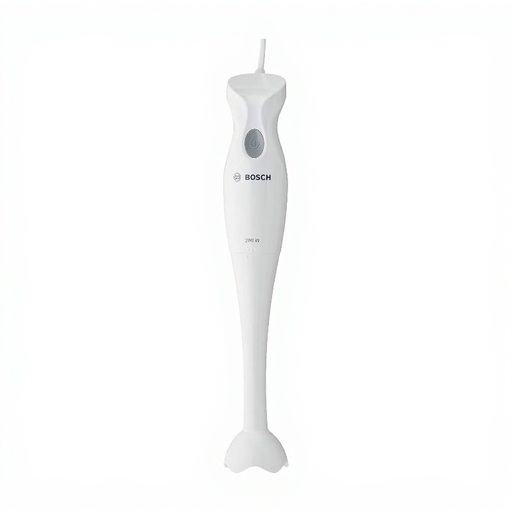
Why it suits this type of user: With 280 watts, a weight of 0.6 kilograms and a turbo button, this model is designed for basic tasks such as puréeing and blending.
Its straightforward set-up means there are no unnecessary accessories. The detachable blending foot and dishwasher-safe removable parts make cleaning easier.
Weighs 0.6 kilograms, with a splash guard and stainless steel blades.

Why it suits this type of user: Variable speed, a turbo function and several attachments give you control across a range of recipes.
The included accessories are clearly listed: a 500 ml chopper, whisk, emulsifying attachment, and 700 ml and 250 ml beakers.
1,200-watt motor, stainless steel blending arm, variable speed control and dishwasher-safe removable parts.
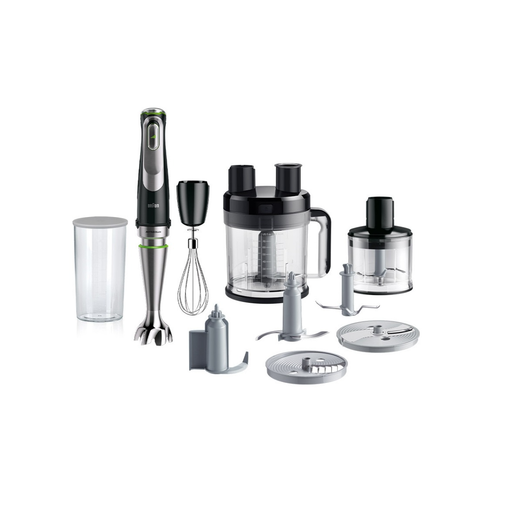
Why it suits this type of user: The 2-litre container and range of attachments are designed for households that regularly prepare larger quantities and work with different ingredients.
Rather than buying accessories separately, you get a blending foot, potato masher, whisk, chopper and food processor bowl in the set.
1,200 watts, a 2-litre container, and ActivePowerDrive and EasyClick Plus systems, according to the product description.
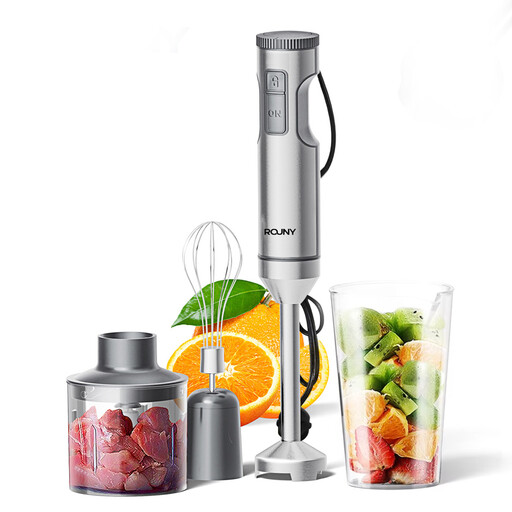
Why it suits this type of user: The blending foot, 700 ml beaker, 500 ml chopper and whisk cover a range of everyday kitchen tasks.
The one-minute operating limit and required break are clearly specified, helping you match use to the task at hand.
1,000 watts rated power, up to 1,200 watts maximum power, 15,000 revolutions per minute and stepless speed control.
We’ve put together a complete, regularly updated list of products that meet these strict selection criteria and fully comply with the safety regulations in force in the EU.
A stick blender is suitable for puréeing soups, sauces, vegetables and baby food, as well as blending smoothies. With a whisk attachment, you can also whisk eggs and cream or mix light batters. For larger quantities or hard ingredients, a model with a suitable chopper is a good choice.
Its lifespan depends on how often you use it, operating intervals, cleaning and storage. There’s no single figure that applies to every model. Avoiding strain on the motor, cleaning the blades carefully and following the manufacturer’s guidance on operating time can help reduce everyday wear and tear.
Power consumption is measured in watts. A 1,000-watt appliance uses around 0.167 kilowatt hours in ten minutes of operation. As a stick blender usually runs for only a few minutes at a time, the overall energy used per preparation is fairly modest. The actual amount depends on how long you use it and how often.