
Lieferung heute & morgen

Qualitätsgarantie

Willkommens-Angebote freischalten: KOSTENLOSE Lieferung | Bis zu 80 % RABATT | Kostenlose 30-Tage-JoyPlus-Testphase
App herunterladen
Whether you are preparing dough, soup, smoothies, sauces or whipped cream, stick blenders and hand mixers are designed for different tasks and cannot be used interchangeably. If you focus only on a high wattage or a long list of accessories, you can quickly end up with an appliance that is too heavy for everyday use, awkward to clean or unsuitable for the recipes you have in mind.
As a Joybuy Product Recommendation Officer, I filter the most important product details according to practical criteria. What matters is not advertising claims, but the design, accessories, controls, cleaning requirements and intended use.
Motor power is a useful indicator, but it is not the only factor that matters. The blade design, torque, container geometry and operating time also affect performance. A compact powerful stick blender with 1,000 watts may be designed for hard ingredients, while a less powerful model may be perfectly adequate for soups or soft fruit.
Also check whether the wattage refers to power consumption or another manufacturer specification. Direct comparisons are only meaningful when the technical data has been measured according to the same standard.
A stick blender set may include a whisk, chopper, measuring beaker, potato masher or emulsifying disc. This increases the range of possible uses, but it also requires storage space and additional cleaning. So consider which attachments you will actually use.
For dough, beaters and dough hooks are essential. A stick blender with a chopper is more suitable for herbs, onions or smaller quantities. A whisk attachment can handle cream or egg whites, but it does not automatically replace a classic hand mixer with beaters when preparing larger quantities for baking.
With a dishwasher-safe mixer, this generally refers only to removable parts. The motor unit, cable and mains plug must not be immersed in water. Before buying, it is worth checking the product description: Which attachments are dishwasher-safe, and which parts need to be washed by hand?
A hand mixer is guided through a bowl. It is designed for cake batter, dough, whipped cream and beaten egg whites. Two beaters and two dough hooks are typical. A stick blender, on the other hand, is used directly in a tall container or saucepan and is suitable for soups, sauces, purées and smoothies.
If you bake regularly, look for a hand mixer with dough hooks. For hot vegetable or potato soups, a stick blender with a removable metal or plastic shaft is more practical. When working with hot liquids, follow the instructions for use; splashes and steam can cause scalding.
Several speed settings make it easier to start slowly when working with flour, liquids and delicate ingredients. A turbo function provides extra speed for short periods, but should not be used continuously if the manufacturer specifies a limited operating time.
A hand mixer with five speed settings may be sufficient for everyday baking tasks. Appliances with variable speed control or 9, 11 or 25 speed settings allow finer adjustment. However, the number of settings alone says nothing about the actual quality of the results.
Stainless steel beaters and dough hooks, or materials specifically identified by the manufacturer as dishwasher-safe, are practical choices. With stick blenders, the blade shaft should lock securely into place and be removable for cleaning. A splash guard on the blending foot helps reduce mess, but does not eliminate the need to use a container of a suitable height.
Also check:
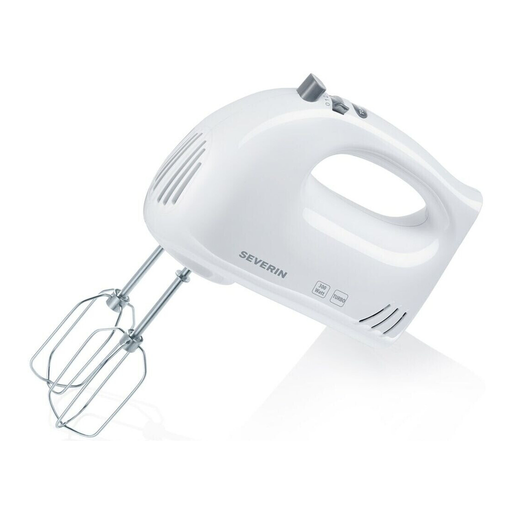
Why this product suits this profile: Five speed settings, a turbo function, two beaters and two dough hooks cover typical baking tasks at home.
The equipment focuses on the beaters and dough hooks you actually need, rather than unused additional attachments.
300-watt motor, five settings plus turbo, and removable stainless-steel attachments.
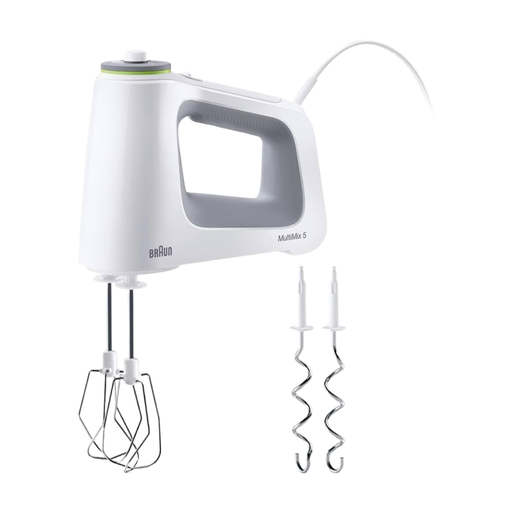
Why this product suits this profile: The 700-watt motor, nine variable speed settings and ergonomic design are made for frequent baking.
Variable speed control supports a controlled start, while the removable parts are dishwasher-safe according to the product information.
SmartMix design, soft-grip handle, turbo function, plus stainless-steel beaters and dough hooks.

Why this product suits this profile: This 1,200-watt stick blender features variable speed control, a turbo function, whisk, chopper and emulsifying attachment.
The accessories are clearly listed, and the removable tools are dishwasher-safe according to the product information.
XL blending foot, 1,200-watt motor, 500 ml chopper and additional emulsifying attachment.
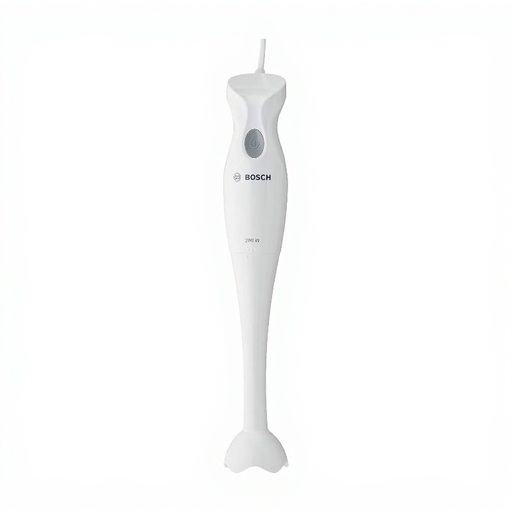
Why this product suits this profile: According to the product information, the appliance weighs 0.6 kg and is suitable for classic blending and puréeing tasks while taking up very little space.
The equipment is limited to a removable blending foot and a turbo button, rather than taking up unnecessary storage space.
280 watts, splash guard, stainless-steel blade and dishwasher-safe blending foot.
We have put together a complete, regularly updated list of products that fully meet these strict selection criteria and the safety regulations applicable in the EU.
A stick blender purées and chops ingredients directly in the container. A hand mixer with beaters and dough hooks is used in a bowl and is designed for dough, cream and beaten egg whites. A hand mixer is generally more suitable for regular baking, while a stick blender is better for soups and sauces.
The lifespan depends on how the appliance is used, cleaned and stored, as well as how long it is operated for. Only use the appliance with the ingredients it is designed to handle, observe cooling breaks and clean removable parts immediately after use. The motor unit and cable should be kept dry.
The actual electricity costs depend on the wattage and operating time. At the same operating time, an appliance with a higher rated power will generally use more energy than a model with a lower rated power. As mixing tasks often take only a few minutes, the duration of use is particularly relevant to running costs.