
Lieferung heute & morgen

Qualitätsgarantie

Willkommens-Angebote freischalten: KOSTENLOSE Lieferung | Bis zu 80 % RABATT | Kostenlose 30-Tage-JoyPlus-Testphase
App herunterladen
By the Joybuy Product Recommendation Officer, August 28, 2026
Choosing to buy still water seems simple at first glance. But a walk down the supermarket aisle or a visit to an online shop reveals a variety that can quickly become overwhelming. Not all water is created equal, and marketing claims can be misleading. Before you order your next case of still water, you should be aware of two common pitfalls that can lead to a poor choice.
First, the specific type of water is often overlooked. Terms like "spring water" or "table water" sound natural but aren't held to the same strict standards as "natural mineral water." Second, the mineral content is frequently ignored. A high sodium content can be unsuitable for certain dietary plans, while the wrong mineral composition can be problematic for preparing baby formula. This guide will help you understand these factors and make an informed decision.
To find the right still mineral water for your needs, three key parameters are crucial. Understanding them will protect you from making the wrong purchase and ensure you get a product that meets your standards for quality and taste.
The minerals listed on the label aren't just marketing—they are a critical quality indicator. They determine not only the taste but also the water's suitability for different groups of people.
The term "Natural Mineral Water" is a legally protected designation in Germany and the EU that guarantees high quality. It must meet the following criteria:
In contrast, table water can be a mixture of different types of water and added minerals, while spring water also comes from an underground source but does not require official recognition as a mineral water.
The choice of packaging depends on your lifestyle.
Based on the criteria above, we have selected a few products from our range that are suitable for different profiles.
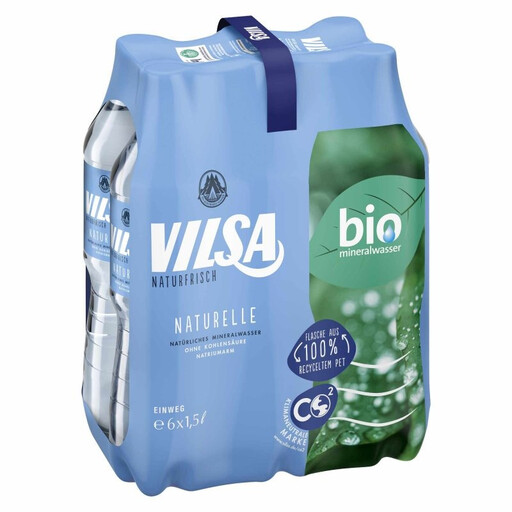
Why This Fits Their Persona: Ideal for daily family needs. The 1.5-litre bottles are convenient for stocking up at home, and the soft taste is accepted by all family members. Its suitability for a low-sodium diet makes it a versatile all-rounder.
This water is declared as "natural mineral water," meeting high purity standards. With only 16.4 mg/L of sodium, it is certified as low-sodium, avoiding the pitfall of choosing an unsuitable water for special dietary needs.
Lightly mineralized for an exceptionally soft, mild taste. According to the manufacturer, it is also suitable for preparing baby formula (please always check the label).
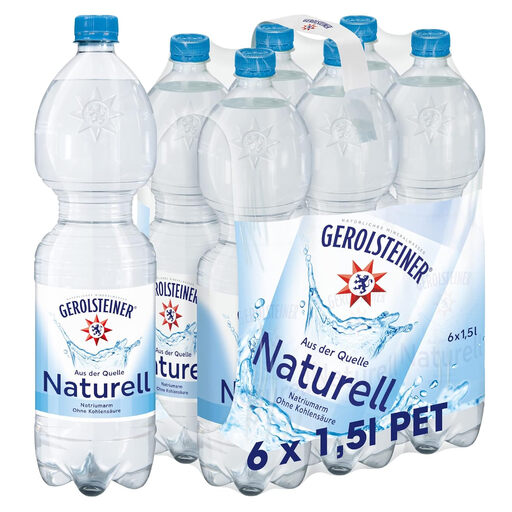
Why This Fits Their Persona: For individuals who need or want to consciously maintain a low sodium intake. Its origin in the Volcanic Eifel region provides a unique mineralization that offers a balanced taste despite its low sodium content.
The product is explicitly labelled as low-sodium, and its mineral values are clearly declared. This prevents the purchase of water with an undesirably high salt content. The high bicarbonate content (>577 mg/L) ensures a neutral taste.
Sourced from a well-known German spring, it offers a balanced mineralization. The soft, neutral taste makes it a pleasant all-day companion.
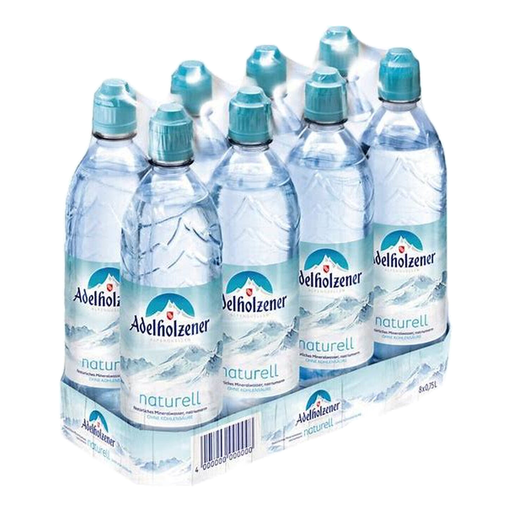
Why This Fits Their Persona: The 0.75-litre PET bottles are a practical compromise between volume and portability. They fit well in gym bags or backpacks and are ideal for the office, university, or day trips. Its origin in the Bavarian Alps is an additional mark of quality.
This product avoids the convenience pitfall. Instead of unwieldy large bottles, it offers a portable solution without compromising on its quality as a "natural mineral water." The mineralization is balanced and suitable for general consumption.
Rich in calcium (70.4 mg/L) and magnesium (32.8 mg/L), which can be beneficial for active people. The lightweight PET bottles are convenient for transport.
We have compiled a complete, up-to-date list of products that fully meet these strict selection criteria and official regulations.
1. How can I tell if a mineral water is suitable for baby formula? Look for the explicit statement "Suitable for the preparation of infant formula" on the bottle's label. Only then can you be sure that the water complies with the strict legal limits for certain ingredients like sodium, nitrate, and sulphate, and that it does not need to be boiled if freshly opened.
2. What does "low-sodium" mean for mineral water? A mineral water can be labelled "low-sodium" if it contains less than 20 milligrams of sodium per litre. This value is legally defined by the Mineral and Table Water Ordinance. This information is important for people with high blood pressure or for preparing baby formula.
3. Does still mineral water need to be refrigerated after opening? Yes, it is recommended to store an opened bottle of mineral water in the refrigerator and consume it within two to three days. Contact with the air and your mouth can introduce germs into the bottle, which multiply faster at room temperature. Refrigeration slows this process and preserves the water's freshness.