
Lieferung heute & morgen

Qualitätsgarantie

Willkommens-Angebote freischalten: KOSTENLOSE Lieferung | Bis zu 80 % RABATT | Kostenlose 30-Tage-JoyPlus-Testphase
App herunterladen
For many, lugging heavy crates of water is a weekly shopping ritual. But those who want to order their still water online are faced with a daunting selection. Not every water advertised as "natural" lives up to its promise, and the convenience of a water delivery service can be soured by hidden costs. This guide will help you separate the wheat from the chaff and find the right mineral water for your needs.
Before you fill your shopping cart, you should be aware of the typical marketing traps and product shortcomings that often lead to disappointment.
To make an informed decision, you should check three core parameters. These provide insight into the actual quality and suitability of a mineral water.
In Germany, the Mineral and Table Water Ordinance (MTVO) governs quality standards. Understanding the differences is crucial:
For guaranteed purity and a traceable origin, you should always opt for natural mineral water.
The composition of minerals determines not only the taste but also its health suitability. Pay attention to the following values, which are given per litre (mg/l):
The choice between glass and PET bottles is often a personal preference. PET bottles are lighter and shatterproof, which simplifies transport for a water delivery. When buying online, look for a transparent presentation of all costs, including product price, deposit, and delivery fees, to fairly evaluate the total package.
Instead of a one-size-fits-all recommendation, we present products tailored to specific needs.
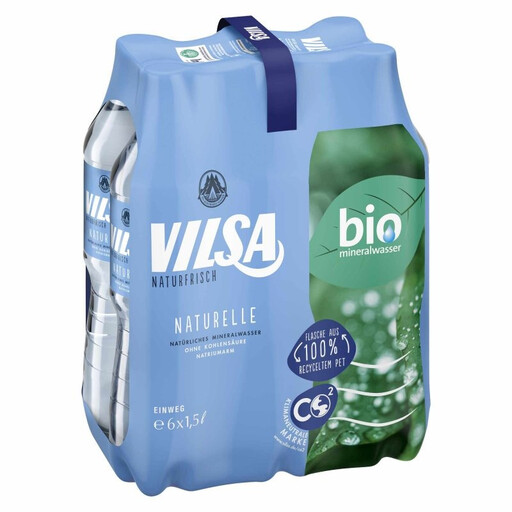
Why This Fits Their Persona: Ideal for families looking for a pure, soft water suitable for all ages. It is explicitly certified for the preparation of baby formula and comes from a protected source in Germany.
It bypasses the pitfall of unsuitable mineral content with its demonstrably low sodium level (16.4 mg/l) and official suitability as water for baby formula.
Officially recognised natural mineral water of organic quality with a very soft taste profile. Ideal for a low-sodium diet.
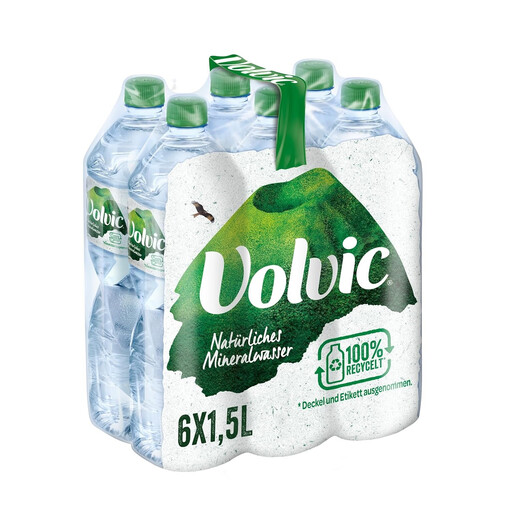
Why This Fits Their Persona: Perfect for consumers who value a special origin and a distinctive, soft taste. The filtration through volcanic rock in the Auvergne region of France is a clear mark of quality.
The clear declaration as a natural mineral water with a specific origin and filtration process protects against buying waters of uncertain quality. The mineral content is transparently listed.
Uniquely soft taste due to natural filtration through six layers of volcanic rock. According to the manufacturer, the bottles are made from 100% recycled material (excluding cap and label).
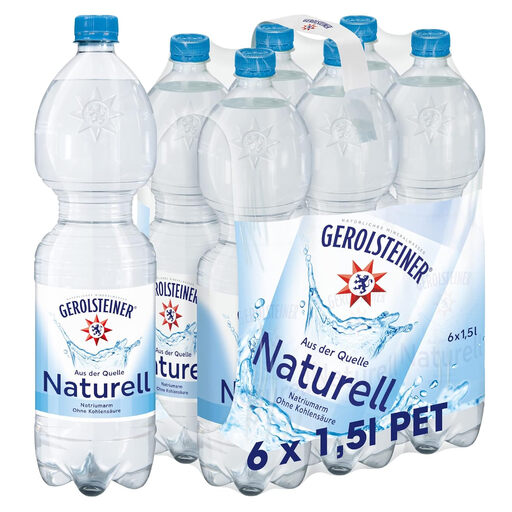
Why This Fits Their Persona: A reliable and well-known brand that stands for quality. The 1.5-litre bottles are ideal for supplying teams, and the convenient water delivery saves time and effort in procurement.
As an established German brand, Gerolsteiner Naturell offers full transparency about its origin (Volcanic Eifel) and mineral content. This prevents the purchase of products with unclear quality or composition.
Particularly high in bicarbonate (>577 mg/l), which ensures a balanced taste. Despite its high mineralisation, it is low in sodium, making it widely suitable.
We have compiled a complete, up-to-date list of products that fully meet these strict selection criteria and German regulations.
1. How do I know if a mineral water is suitable for baby formula? Look for the explicit note "Suitable for the preparation of infant formula" on the label. This guarantees that the water complies with strict legal limits for certain minerals, including sodium (under 20 mg/l), nitrate (under 10 mg/l), and sulphate (under 240 mg/l). It must also be non-carbonated.
2. What is the difference between mineral water, spring water, and table water?Natural Mineral Water requires official recognition, comes from a protected underground source, and is bottled directly on-site. Its composition is constant. Spring Water also originates from underground sources but does not require official recognition. Table Water is a treated beverage that can be mixed from various types of water and added minerals and is not tied to a specific source.
3. Is a home water delivery service really worth it? For households with high consumption, offices, or individuals with limited mobility, the convenience of a water delivery can justify the potential extra cost, as it eliminates the strenuous task of carrying heavy crates. It is advisable to compare the total price—including delivery fees and deposit—with prices in brick-and-mortar stores to assess the cost-effectiveness for your individual situation.