
Lieferung heute & morgen

Qualitätsgarantie
App herunterladen
Kategorien
Choosing a new dinnerware set is a decision that should be based on functional criteria and material properties. Stoneware has established itself as a material for everyday use due to its high density and robustness. Compared to earthenware, stoneware is fired at higher temperatures (typically between 1,100°C and 1,300°C), resulting in lower porosity and thus improved resistance to chipping. This article analyses the technical parameters relevant to selecting a stoneware dinnerware set and presents a curated selection of products.
The decision for a suitable dinner service or dinnerware set depends on several objective factors. A systematic evaluation of these criteria will simplify your selection.
The quality of a stoneware set is largely determined by the clay composition and firing temperature. High-quality sets are often made from lead- and cadmium-free clay, a crucial factor for food contact. A high firing temperature leads to the vitrification of the material (sintering), which minimises water absorption and increases strength. The glaze is another critical factor. Modern glazing technologies can enhance scratch resistance and simplify cleaning. Pay close attention to the manufacturer's specifications regarding material composition and production methods.
Dinnerware sets are available in various configurations. A 12-piece dinnerware set for four people is a common starter configuration. It typically includes dinner plates, dessert or salad plates, and cereal bowls.
Check the dimensions and capacity of the individual pieces (e.g., plate diameter, bowl volume) to ensure they meet your practical needs.
For daily use, two properties are of central importance: suitability for the dishwasher and microwave.
While design is subjective, there are objective characteristics to consider. A modern dinnerware set is often distinguished by clean lines, organic shapes, or special glazes. Reactive glazes, for example, create unique patterns, ensuring no two pieces are exactly alike. Hand-painted rims or textured surfaces are other design features that influence the tactile feel and visual appearance.
Based on the criteria above, we have compiled a selection of products that stand out for their specific material properties and functionality.
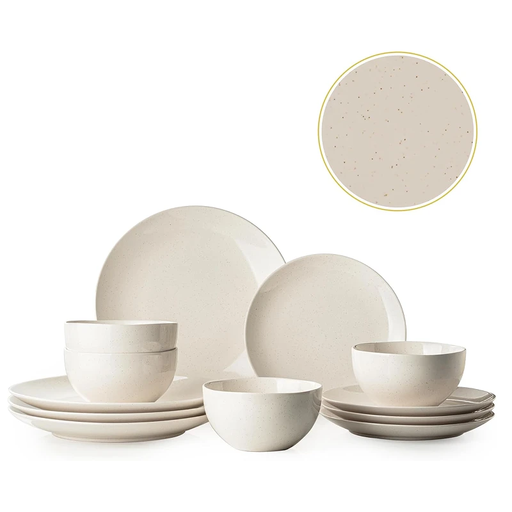
Why We Recommend This Product According to the manufacturer, this ceramic dinnerware set is crafted from lead- and cadmium-free ORC ceramic clay and fired at a temperature of 1400°C. This high firing temperature results in vitrified stoneware with low water absorption. The GLIDECOAT glaze technology is designed for durability and easy cleaning. The set provides a complete starter collection for four people.
Pros
Who It's For This set is suitable for households looking for a functional and modern dinnerware set for everyday use. Its microwave and dishwasher suitability, combined with its robust construction, make it a practical choice for young families and starter homes.
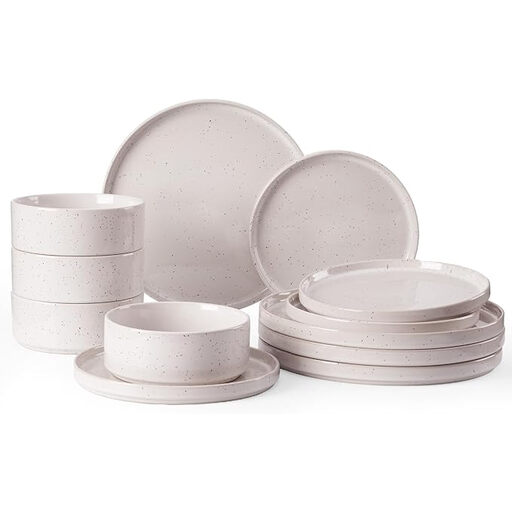
Why We Recommend This Product The Richmount Nebula set is fired at 1282°C for 13.5 hours, creating a glossy and scratch-resistant surface. Each piece features a unique pattern thanks to the hand-speckled glaze. The design, with its vertical rim, is not only aesthetic but also facilitates stacking. This plate and bowl set is designed for four people.
Pros
Who It's For Ideal for those who appreciate an artisanal aesthetic without sacrificing modern functionality. The set complements interior design styles that favour natural materials and subtle, unique details.
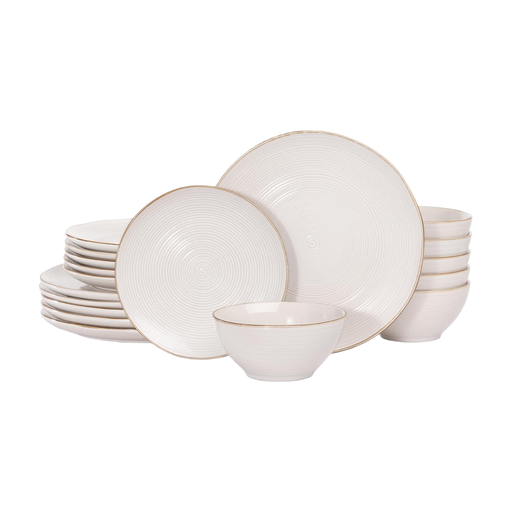
Why We Recommend This Product This 18-piece dinner service for six is distinguished by its irregular, spiral design, which is handcrafted. The set is made of high-quality stoneware, also fired for 13.5 hours at high temperatures. The food-safe glaze is scratch-resistant and designed for cleaning in the dishwasher and heating in the microwave.
Pros
Who It's For This set is an excellent choice for larger households or for those seeking a complete and visually appealing service for up to six people. It is suitable for both everyday use and special occasions.
Should the sets presented not exactly meet your requirements for size, shape, or design, the market offers a wide range of alternatives. You can find an extensive selection of individual plates and other sets, which you can combine to suit your individual needs, in our Dinner Plates category.
1. What is the difference between stoneware and porcelain? The main difference lies in the material and the firing temperature. Porcelain is made from kaolin, feldspar, and quartz and is fired at very high temperatures (up to 1,450°C). This process makes it fully sintered, non-porous, thinner, and often translucent. Stoneware is made from clay and fired at lower temperatures, making it thicker, heavier, and opaque. It is more robust than earthenware but typically less break-resistant than hard-paste porcelain.
2. Is stoneware dinnerware always dishwasher-safe? Most modern stoneware dinnerware sets are declared as dishwasher-safe. The glaze protects the more porous material from water absorption and harsh detergents. However, it is always advisable to check the manufacturer's specifications, as hand-painted or particularly delicate decorations may be more sensitive.
3. Can stoneware dinnerware go in the microwave? Yes, as a rule, stoneware is microwave-safe. It heats evenly and can withstand the temperatures. An exception would be pieces with metallic embellishments (e.g., gold rims), which must never be placed in the microwave. Here too, the manufacturer's product labelling is the definitive source of information.