
Lieferung heute & morgen

Qualitätsgarantie

Willkommens-Angebote freischalten: KOSTENLOSE Lieferung | Bis zu 80 % RABATT | Kostenlose 30-Tage-JoyPlus-Testphase
App herunterladen
A stool is more than just a simple place to sit. It can serve as a versatile side table, a practical footrest, or a stylish decorative accent. However, the vast selection of models, materials, and functions can make the decision difficult. Often, persuasive product images and marketing promises lead to purchases that prove impractical or short-lived in daily use. This guide will show you which critical features to look for to find a stool that truly meets your needs.
Before we delve into the important selection criteria, let's look at three common problems that can lead to disappointment:
To avoid a bad purchase, you should base your selection on objective criteria. The following three points are of central importance.
The quality of an upholstered stool depends significantly on its internal structure and its cover.
A stool can play many roles – from an ottoman in the living room to a bar stool at the kitchen counter. Its function determines the ideal dimensions.
To make the selection easier, we have compiled some models based on different user profiles.
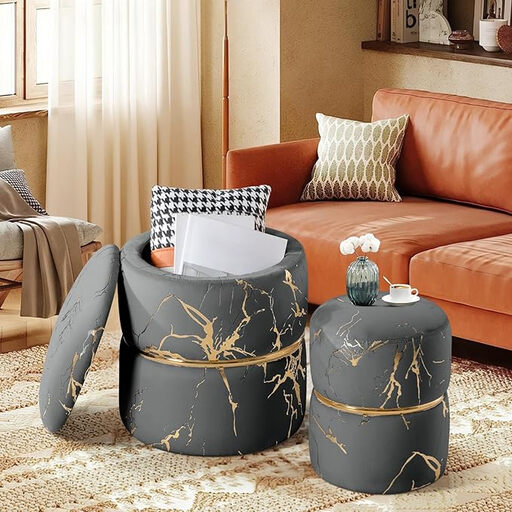
Why This Fits Their Persona: This set combines a modern velvet look with thoughtful functionality. The two stools are stackable, saving space. The larger stool serves as a pouf with hidden storage—ideal for living rooms or bedrooms where both order and style are paramount.
The sturdy wooden frame and a load capacity of 135 kg counteract the problem of instability. The space-saving, stackable feature solves the dilemma of mismatched dimensions in smaller rooms.
Two stools in one set, one with storage. Stackable for maximum space efficiency. Soft velvet cover.
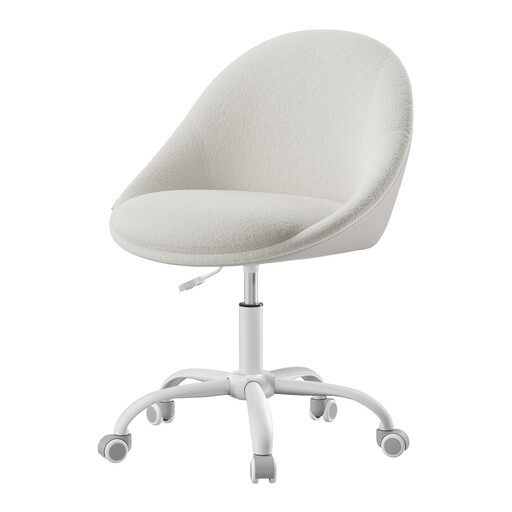
Why This Fits Their Persona: For anyone looking for a flexible seat for their desk or vanity table. This chair combines the cosy look of a teddy fabric stool with the functionality of an office chair: it swivels, is height-adjustable, and is mobile thanks to its castors.
The height adjustability (83.3-93.3 cm total height) solves the problem of improper dimensions. The steel frame provides the necessary stability, while the armless design allows the chair to be pushed under the table to save space.
Height-adjustable and 360° swivel. Compact, armless design. Soft, teddy-look cover.

Why This Fits Their Persona: This storage bench is a solution for anyone seeking maximum storage and a robust seating option in one. At 110 cm long, it functions as a bench at the end of the bed, in the hallway, or as an ottoman in front of the sofa. When not in use, it can be folded flat.
The construction from an MDF frame (E1 grade) and a specified static load capacity of 300 kg directly address concerns about instability. The linen cover is described as breathable and skin-friendly, making it a low-maintenance alternative to delicate fabrics.
Very high load capacity (300 kg). Large storage volume (118 L). Foldable for space-saving storage.
We have compiled a complete, up-to-date list of products that fully meet these strict selection criteria and German safety regulations.
For general care, it is usually sufficient to regularly vacuum the cover with an upholstery nozzle. For stains on velvet, it is recommended to gently dab them with a slightly damp cloth and possibly a mild soap solution – do not rub. For teddy fabric, a soft brush can help remove dust and fluff up the pile. Always follow the manufacturer's specific care instructions.
The ideal height depends on its intended use. As a rule of thumb:
The maximum load capacity indicates the static weight that the stool can safely support without being damaged, according to the manufacturer. For regular use as a seating option, a load capacity of at least 120 kg is a good benchmark for stability and durability. A higher rating, e.g., 150 kg or more, often indicates a particularly robust frame construction.