
Lieferung heute & morgen

Qualitätsgarantie

Willkommens-Angebote freischalten: KOSTENLOSE Lieferung | Bis zu 80 % RABATT | Kostenlose 30-Tage-JoyPlus-Testphase
App herunterladen
A stool can provide extra seating, a footrest, storage or a handy step up. But this versatility can make choosing one more difficult: a decorative stool isn’t automatically suitable as a step stool, and a low folding stool is no substitute for a sturdy household ladder.
So before you buy, look beyond colour and price. The key factors are intended use, weight capacity, stability, dimensions and material. This will help you avoid common buying mistakes, such as choosing a stool that doesn’t offer enough space, feels unstable or is difficult to store away.
The stated maximum weight capacity usually applies to a specific, intended use. With a storage stool, the lid must be fully in place before you sit on it. The storage compartment should also not be overloaded or filled with oversized items.
A step stool is subject to different forces: climbing onto it creates movement and sideways pressure. That’s why the standing surface, locking mechanism, non-slip steps and rubber feet matter just as much as the weight limit.
A folding stool or step stool can fold flat for storage. Even so, check its dimensions when folded and where you plan to put it away. It will only fit under a bed, behind a door or in a cupboard if you take its folded width and depth into account too.
For seating, also check that the folding mechanism is fully locked into place. Never use a folding stool if it is only partly open or not securely fixed.
A teddy, corduroy or linen look affects the appearance and feel, but doesn’t necessarily make a stool more stable. For a storage stool, the supporting panels, hinges, lid construction and base all matter. For a children’s stool, the right seat height, a stable base and age-appropriate use are important.
For your living room, bedroom or hallway, choose a seat height that works with your existing furniture. A stool used alongside a sofa can be lower than one intended as an occasional seat at the table. Measure the available space before you buy, and check that doors, drawers and cupboard compartments can still open.
A long storage stool, for example, can work well at the end of a bed or as an extra bench. More compact models are better suited to small hallways or next to an armchair.
Check the maximum weight capacity stated by the seller and distinguish between sitting, putting your feet up and climbing. A model with a maximum capacity of 150 kg isn’t automatically suitable for commercial or industrial use.
The stated weight limit for a children’s stool shouldn’t be taken as an invitation for adults to use it. A step stool should only be used on a level, dry and stable surface. Check the locking mechanism, steps and rubber feet on ladders and folding step stools before each use.
MDF panels can provide a sturdy structure for storage stools. Clean fabric covers according to the care instructions; for many surfaces, wiping with a damp cloth is better than soaking them.
For a storage stool, the interior capacity matters too. Check whether bedding, blankets, toys or magazines will actually fit inside. For a footstool without storage, compact dimensions and an easy-care surface are more important.
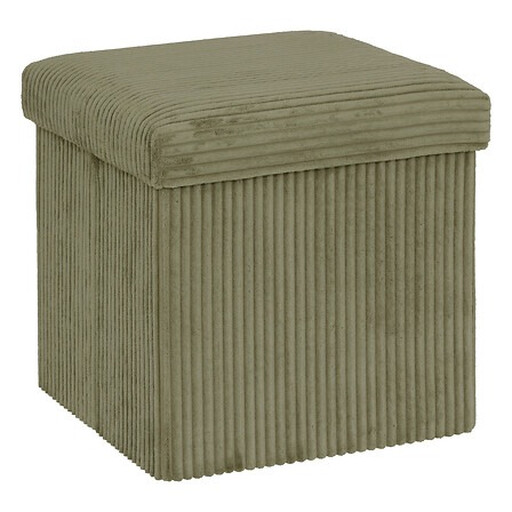
Why this product suits this profile: Measuring 38 × 38 × 38 cm, this compact pouffe can be used as an extra seat, footrest or occasional side table in smaller rooms. Its folding design makes it easier to store away.
The product description clearly states its limited weight capacity and rules out standing or jumping on it. This makes it clear that it’s not intended to be used as a step stool.
38 cm cube shape, polyester corduroy cover and foldable design for flexible storage.
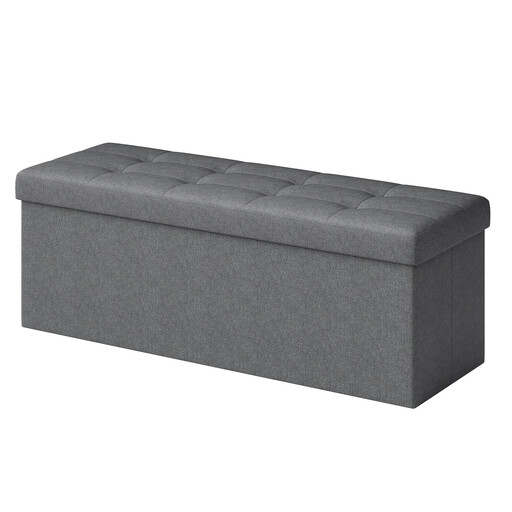
Why this product suits this profile: This 110 cm-long bench combines a seat with enclosed storage. With a capacity of 131 litres, it has room for blankets, cushions or bedding in the living room, bedroom or hallway.
The construction is described as featuring MDF panels and metal corner reinforcements. To use it as a seat, the lid must be fully in place.
Stated maximum weight capacity of 300 kg, 131 l of storage and a foldable design for compact storage when not in use.
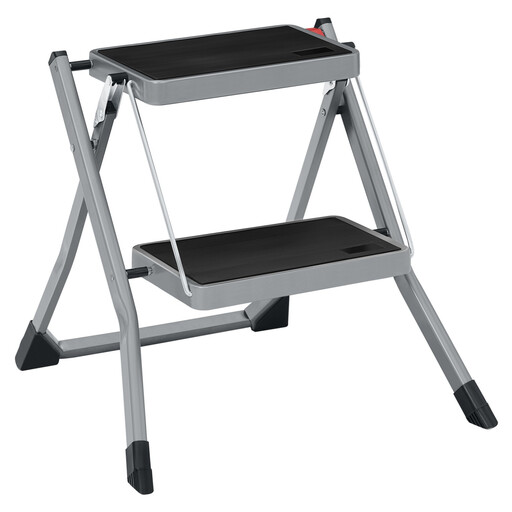
Why this product suits this profile: For reaching high shelves, curtains or light bulbs, a designated folding step stool is a better choice than an ordinary seat stool. This model folds down to 55 × 50 × 4,5 cm.
The auto-lock system, ribbed non-slip steps and slip-resistant rubber feet address key safety requirements. Check that the locking mechanism is engaged before each use.
Steel frame, two steps and a stated maximum weight capacity of 150 kg; designed for household use.
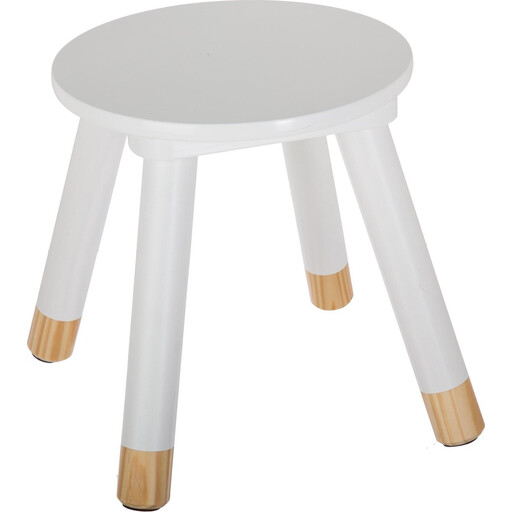
Why this product suits this profile: This round children’s stool, with a wooden frame and a height of 27 cm, is designed for a child’s bedroom or as an extra seat.
The dimensions, intended users and maximum weight capacity of 50 kg are clearly stated. The model isn’t foldable and has no storage, so its intended use is clear.
Wooden construction, compact footprint of 24 × 24 cm and straightforward assembly by screwing on the legs.
We’ve put together a complete, regularly updated list of products that meet these strict selection criteria and fully comply with the safety regulations in force in the EU.
A seat stool, pouffe or storage stool with a suitable seat height can work well in the living room. Pay particular attention to its footprint, the lid construction and the maximum weight capacity. A model with storage is useful if you want to keep blankets, cushions or toys neatly tucked away at the same time.
Its lifespan depends on how often it’s used, the weight it carries, the surface it’s placed on and how well it’s maintained. For a folding step stool, check the locking mechanism, joints, steps and rubber feet regularly. Don’t continue using a damaged or wobbly stool. For a folding stool used for sitting or as a surface to rest things on, make sure it’s fully opened and secured correctly.
The price mainly depends on the material, size, storage, upholstery and safety features. A simple children’s stool or pouffe needs a different construction from a sturdy folding step stool with non-slip steps. So compare more than just the price: consider weight capacity, dimensions, safety features and intended use.