
Lieferung heute & morgen

Qualitätsgarantie
App herunterladen
Kategorien
Efficiently organising your living space requires sophisticated solutions, especially for storing seasonal linens, bedding, or clothing. Storage bags offer a structured method to protect items from dust, moisture, and to maximise space. Selecting the right product depends on specific requirements, such as available storage area, the type of textiles being stored, and the desired level of protection. This guide analyses the technical features of various storage systems to provide a solid basis for an informed decision.
The decision for a storage solution should be based on objective criteria. Material composition, closure type, and volume capacity are critical parameters.
The longevity and protective function of a storage bag are largely determined by the material used.
The closure mechanism is critical for protecting the contents.
Depending on the use case, the priority is either maximum space-saving or sheer storage capacity.
Based on technical specifications and practical utility, here are some models that meet different storage needs.
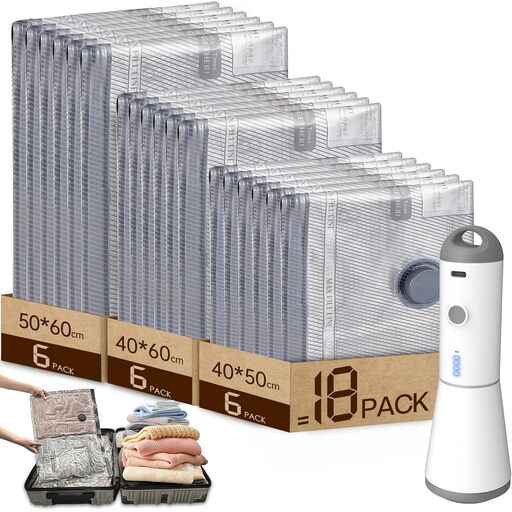
Product Feature Analysis: This set stands out due to its included cordless vacuum pump. The pump allows for air removal in about 30 seconds, offering a high degree of flexibility, independent of a conventional vacuum cleaner. The bags are made from a tear-resistant composite material of polyamide and polyethylene. A double-zip seal and special valves are designed to ensure an airtight seal and protect the contents from moisture and dust.
Advantages:
Best for: Users seeking a mobile and self-contained solution for travel, moving, or home organisation, who do not want to rely on an external vacuum cleaner. Ideal for the space-saving storage of clothing and smaller bedding items.
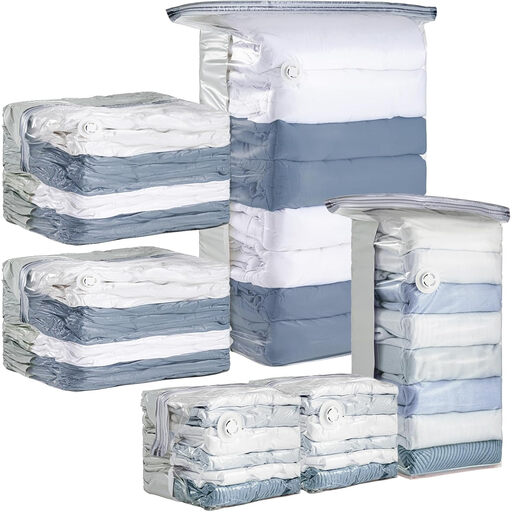
Product Feature Analysis: The main feature of these bags is their cube design with a widened base. This construction allows for easy, upright filling and results in a stable, block-like shape after compression, which simplifies stacking in a wardrobe or under the bed. The bags are made from a PA/PE blend. According to the manufacturer, the capless valve is compatible with any standard vacuum cleaner and enables three times faster air suction.
Advantages:
Best for: Individuals who need to store very bulky textiles like thick duvets and want to use the storage space in wardrobes or under beds with maximum efficiency. The stable shape is a clear advantage for organised storage.
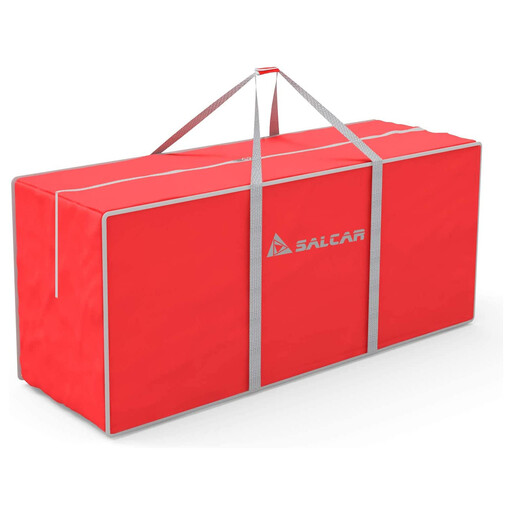
Product Feature Analysis: This bag is a non-vacuum solution that focuses on maximum capacity and durability. Made from 600D Oxford fabric with a PVC coating, it is water-resistant, UV-resistant, and wear-resistant. Measuring 130 x 40 x 50 cm, it offers an exceptionally large volume for non-compressible or bulky items. When not in use, the bag is foldable and can be stored compactly.
Advantages:
Best for: Users who need a simple and robust large storage bag for garden furniture cushions, large quantities of bedding, as a moving bag, or for storage in potentially damp environments like a basement or garage.
While the featured storage bags provide a solution for storage, your needs might also include purchasing new textiles. For instance, if you're looking to refresh your seasonal items, you can find a selection of products in our Bedding and Duvets category.
1. How long do vacuum bags hold their seal? The duration a vacuum bag remains airtight depends on the quality of the material, the zip, and the valve. High-quality bags made from thick PA/PE material with a reliable double-zip seal can hold the vacuum for several months. It is recommended to check the seal every 4-6 months, especially for long-term storage.
2. Can you store down duvets in vacuum bags? Storing down and feather products in vacuum bags is possible but should be done with care. Excessive compression can damage the delicate structure of the down and permanently reduce its loft. It is recommended to only remove about 50–60% of the air, so the duvet is compressed but not completely flattened.
3. What is the difference between PA/PE and Oxford fabric for storage? PA/PE composites are designed for flexible, airtight applications like vacuum bags. Their main purpose is volume reduction and protection from air and moisture in a sealed environment. Oxford fabric is a robust, woven textile engineered for durability and resistance to abrasion and tears. It is used for bags where capacity and durability are key, not compression. The additional coating also makes it waterproof or water-resistant.