
Lieferung heute & morgen

Qualitätsgarantie

Willkommens-Angebote freischalten: KOSTENLOSE Lieferung | Bis zu 80 % RABATT | Kostenlose 30-Tage-JoyPlus-Testphase
App herunterladen
By Joybuy Product Recommendation Officer, August 29, 2026
An overflowing wardrobe, seasonal duvets taking up valuable space, or preparations for a move—the need for efficient storage solutions is an everyday problem. Storage bags promise a simple solution, but not every product lives up to its advertising. Many buyers quickly find that the zipper gets stuck, the material tears, or the promised protection from dust and moisture fails to materialize.
This guide will show you what to look for when making a selection to avoid common pitfalls and find a functional solution for your clothes storage. We focus on the crucial product features that distinguish a short-term fix from a long-lasting organizational tool.
Before you invest, it's helpful to know the weaknesses that frequently appear in low-quality products.
To avoid these problems, you should focus on three objective criteria. These will help you realistically assess the functionality and durability of a storage solution.
The material is the foundation for protection and durability. Look for the following specifications:
Regardless of the material, the quality of the seams and zipper is crucial. Double stitching and metal zippers are typically an indicator of higher durability.
The closure mechanism determines how well the contents are protected.
The right shape is crucial for making optimal use of available space and storing textiles gently.
Here are some product suggestions tailored to specific needs that meet the criteria mentioned above.
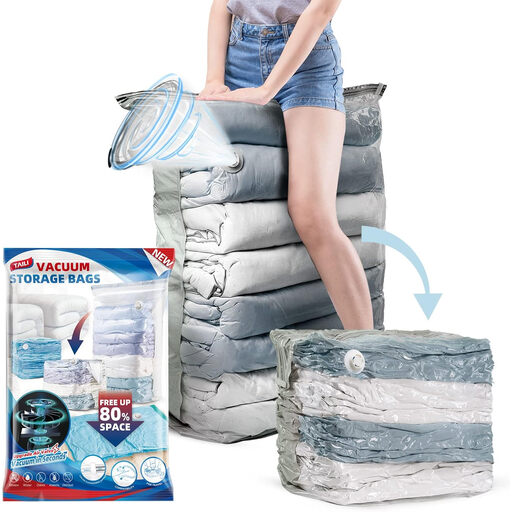
Why This Fits Their Persona: Ideal for those who need to store bulky items like duvets, pillows, and winter coats. The cubic shape allows for easy and stable stacking in a closet or basement after vacuuming.
This product avoids the pitfall of leaky vacuum bags with a double-zipper system and a special air valve compatible with standard vacuum cleaners. The robust PA+PE material minimizes the risk of tears.
The main advantage is the cubic, self-standing structure, which makes filling easier. The large volume per bag replaces several conventional flat vacuum bags.
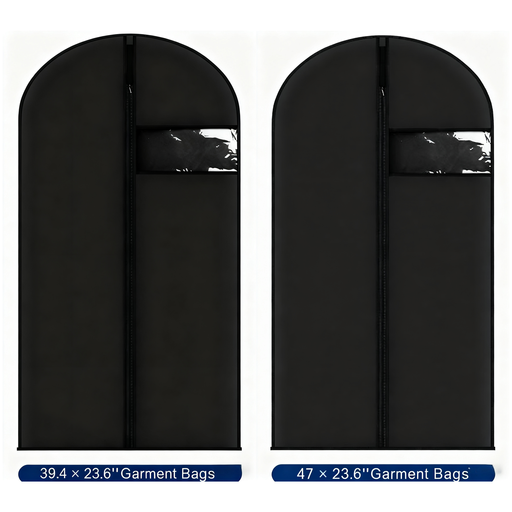
Why This Fits Their Persona: Perfect for individuals looking to protect suits, evening gowns, coats, or blazers from dust, moths, and wrinkling. The set provides a uniform and organized look in the wardrobe.
This set avoids the trap of flimsy materials. It is made of a durable protective material with reliable closures and reinforced seams, offering effective protection against external elements.
The key advantage is the set includes two different lengths (100 cm and 120 cm). This allows both shorter jackets and long coats or dresses to be stored with a perfect, wrinkle-free fit.
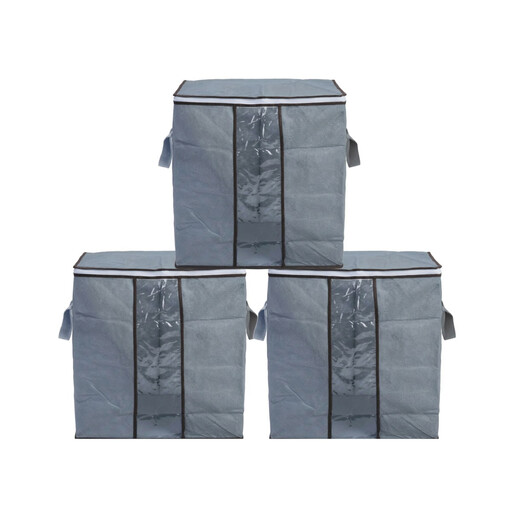
Why This Fits Their Persona: A versatile solution for families or individuals who need to organize a large quantity of textiles like bedding, seasonal clothing, or even toys. Ideal for use in the closet, under the bed, or during a move.
This product avoids the pitfall of weak seams and handles. The handles are reinforced with two extra layers of thick fabric, which the manufacturer claims doubles the load-bearing capacity and prevents tearing when transporting heavy contents.
The main advantage is the large 90-liter capacity per bag combined with its foldability. When not in use, the bags can be stored compactly. The clear window makes it easy to identify the contents.
We have compiled a complete, up-to-date list of products that fully meet these strict selection criteria and safety regulations.
The seal of a high-quality vacuum bag depends on the valve and the double-zipper. Well-made models using PA/PE material can maintain the vacuum for several months, which is usually sufficient for seasonal storage. It is recommended to check their condition every 3-4 months.
Mold is caused by moisture. To prevent this, only pack completely dry clothes and bedding. Furthermore, store the bags in a cool, dry place like a wardrobe or under the bed, not in a damp basement or an uninsulated attic. Breathable materials like PEVA are beneficial for shorter storage periods, while vacuum bags are suitable for long-term, airtight storage.
For bulky duvets and pillows where maximum space savings is the priority, vacuum bags are a great choice. For general, dust-protected storage of bedding sets, large, foldable clothes storage boxes made of Oxford fabric or another robust material are suitable, as they are more breathable and easy to stack.