
Lieferung heute & morgen

Qualitätsgarantie

Willkommens-Angebote freischalten: KOSTENLOSE Lieferung | Bis zu 80 % RABATT | Kostenlose 30-Tage-JoyPlus-Testphase
App herunterladen
Storage bags help you store clothes, bedding, food and personal belongings neatly while saving space. But not every bag is right for every purpose. A garment storage bag that’s too small can put strain on the zip, an unsuitable bag may leak when used for liquids, and a vacuum storage bag can encourage odours or mould if you store damp fabrics in it.
This buying guide explains which features to look for before you buy and which styles suit different everyday needs.
A bag with large external dimensions won’t necessarily offer plenty of usable space. Seams, handles, lids and internal compartments can all reduce its capacity. That’s why height matters just as much as length and width when you’re storing duvets and winter clothes.
For example, the stated dimensions of the WhereHike bags for clothes and bedding are 68 × 50 × 24 cm. Before buying, check that they’ll fit in the space you have in mind, whether that’s under the bed, in a wardrobe or in the loft.
Coated fabrics and plastic surfaces can keep splashes at bay. But that doesn’t automatically mean the bag will stay protected from moisture over time. For use in a cellar or garage, or when carrying items in the rain, consider the material, fastening and seam construction together.
For textiles, make sure clothes and bedding are completely dry before putting them away. A closed bag is no substitute for a dry storage environment.
Claims such as ‘extra strong’ or ‘heavy duty’ can be hard to assess without specific details. Look at the material, handles, zip, seam construction and, where available, the stated maximum load. Don’t put heavy books or sharp objects in fabric moving bags unless the manufacturer explicitly says they’re suitable.
A clear window or space for a label can make it quicker to find seasonal items. For opaque bags, it’s worth adding a label with the contents and storage date.
Polyester, non-woven fabric, PE and combinations of different materials are commonly used for textile storage. PE and polyamide vacuum storage bags are designed to compress items using a vacuum cleaner. The valve needs to fit your hose; the 5Five set is described as having a valve that’s compatible with vacuum cleaners with a hose.
For food, the product description should clearly state what the bags are designed for. According to the product details, pely 2 l freezer bags are made from BPA-free, three-layer film, measure 20 × 31 cm and come in a pack of 30. For liquids or larger portions, styles with a double seal may be a better choice. According to the manufacturer, pely freezer bags with a 3 l capacity have a double seal and a space for labelling.
Important: Keep plastic bags away from babies and young children, as they pose a suffocation risk. Don’t reuse damaged bags.
For moving house or frequent use, sturdy bags with zips and reinforced handles are practical. Shoulder straps can make them more comfortable to carry, while a base that’s too soft can make stacking difficult.
When choosing lunch bags and shopping bags, check how they should be cleaned. According to the product description, the insulated lunch bag with a capacity of 12.5 litres should be wiped clean with a damp cloth and must not be put in the washing machine. So an insulated lunch bag is only a good choice if its care instructions and internal dimensions suit your day-to-day needs.
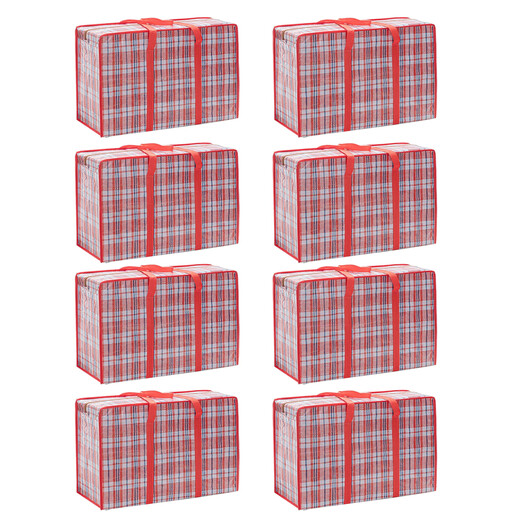
Why this product suits these needs: This set of six bags, each measuring 68 × 50 × 24 cm, is ideal for households that want to store seasonal clothes or bedding separately.
The specific dimensions make it easier to check the fit in wardrobes and under-bed storage. The pack size is clearly stated before you buy.
A set of six for organising several storage areas, with dimensions specified for clothes and bedding.
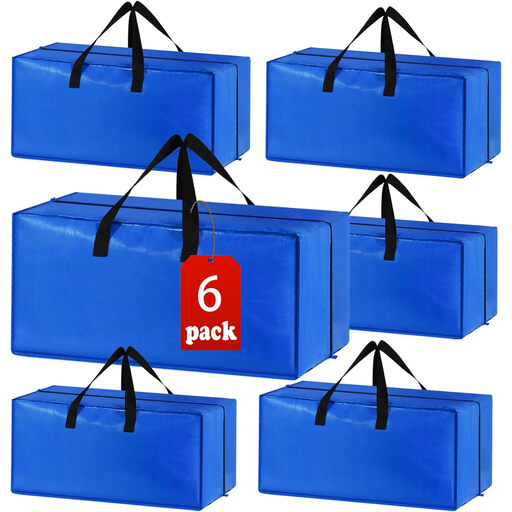
Why this product suits these needs: Measuring 73 × 34 × 37 cm, these bags have handles and a zip, making them suitable for larger textiles, camping gear and moving house.
The product description gives the dimensions, fastening and handles, rather than relying on a vague claim about size.
Generous dimensions; a set of six bags for organised packing.
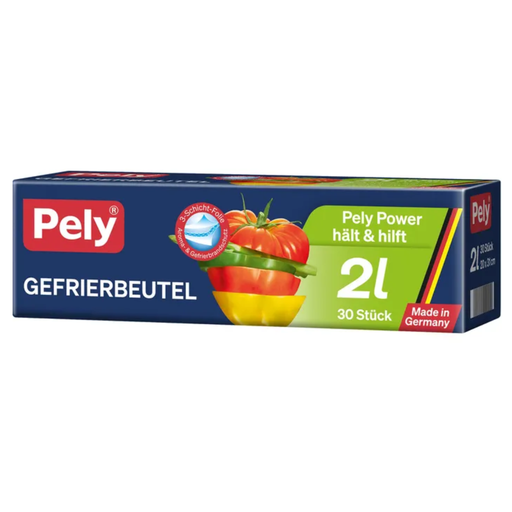
Why this product suits these needs: For families and households that meal prep, 2-litre freezer bags offer space for medium portions, vegetables or baked goods.
Capacity, dimensions, pack size and material are all clearly stated. A labelling area helps you keep track of what’s in the freezer.
30 bags per pack; according to the product details, flexible down to −40 °C.
We’ve put together a complete, regularly updated list of products that meet these strict selection criteria and fully comply with the safety regulations in force in the EU.
Make sure textiles are completely dry before packing them away. Store the bag somewhere dry, away from damp external walls and poorly ventilated areas. Check vacuum bags regularly for leaks and signs of moisture.
Lifespan depends on the material, load, storage location and care. Don’t overfill zips, drag bags over sharp edges or leave damaged seams unrepaired. Freezer bags are generally single-use products and should be thrown away if damaged or after use.
Moving bags are handy for clothes, bedding and soft items because they’re flexible and have handles. Sturdy boxes are usually better for books, crockery and heavy or angular items. Choose according to the weight and shape of what you’re packing.