
Lieferung heute & morgen

Qualitätsgarantie

Willkommens-Angebote freischalten: KOSTENLOSE Lieferung | Bis zu 80 % RABATT | Kostenlose 30-Tage-JoyPlus-Testphase
App herunterladen
Whether you live in a small city flat, a family home or are travelling, storage bags and household bags have a wide range of uses. Vacuum storage bags help you store clothes compactly, freezer bags protect food, and refuse sacks make everyday waste disposal more hygienic. But if you focus only on a low price per bag or bold marketing claims, you can easily end up buying something that doesn’t meet your needs.
The capacity in litres printed on a bag tells you little about whether it will fit in your cupboard, freezer or bin. Refuse sacks need to be the right width and height for your bin. For example, a 60-litre bag may suit a medium-sized bin, while a 5-litre bag is more likely to be intended for a small office or bathroom bin.
Shape also matters with freezer bags. A 1-litre freezer bag is suitable for individual portions. For soups, sauces or larger quantities, a 3-litre freezer bag with a gusseted base may be more practical.
A simple press seal isn’t automatically suitable for every use. For airtight storage, look for a sturdy seal, a suitable valve or a double zip. With vacuum storage bags, it’s also important to check whether the air is removed with a pump or a vacuum cleaner hose.
“Waterproof” shouldn’t automatically be taken to mean completely leakproof. Damage from sharp objects, overfilling or a seal that hasn’t been closed properly can affect how well the bag protects its contents.
Depending on their material and seal, vacuum bags can be used more than once. To keep them in good condition, they need to be clean and dry, and kept away from sharp edges. A bag designed for clothes isn’t automatically suitable for food. Likewise, resealable bags should only be used for food if the manufacturer explicitly states that they’re suitable for this purpose.
Sturdy PE or multi-layer plastic materials are commonly used for clothes and bedding. A double-zip seal can make bags easier to use, while vacuum bags need a valve for use with a pump or vacuum cleaner. For freezer bags, check details such as BPA-free status, temperature range and suitability for food contact.
For refuse sacks, the material thickness, dimensions and intended use should all be a good match. A drawstring refuse sack is easier to close and carry once it’s full. However, it isn’t suitable for hot, smouldering or sharp objects.
Don’t just compare pack sizes: check the price per bag and the usable space inside. For space-saving clothes storage, different sizes can come in handy:
Before sealing, portion food where possible, label it and remove any excess air. When filling bags with liquid foods, keep them stable. Plastic bags should always be kept out of reach of babies and young children, as they pose a suffocation risk.
Compostable food waste bags are available for organic waste. However, whether they’re accepted in your food waste bin depends on your local waste disposal rules. A “compostable” label doesn’t automatically mean a bag is accepted by every local authority collection service.
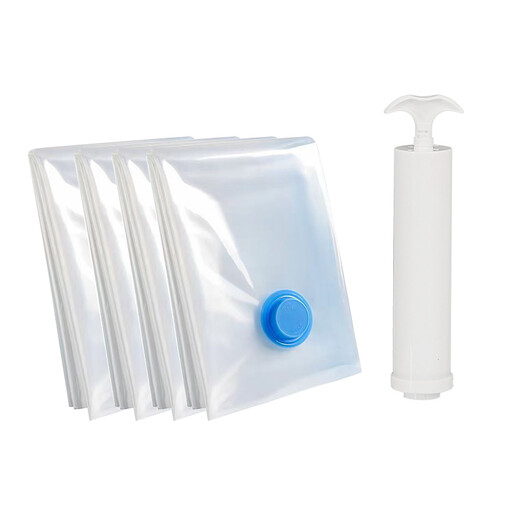
Why this product suits your needs: This set includes five medium-sized vacuum bags and a hand pump. It’s a practical choice if you want to store clothes or textiles more compactly without needing lots of extra accessories.
The pump included in the set makes it clear how to use the bags, unlike bags that require you to find a compatible vacuum cleaner attachment. Be sure to check the dimensions and seal before buying.
Five bags and a hand pump in one set; ideal for medium quantities of textiles and space-saving storage in a wardrobe or under the bed.
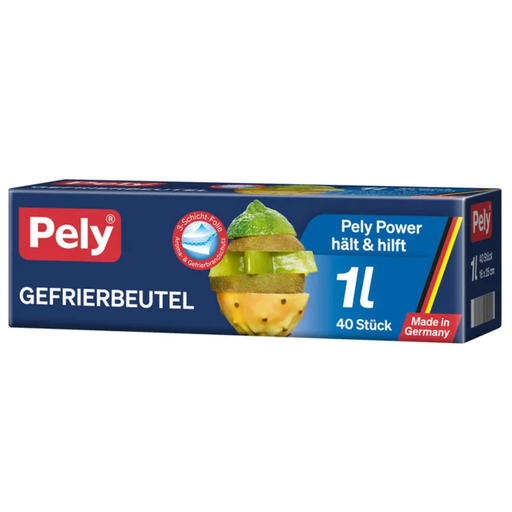
Why this product suits your needs: These 1-litre bags are designed for regular portioning of meat, vegetables, fruit or leftovers, and include a space for labelling.
The capacity, dimensions and material are clearly stated. This reduces the risk of choosing a bag that’s too large or not intended for freezer use.
40 bags with a 1-litre capacity; BPA-free, three-layer film and a temperature rating down to -40 °C, according to the product description.
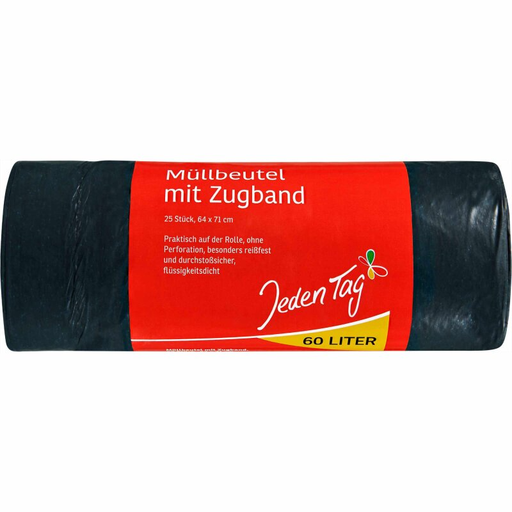
Why this product suits your needs: The 60-litre bags have a drawstring closure and are suited to households, kitchens, offices or outdoor areas with medium-sized bins.
The stated capacity and drawstring make it easier to choose a suitable bag for your bin. However, the bags still aren’t suitable for sharp or hot objects.
30 bags per pack, according to the product details; approximately 64 × 71 cm and designed for bins with a capacity of 60 to 80 litres.
We’ve put together a complete, regularly updated list of products that meet these strict selection criteria and comply with the safety regulations in force in the EU.
Their lifespan depends on the material, how they’re used and their storage conditions. Clean, dry textiles, avoiding overfilling and keeping sharp edges away can help protect the seal and film. If a bag no longer stays airtight, check for tears, dirt around the zip and a correctly positioned valve.
It depends on the pack size, price per bag and how you use them. 1-litre bags are usually better suited to individual portions. 3-litre bags can be worthwhile for larger quantities, if you regularly use their full capacity. The key is to compare the price per bag, rather than just the price of the pack.
Only if the manufacturer explicitly confirms that the bags are suitable for food contact. Vacuum bags designed for clothes are intended for textiles and shouldn’t be used to store food. For frozen food, labelled freezer bags with suitable temperature and material details are the safer choice.