
Lieferung heute & morgen

Qualitätsgarantie

Willkommens-Angebote freischalten: KOSTENLOSE Lieferung | Bis zu 80 % RABATT | Kostenlose 30-Tage-JoyPlus-Testphase
App herunterladen
Storage bags bring order to wardrobes, cellars, student flats and travel luggage. However, it’s not always obvious from the listing whether they’re truly suitable for duvets, clothing, toiletries or camping gear. Large capacities alone aren’t a reliable way to choose.
Three common buying mistakes frequently lead to the wrong purchase:
Measure the space you have before you buy. For underbed storage, the height and the direction of the opening matter most. A bag measuring 100 × 45 × 16 cm, for example, is more likely to fit under low furniture than a taller model intended for duvets.
For bulky textiles such as winter clothing, blankets or bedding, large storage bags with clearly stated volume are a good choice. A 66‑litre bag may be designed for several garments or a single duvet; whether it’s sufficient in your case depends on the filling and how much you compress it. Avoid overfilling, as this puts strain on the seams and zip.
For clothing and bedding, breathable non-woven fabrics can be suitable if the contents are dry and stored in a dry room. The material allows air circulation but doesn’t provide full protection against water ingress.
A waterproof storage bag made from a coated material is a better fit for bathrooms, travel or damp environments. Check whether the product description explicitly says “waterproof” or only “water-resistant”. These terms aren’t the same. For outdoor use, a reinforced base and water-repellent materials can add extra protection against ground moisture.
Storage bags with zips should open fully so you don’t have to force clothing or duvets inside. A front or lid opening makes packing and unpacking easier. Reinforced handles are useful on larger bags, while wheels help with very heavy loads on level ground.
A viewing window cuts down on rummaging. For clothing storage, transparent front or top windows are helpful if several bags are stacked or stored side by side. For travel, smaller compartments and uniform formats usually matter more than maximum volume.
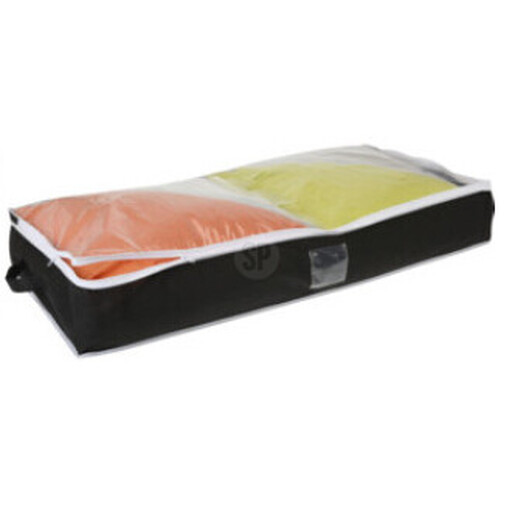
Why this product fits the profile: The clearly stated external dimensions make planning for a wardrobe, shelf or underbed storage easier. The bag is described as suitable for seasonal clothing, bedding, toys and other household items.
The 100 × 45 × 16 cm size helps reduce the risk of buying a bag with unsuitable height. Still, you should measure your storage space before purchasing.
100 × 45 × 16 cm; zip; black, understated design; intended for dry storage according to the product description.
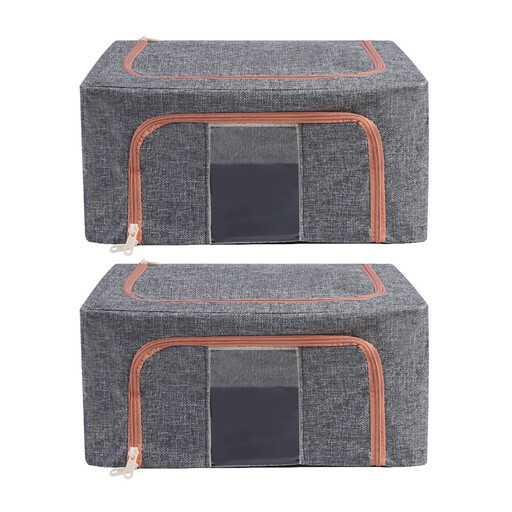
Why this product fits the profile: Two transparent windows plus openings at the front and the top make it easier to check the contents and access seasonal textiles or duvets.
Reinforced handles and the advice not to overload the zip address a common weak point. Also note the discrepancy in the set information: the name mentions two, the description three bags.
66 litres per bag; dimensions 50 × 40 × 33 cm; transparent windows; reinforced handles; front and top access.
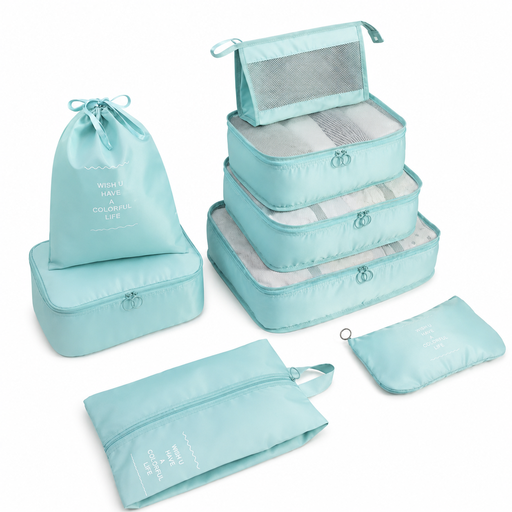
Why this product fits the profile: Eight cube-format pouches suit underwear, clothing and toiletries. The set is designed for dividing up luggage and can also be used in small living spaces.
Individual pouches stop small items from getting jumbled together in one large bag. Nylon and hand-washing match the described care; machine washing isn’t provided for according to the product information.
8-piece set; nylon; cube shape; suitable for clothing, underwear and toiletries; hand wash and air dry.
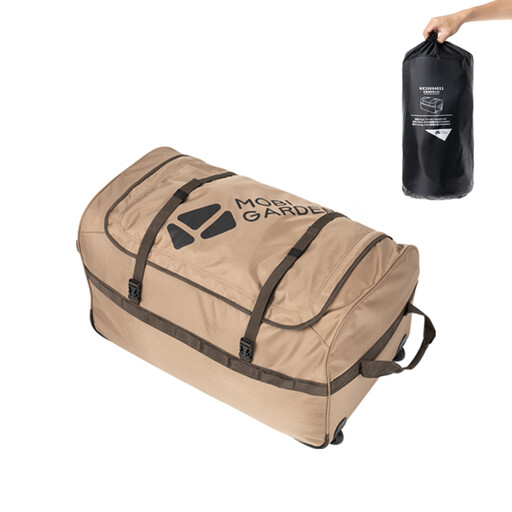
Why this product fits the profile: The foldable design with wheels is aimed at camping, fishing and travel, where lots of kit needs transporting and then storing away compactly afterwards.
The wheels reduce the need to carry the bag on level ground. The care instructions call for wiping rather than prolonged soaking; after use, the bag should be allowed to dry completely.
110 litres; dimensions 70 × 40 × 40 cm; folds down to 42 × 21 cm; integrated wheels; suitable for camping, fishing and travel.
We’ve compiled a complete, continuously updated list of products that fully meet these strict selection criteria and the safety regulations in force in the EU.
For duvets and bulky winter textiles, choose bags with sufficient internal height and a sturdy zip. Bags for storing duvets shouldn’t be overfilled. Measure the folded or compressed duvet and compare those measurements with the bag’s internal dimensions.
That depends on the specific model. A bag explicitly described as waterproof can be useful for damp areas or on the go. However, that doesn’t automatically mean it can sit in puddles for long periods or be fully submerged. For clothing and bedding, a dry storage location is always advisable.
Service life depends on the material, the load, storage conditions and care. Gentle packing, dry storage and a zip that doesn’t snag can extend the lifespan. If you transport bags frequently, also look for reinforced handles, a sturdy base and, for wheeled bags, smooth-running wheels.