
Lieferung heute & morgen

Qualitätsgarantie

Willkommens-Angebote freischalten: KOSTENLOSE Lieferung | Bis zu 80 % RABATT | Kostenlose 30-Tage-JoyPlus-Testphase
App herunterladen
Seasonal clothing, winter duvets and extra pillows take up a lot of room. Storage bags for clothes and duvets can help organise textiles in your wardrobe, under the bed or in the loft. However, materials, fastenings, load capacity and actual storage space can vary considerably.
If you only look at large litre capacities or claims such as “space-saving”, you may overlook important details. Three typical buying and usage pitfalls are particularly relevant:
Not every clothes storage bag is designed for every situation. For duvets and seasonal textiles, roomy zip-up bags are often sufficient. If you want to reduce the space required as much as possible, you could consider vacuum bags or hanging vacuum storage bags. For business trips or formal clothing, however, a garment bag with a hanger and compartments is more practical.
The external dimensions should fit the wardrobe compartment, under-bed storage or shelving. For bulky duvets, for example, bags with a base of approximately 68 × 50 cm and a height of 24 cm are suitable. It is also important to check whether the opening is wide enough and whether the bag can be stacked.
Large garment bags and hanging models have different requirements. Here, you need to consider the length, side width and load capacity of the clothes rail. An overfilled garment bag can be difficult to close or may unnecessarily squash the clothing.
Non-woven textiles such as fleece fabric or non-woven material are lightweight and can allow air circulation. This can be useful when storing clothes and bed linen. Transparent viewing windows or a label make it easier to check the contents without opening the bag completely.
PA/PE composite materials are used for vacuum storage bags. According to the product details, they are designed to be water-repellent or airtight. The zip and valve must close completely. On models with a colour indicator, it is easier to check whether the fastening is sealed.
Clothing and duvets should be completely dry and clean before being stored. The bag does not automatically protect against every environmental influence. In lofts or cellars, you should also pay attention to temperature, humidity and possible pressure marks.
Vacuum bags are not equally suitable for every textile. Delicate fillings or heavily structured garments may lose their shape after prolonged compression. For suits, shirts and dresses, a hanging garment bag with internal fastenings is often preferable to a flat-stored vacuum bag.
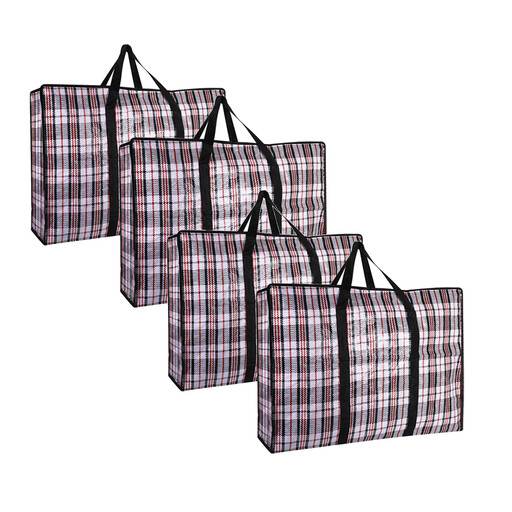
Why this product suits this profile: The four-piece set offers a simple way to organise clothes, duvets and seasonal textiles separately. The stated dimensions are suitable for households that want to use several bags in different storage locations.
The fixed external dimensions make it easier to plan your storage space than with unclear size specifications. Splitting the contents between four bags means that one individual bag does not have to be overfilled.
Four bags per set; dimensions of 68 × 50 × 24 cm; designed for clothes and bedding.
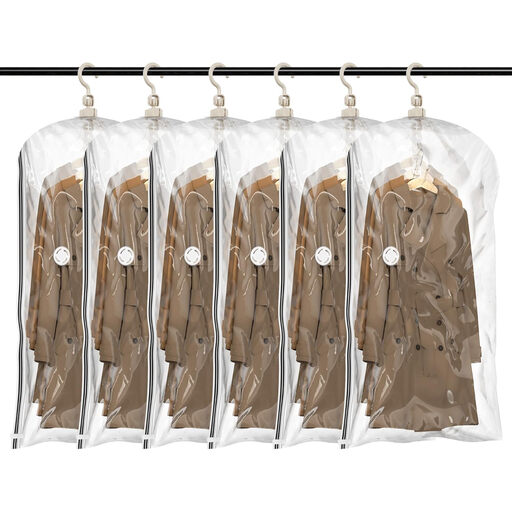
Why this product suits this profile: These bags are designed for suits, jackets and other hanging garments. The PA/PE material, five-ring hook and vacuum valve will appeal to shoppers who value clearly defined technical specifications.
The colour indicator on the zip helps you check that it is properly sealed. The valve is designed for use with a vacuum cleaner; according to the product details, sharp objects and naked flames should be avoided.
Six bags measuring 135 × 70 × 38 cm; five-ring hook; PA/PE material; vacuum valve for use with a vacuum cleaner.
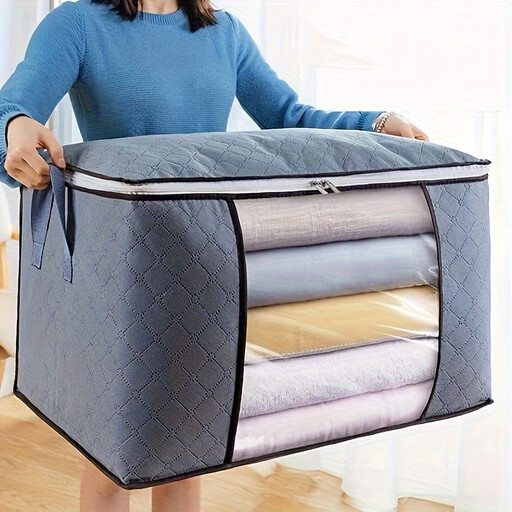
Why this product suits this profile: This bag is designed for large quantities of textiles, such as winter clothes, blankets and duvets. A viewing window and label card make it easier for households to keep items organised over the long term.
The viewing window reduces unnecessary opening and searching. The double zip makes the bag easier to close; however, it should not be filled beyond its intended capacity.
Large capacity; viewing window; double-zip construction; label card; suitable for wardrobes, under-bed storage or lofts.
We have put together a complete, regularly updated list of products that fully meet these strict selection criteria and the safety regulations applicable in the EU.
Duvets should be folded when they are dry and clean. A bag with sufficient height and a wide opening makes them easier to put away. For particularly limited storage space, vacuum storage bags may be suitable. After compression, check the bag regularly for an open fastening or visible damage.
There is no fixed, generally applicable storage period. It depends on the material, type of textile, moisture and storage location. For longer-term storage, textiles should be dry and checked from time to time. Fleece fabric bags may be designed to allow some air circulation; airtight vacuum bags should only contain completely dry textiles.
No. Durable seasonal clothing and many types of bedding can often be stored in compressed form, but delicate or structured garments are not always suitable. Suits, shirts and jackets may be better protected in a garment bag with a hanger, internal straps and separate compartments. The care instructions for the individual textile and the bag manufacturer’s information are the key considerations.