
Lieferung heute & morgen

Qualitätsgarantie

Willkommens-Angebote freischalten: KOSTENLOSE Lieferung | Bis zu 80 % RABATT | Kostenlose 30-Tage-JoyPlus-Testphase
App herunterladen
A storage bench is an intelligent solution for anyone looking to combine functionality and design in their home. Especially in flats where every square foot counts, these pieces of furniture serve a dual purpose: a comfortable seat and valuable, hidden storage. However, the market is flooded with models of widely varying quality. Before you make a decision, it's crucial to understand the typical weaknesses that can quickly turn a practical piece of furniture into a bad buy.
Common Weaknesses of Storage Benches:
To avoid these problems, you should carefully check a few key product features before buying.
A well-considered decision is based on objective criteria, not marketing promises. The following three aspects are crucial for the longevity and functionality of your new storage bench.
Stability is paramount. A reliable storage bench should have a solid underlying structure. Look for the following features:
hallway chest bench or as additional seating in the living room.The upholstery significantly contributes to the look and comfort. At the same time, it must be suitable for everyday use.
For maximum flexibility, especially in small flats or during a move, a foldable storage chest is ideal. These models, often referred to as a collapsible ottoman, can be folded flat when not in use and stored to save space. Compare the dimensions when assembled and when folded to ensure the bench fits perfectly in its intended spot, whether as an end-of-bed bench or as a compact storage stool.
Based on these objective criteria, we have identified several models that are suitable for different needs and interior styles.
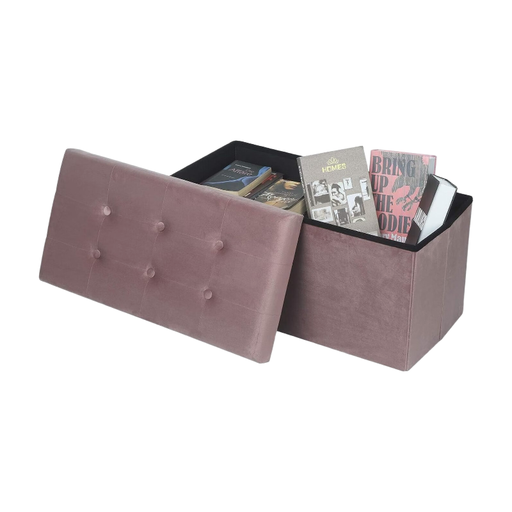
Why it's a good fit: Ideal for those seeking a functional piece of furniture that also serves as a design statement in the bedroom or living room. The velvet cover and colour add an elegant accent.
The frame made of E1-grade MDF boards and the specified static load capacity of 300 kg counteract the risk of a flimsy construction. The pilling-resistant velvet fabric, as stated by the manufacturer, addresses the problem of low-quality covers.
Combines 80 litres of storage with a high load capacity. The foldable design allows for flexible use and easy storage.
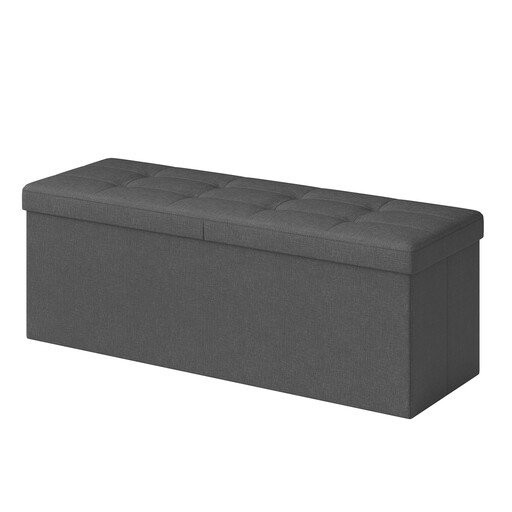
Why it's a good fit: Perfect for families or individuals with significant storage needs. At 110 cm long, it's excellent as an end-of-bed bench or a spacious hallway chest for stowing shoes, blankets, or toys.
The construction from thick MDF boards with metal corner protectors on the lid ensures high stability (up to 300 kg). The large volume of 131 litres is a clear specification that counteracts the problem of misleading capacities.
Very large storage volume (131 L) and a robust, durable construction. The hard-wearing, linen-look cover is easy to maintain.
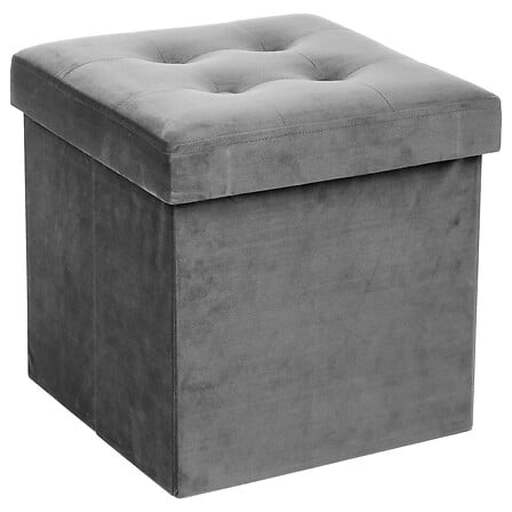
Why it's a good fit: The compact cube shape makes this stool an ideal addition to student rooms, small living rooms, or as a flexible footrest. It provides storage without taking up much space.
Despite its compact size, the construction is based on E1-grade MDF boards, which provides the necessary stability. The foldable design is built for durability, avoiding the typical weaknesses of simple folding mechanisms.
Extremely space-saving due to its foldability and compact dimensions (38x38x38 cm). Versatile as a stool, footrest, or small storage box.
We've compiled a complete, up-to-date list of products that fully meet these strict selection criteria and UK safety regulations.
Assembly is typically very simple and requires no tools. For most models, you just need to unfold the body, insert the base plate for stability, and place the lid on top. The entire process often takes less than a minute.
The load capacity varies greatly depending on the model. It is important to pay attention to the maximum static load capacity specified by the manufacturer. Models with a solid frame made of MDF boards can often support up to 300 kg. However, this value refers to an even, static load. Jumping or point overloading should be avoided.
For cleaning velvet upholstery, it is recommended to use a slightly damp, lint-free cloth. Harsh cleaning agents should be avoided as they can damage the fibres or affect the colour. For stains, it is advisable to gently blot them instead of rubbing. Always follow the specific care instructions provided by the manufacturer.