
Lieferung heute & morgen

Qualitätsgarantie

Willkommens-Angebote freischalten: KOSTENLOSE Lieferung | Bis zu 80 % RABATT | Kostenlose 30-Tage-JoyPlus-Testphase
App herunterladen
A storage bench is a functional solution for many homes. It brings order to the entryway, provides a place to sit while putting on shoes, and often makes use of underutilised space in the bedroom or living room. But not every model lives up to its promise. Many buyers only realise after a few months that the construction is wobbly, the storage is impractical, or the material shows signs of wear and tear quickly.
Before you make a decision, it helps to understand the most common weaknesses found in budget-friendly or poorly designed models:
An informed approach to your selection will help you avoid these problems and find a piece of furniture that serves its purpose for years to come.
To find the right storage bench, you should examine three core aspects. These determine the furniture's durability, functionality, and safety.
The maximum static load capacity is a key indicator of a bench's stability. This value, often given in kilograms (kg), describes the weight the bench can support when at rest. For daily use, where dynamic forces are at play, a solid underlying construction is crucial.
The ideal storage solution depends on your individual needs. Think carefully about what you plan to store.
Measure the available space precisely before you buy. Consider not only the width and depth but also the height, especially if the bench is to be placed under a window or a coat rack.
With an upholstered storage bench, the cover fabric and padding are crucial for comfort and durability. Linen-look fabrics are often hard-wearing and breathable. Velvet covers look elegant but can be more delicate. Padding made from high-density foam retains its shape better and provides comfortable seating.
Here are some models tailored to specific needs and living situations.
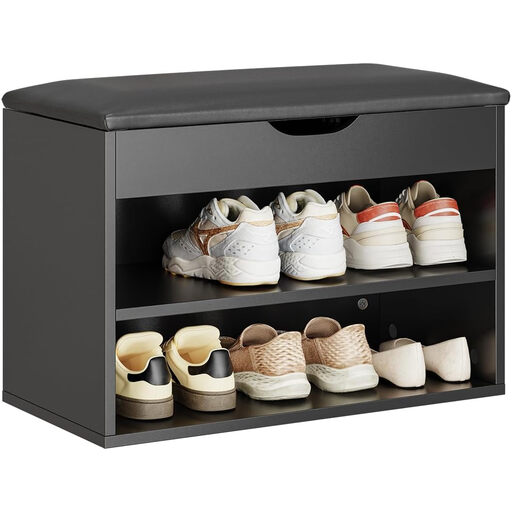
Why it's a great fit: With a width of just 60 cm, this bench is ideal for narrow hallways or small entryways where every centimetre counts. It combines a seat, open shoe storage, and a hidden compartment.
This model solves the problem of impractical storage in a small space by offering three different types of storage: open compartments for everyday shoes and a flip-top compartment for small items like keys or shoe brushes.
The 3-in-1 functionality maximises utility in a minimal footprint. The stated load capacity of up to 113 kg is sufficient for its intended purpose.
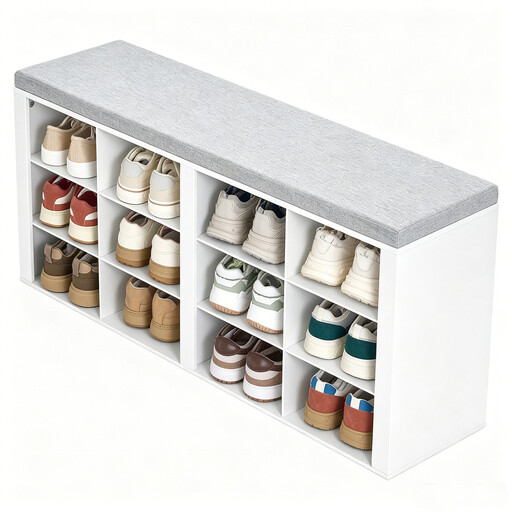
Why it's a great fit: Ideal for families or people with a lot of shoes. With 12 compartments, this bench provides a structured solution to keep the hallway permanently tidy.
This model tackles the problem of impractical storage with adjustable shelves. This allows both flat trainers and taller boots to be stored efficiently. The stated load capacity of 150 kg suggests a stable construction.
The high number of compartments allows for clear organisation. The removable seat cover also makes cleaning easier, which is a bonus in a high-traffic entryway.
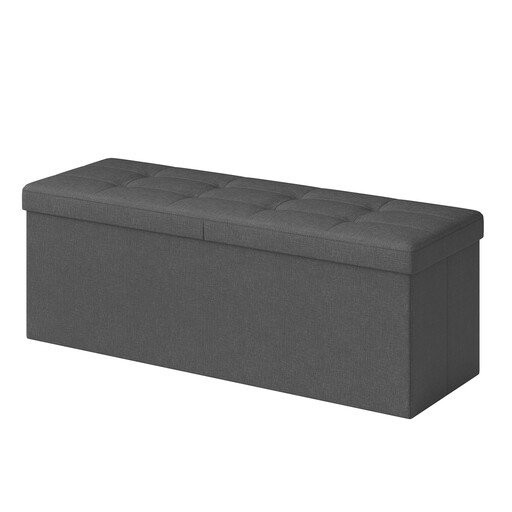
Why it's a great fit: This **storage box with a seat** is a versatile piece of furniture for the living room or bedroom. It serves as a seat, a footrest, or storage for blankets and pillows, and can be folded away to save space when not in use.
This model avoids the instability pitfall by using thick MDF boards and metal reinforcements, which allows for a static load capacity of 300 kg, according to the manufacturer. The durable, linen-look fabric counteracts the problem of low-quality surfaces.
The combination of high storage volume (131 litres), very high load capacity, and a foldable design makes this ottoman bench extremely flexible and durable.
We've compiled a complete, up-to-date list of products that fully meet these strict selection criteria and safety standards.
The load capacity varies greatly depending on the model and material. Compact shoe benches made of particleboard often only support 90-120 kg. Models made of solid wood or high-quality MDF can support a static load of 150 kg to 300 kg. Always check the manufacturer's specifications and remember that the stated load is static. For daily use by adults, a load capacity of at least 120 kg is recommended.
For the hallway, where benches often come into contact with moisture and dirt, robust and low-maintenance materials are ideal. Lacquered bamboo or solid wood are very resilient. Melamine-coated MDF or particleboard also offer good protection against scratches and moisture and are easy to clean. Pure fabric covers are less practical in an entryway unless the cover is removable and washable.
Yes, many upholstered storage ottomans also work well as a coffee table alternative, especially in smaller living rooms. Placing a large tray on the upholstered surface creates a stable top for drinks or decor. Pay attention to a suitable height (usually between 35 and 45 cm) and a sturdy lid construction.