
Lieferung heute & morgen

Qualitätsgarantie

Willkommens-Angebote freischalten: KOSTENLOSE Lieferung | Bis zu 80 % RABATT | Kostenlose 30-Tage-JoyPlus-Testphase
App herunterladen
A storage bench with a seat cushion combines seating with useful storage space. In the living room, it can hold blankets; in the bedroom, it can serve as a bed-end bench; and in the hallway, it keeps shoes, bags and accessories close to hand. But not every storage bench is suited to the same purpose. If you focus only on the design or a high stated weight capacity, you may overlook important details.
This buying guide explains which dimensions, materials and safety information to consider before buying a storage bench, and which models suit different living spaces.
A figure such as 300 kg weight capacity may seem clear-cut at first. However, it often refers to the maximum static load capacity. This means the storage bench must stand on a level surface, the lid must rest fully in place, and the load must not result from jumping, falling or sudden movements.
A folding storage bench with a static load capacity of 300 kg is therefore not automatically suitable as a step or climbing aid. Check the product information and safety instructions before use.
The width, depth and height of a storage chest are measured on the outside. MDF panels, upholstery and reinforcements reduce the usable space inside. A capacity of 131 litres, for example, can be useful for bed linen or folded blankets. For a small hallway, however, a compact storage stool is often more practical.
The opening matters too: an attached or hinged lid makes it easier to access the contents, while a removable lid can offer more flexibility when packing things away.
A folding storage bench saves space when you don’t need it. Before buying, however, check how the base is fitted and whether the construction stands firm once assembled. ‘Folding’ primarily describes how the bench can be stored; it doesn’t automatically mean it’s suitable for being moved every day or left outdoors permanently.
For a bed-end bench or upholstered bench at the foot of your bed, choose a width that suits both the bed and the available floor space. Models measuring 110 cm wide, 38 cm deep and 38 cm high offer a longer seat and are suitable for bedrooms, living rooms and hallways, among other spaces.
A 76 cm-wide model takes up less room. It can be used as a footstool, a compact hallway bench or an extra seat. Before buying, also consider doorway widths, walkways and the distance from radiators.
MDF panels form the supporting structure of many storage benches. They should be sufficiently sturdy and well finished. Metal reinforcements at the corners of the lid can help to improve stability in the areas that bear the greatest load.
For seating comfort, the padding thickness and type of foam used are important. The following JOYFURNOS models, for example, are described as featuring 25D foam with high resilience. This is a technical product specification, not a guarantee of a particular lifespan. Actual durability depends on use, weight, flooring and care.
Only sit on the cushioned top when the lid is fully closed and correctly in place. Don’t put oversized items inside, as they could lift the lid or put strain on the structure.
A removable divider is useful if you want to keep blankets, cushions and books separate. If your storage ottoman has no compartments, boxes or fabric bags can help keep the inside tidy.
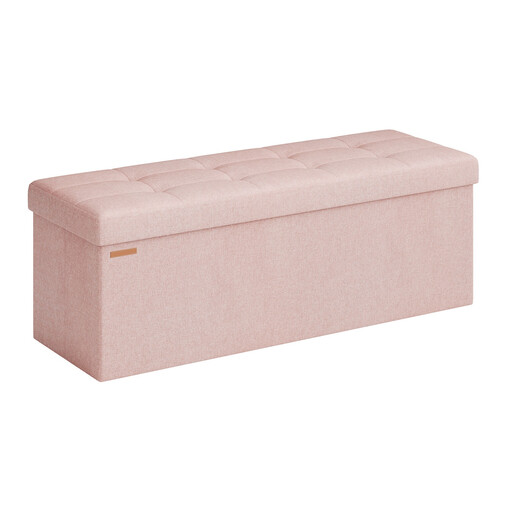
Why it suits this need: At 76 cm wide, this model is suitable for smaller rooms, as a footstool or as an extra seat in the hallway.
The product information gives specific dimensions, a folding design and a maximum static load capacity of 300 kg. Remember that the lid must rest fully in place.
76 cm wide, folds flat, MDF construction and padded lid.
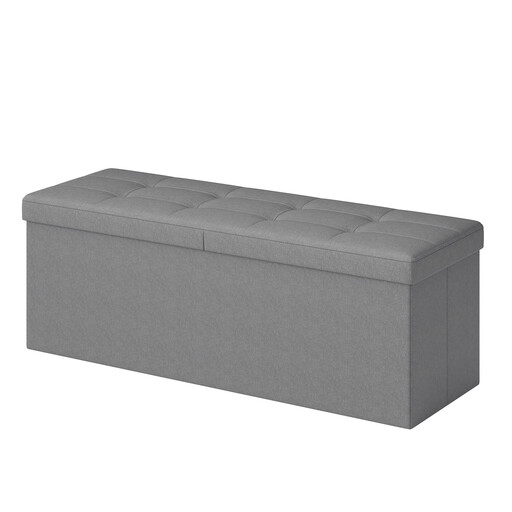
Why it suits this need: This longer bench combines 131 litres of storage with a hinged lid, making it a good fit as a bed-end bench or living room bench.
The product details specify the internal capacity, dimensions and a removable divider. This gives you a better idea of the storage space available than the exterior width alone.
131-litre capacity, 110 cm wide, folding mechanism and maximum static load capacity of 300 kg.
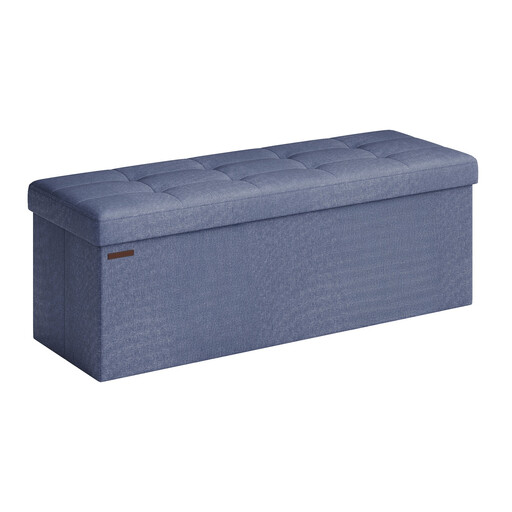
Why it suits this need: This longer model offers more seating space and can be used in the living room as a bench, footrest or occasional table.
The product description specifically says that the lid must cover the top fully and that oversized items should not be placed inside. This makes the intended use clear.
110 cm wide, maximum static load capacity of 300 kg, internal compartment with divider and folds flat for storage.
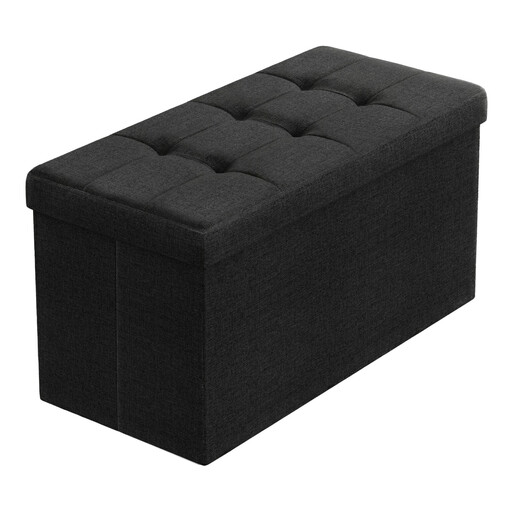
Why it suits this need: This compact stool is ideal for smaller homes, as a footstool beside the sofa or as extra storage in the bedroom.
Its compact dimensions of 76 × 38 × 38 cm make it easy to see how much space it will take up. The 300 kg weight capacity should be understood as a static maximum.
89-litre capacity, folding design, padded lid and can be used as a footstool or storage surface.
We’ve put together a complete, regularly updated list of products that meet these strict selection criteria and fully comply with the safety regulations in force in the EU.
To keep your upholstered bench looking its best for as long as possible, clean the surface regularly with a suitable vacuum cleaner attachment or a soft, dry cloth. Don’t let liquids soak into the fabric. Keep the bench on a level surface and avoid dragging it across the floor.
If you’re putting the storage bench away, empty it completely, fold it down and store it somewhere dry. Place heavy items on the bottom of the storage compartment rather than in the lid area.
For the models mentioned, the frame is typically unfolded and stabilised by inserting a base panel. Before using it for the first time, make sure all the sides are fully unfolded and the lid is correctly in place. Always follow the illustrated assembly instructions for the specific product.
There’s no single answer. Its lifespan depends on factors including daily use, the load it bears, the surface it stands on, moisture and how well it’s cared for. MDF panels, reinforced lid corners and shape-retaining foam are features you can check, but they don’t replace proper use.
No. For the products mentioned, this figure refers to the maximum static load capacity. Don’t use the storage bench as a ladder, step or platform to jump on. The lid must rest fully in place, and the bench must stand on a level surface.