
Lieferung heute & morgen

Qualitätsgarantie

Willkommens-Angebote freischalten: KOSTENLOSE Lieferung | Bis zu 80 % RABATT | Kostenlose 30-Tage-JoyPlus-Testphase
App herunterladen
Living space is often limited, but the desire for a tidy yet stylish environment remains. A storage bench is a functional solution to this common problem. It combines extra seating with discreet storage space, blending harmoniously as a piece of furniture into various living areas.
This article serves as your guide. We'll highlight key features to consider when making your choice and present a selection of models that stand out for their specific qualities. Our goal is to provide you with an informed basis for choosing the right storage bench for your home.
Before you make a decision, a few practical considerations can be helpful. The following points will help you find the perfect model for your needs.
The material determines not only the durability but also the visual impact of the furniture.
Measure the intended space carefully to ensure the bench fits without overcrowding the room. Consider not only the width and depth but also the height. For example, a lower end-of-bed bench should not be taller than the mattress.
The internal volume is crucial for its practical use. Think about what you want to store—cushions and blankets require more space than shoes or magazines. The manufacturer's specifications for volume in litres or the internal dimensions will provide this information.
Stability is a key quality feature, especially if the bench will be used regularly for seating.
Here is a selection of models that cater to different needs regarding size, material, and functionality.
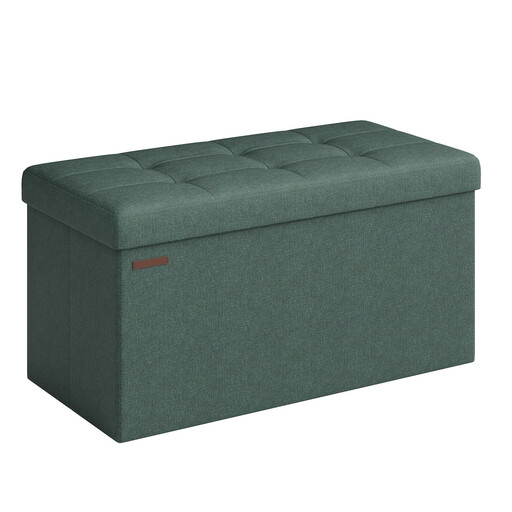
What makes it stand out: This model combines a compact design with high functionality. The linen-effect surface with tufted details gives it an appealing aesthetic. A special feature is its high static load capacity of up to 300 kg, which, according to the manufacturer, is achieved through sturdy MDF boards and metal corner reinforcements on the lid. Additionally, the storage chest is foldable and can be stored to save space when not in use.
Pros:
Who is it for: Ideal for those looking for a flexible and sturdy solution for smaller rooms, hallways, or a child's room. Its high load capacity makes it a reliable extra seat.
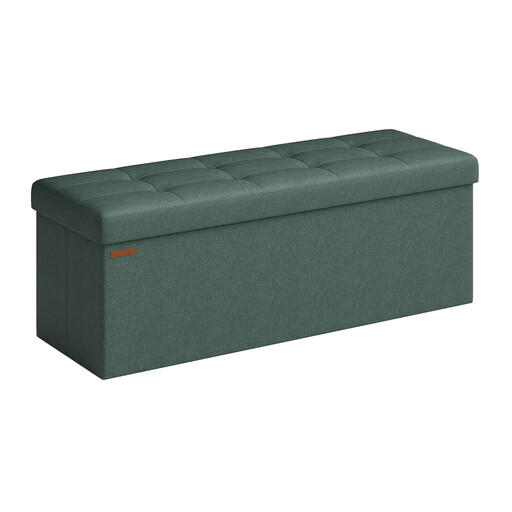
What makes it stand out: With a width of 110 cm, this storage bench for the bedroom or living room offers exceptionally generous storage volume. It is perfect as an end-of-bed bench for storing bedding, blankets, and pillows. Despite its size, it retains the practical features of the smaller model: a sturdy construction with a static load capacity of up to 300 kg (manufacturer's specification) and a foldable body.
Pros:
Who is it for: Perfect for anyone who needs maximum storage space and is looking for a longer bench for the foot of the bed or along a large wall in the living room.
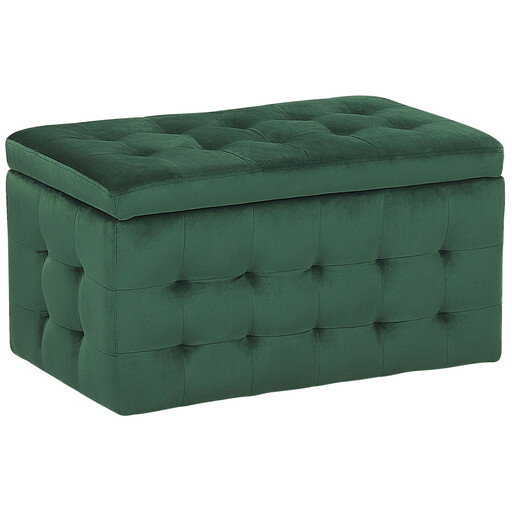
What makes it stand out: This storage ottoman boasts a glamorous look. The dark green velvet cover and decorative stitching make it a stylish eye-catcher. Unlike the foldable models, it features a solid wood construction and comes fully assembled. With a maximum load capacity of 120 kg, it is designed as a seat for one person or as an elegant accent piece.
Pros:
Who is it for: For design lovers seeking a decorative piece of furniture with added functionality. It fits well in dressing rooms, bedrooms, or living rooms where style and ambiance are a priority.
Green is a versatile colour, but perhaps another shade or material would better suit your decor. If you want to explore more models and colour options, you'll find a wider selection in our seating category.
Discover more green seating furniture
1. How much weight can a storage bench support? The load capacity varies significantly depending on the model and construction. Simple models or a small upholstered storage stool are often designed for around 100–150 kg. Sturdy versions with a reinforced frame made of MDF or wood, like the featured Ochama models, can have a static load capacity of up to 300 kg. It is important to always check the specific manufacturer's details to ensure safe use.
2. How do I clean an upholstered storage bench? The cleaning method depends on the cover material. For linen-effect fabrics, vacuuming with an upholstery nozzle is often sufficient. Light stains can usually be treated with a damp cloth and a mild soap solution. Be more careful with velvet covers. Gentle brushing in one direction or using special upholstery cleaners for velvet fabrics is recommended to avoid damaging the fabric's texture.