
Lieferung heute & morgen

Qualitätsgarantie

Willkommens-Angebote freischalten: KOSTENLOSE Lieferung | Bis zu 80 % RABATT | Kostenlose 30-Tage-JoyPlus-Testphase
App herunterladen
A storage bench combines a place to sit with extra storage. It can hold shoes in the hallway, keep blankets tucked away at the end of your bed or serve as a footrest in the living room. However, not every model is right for every purpose. Claims such as ‘extra sturdy’, ‘generous’ or ‘space-saving’ are only useful when you can check the dimensions, weight capacity and construction for yourself.
A storage bench for the hallway needs to leave enough room to move around. Before buying, measure not just the length but also the depth, height and lid clearance. A 110 cm-long storage bench might work well at the end of your bed, but could obstruct the passage in a narrow entrance hall.
Remember to take skirting boards, radiators, wardrobe doors and the distance from other furniture into account. For a hallway or shoe bench, a shallower design is often more important than maximising the internal storage space.
A maximum weight capacity of, for example, 300 kg does not automatically mean the bench is suitable for every type of use. Check whether the figure refers to static weight capacity and whether the lid needs to be fully closed. Several people sitting on the bench, sudden movements or standing on it will put it under different strain from someone sitting quietly.
Always follow the safety instructions for the product. A bench is generally designed for sitting on, not for use as a step or ladder.
An upholstered bench may feel comfortable, but that doesn’t necessarily mean it has a sturdy lid construction. Conversely, a simple storage bench may offer plenty of space without the level of comfort you’re looking for. Check the upholstery material, frame, hinges, lid support and internal capacity.
If you have children, keep small parts safely stored during assembly and take care when using a moving lid.
Compact models can work well in a hallway, provided they have enough room for your shoes and accessories. Longer designs are practical in the bedroom if you want to store bed linen, pillows or blankets. A bench for the living room or hallway should suit your existing furniture and leave enough space for people to pass.
Compare the external dimensions and the actual storage space separately. In foldable models, internal walls, lid supports and reinforcements can reduce the usable capacity.
For fabric-covered benches, terms such as velour, linen-look and imitation linen describe the material; they don’t guarantee durability. For everyday use, look for a sturdy MDF or wooden frame, reinforced corners and upholstery that holds its shape.
Wood or bamboo surfaces often suit natural interior styles and need different care from fabric upholstery. Fabric models should be vacuumed regularly, and stains should be spot-cleaned according to the care instructions.
Many storage benches are delivered flat-packed or folded. Check whether you need to attach the legs or simply fit a base. Once assembled, all screws should be secure and the bench should stand on a level surface.
There are a few practical rules to follow when using a storage bench:
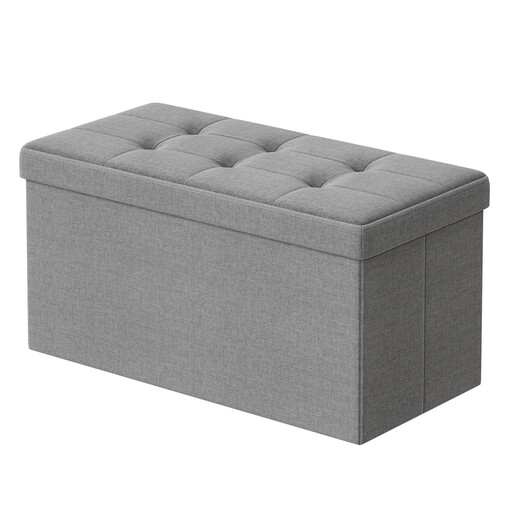
Why this product suits these needs: This compact storage bench is ideal for smaller hallways, bedrooms or living rooms. It offers a stated capacity of 89 litres and can be assembled in just a few simple steps.
The dimensions of 38 x 76 x 38 cm and stated weight capacity of up to 300 kg give you a clearer basis for making a decision than vague size descriptions.
MDF frame, metal corner reinforcements, removable lid and foldable storage.
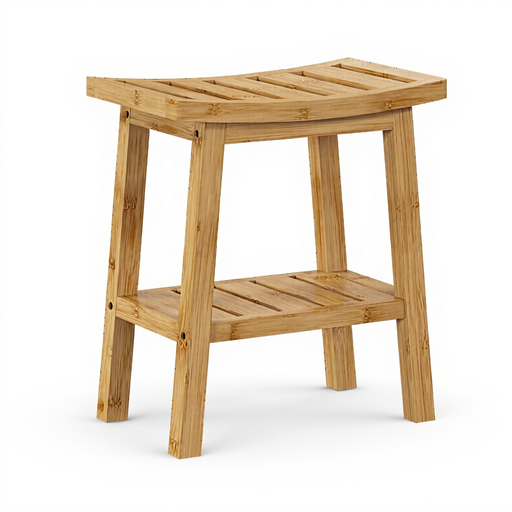
Why this product suits these needs: This bamboo design is made for households looking for a sturdy storage bench with a natural finish for the hallway, entrance or living room.
It’s described as a bamboo bench with a hinged lid and integrated storage compartment, making the material and storage features clear.
Bamboo surface, concealed storage and space for shoes, scarves, hats or toys.
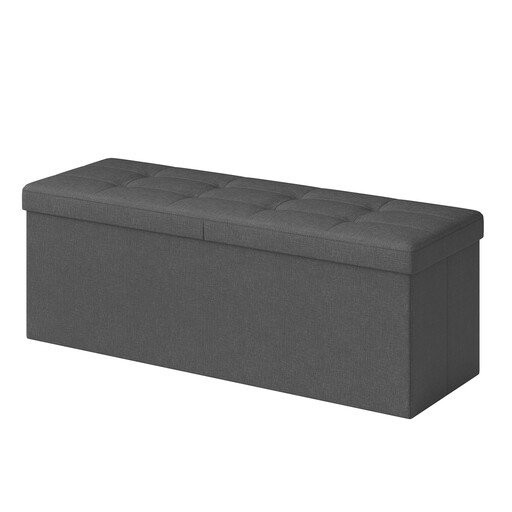
Why this product suits these needs: This long bench for the bedroom, living room or hallway offers a stated capacity of 131 litres and a foldable design, making it a good fit for households whose space needs change.
The external dimensions, MDF construction with linen-look fabric and maximum static weight capacity of 300 kg are all clearly stated.
131 litres of storage, foam padding, metal corner reinforcements and compact storage when not in use.
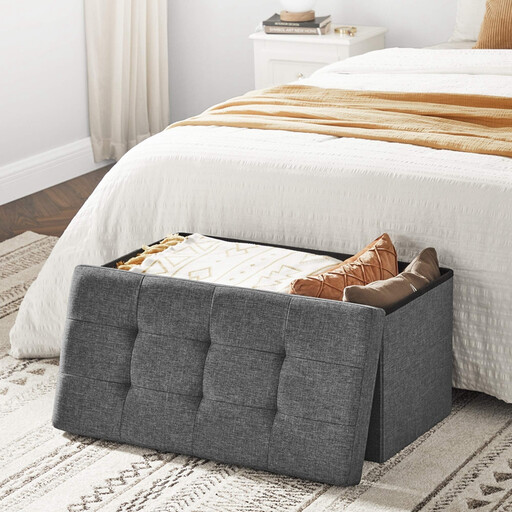
Why this product suits these needs: This model combines a seat with a stated internal capacity of 80 litres, making it suitable for shoes, toys, magazines or blankets.
The removable lid makes it easy to reach the contents, while the foldable design makes the bench easier to put away when not in use.
MDF frame, high-density foam, imitation linen cover and a stated static weight capacity of 300 kg.
We’ve put together a complete, regularly updated list of products that meet these strict selection criteria and fully comply with the safety regulations in force in the EU.
It depends on what you plan to store. A compact compartment may be enough for shoes and small accessories. If you want to store bed linen, pillows or several blankets, models with a stated capacity of around 80 to 131 litres are more practical. Check whether the figure refers to the internal capacity or is a general product specification.
Start by measuring the available depth and the remaining walkway width. A shorter storage bench around 76 cm long may be a better fit for a small entrance than a 110 cm-long model. You should also be able to open the lid without blocking doors or walkways.
There’s no reliable way to give a single lifespan. It depends on how the bench is used, the weight placed on it, exposure to moisture, how it’s cared for and the quality of its construction. Placing it on a level surface, staying within the weight limit and regularly checking the screws and connections can help keep it safe to use.