
Lieferung heute & morgen

Qualitätsgarantie
App herunterladen
Kategorien
A storage bench combines two essential furniture functions: it provides extra seating while also offering concealed storage space. These multifunctional pieces, often called storage ottomans or upholstered storage stools, are designed to optimise living spaces. They are particularly well-suited for areas like the hallway, bedroom, or living room, where both organisation and flexibility are key. Choosing the right model depends on specific requirements for material, size, and durability.
The decision for a suitable storage box with seating should be based on objective parameters. The following criteria are relevant for making an informed choice.
The structural integrity of a storage bench is largely determined by its core material. MDF (Medium Density Fibreboard) is frequently used, offering high dimensional stability and uniform density. The maximum load capacity, specified in kilograms (kg), is a crucial indicator of the construction's robustness. Pay close attention to this value in the product specifications, especially if the bench will be regularly used as seating for multiple people.
The upholstery fabric defines the piece's feel and visual appeal. Common materials include:
Measure the intended space precisely to ensure the furniture will fit. Product dimensions are usually given in Length x Width x Height (L x W x H) format. The usable storage volume, often specified in litres (L), indicates how many items (e.g., blankets, cushions, books) can be accommodated. A larger volume is advantageous for effectively reducing clutter.
Some models are foldable. This feature allows the bench to be stored in a space-saving manner when not in use, for example, under a bed or in a wardrobe. This is particularly beneficial in smaller flats or for temporary needs. Depending on its shape and size, the piece can serve various functions: a long bed bench is suitable for the foot of a bed, while a compact storage stool or a storage pouffe can flexibly serve as a footrest or side table.
Based on an analysis of product specifications and functional design, here are a few models we're highlighting.
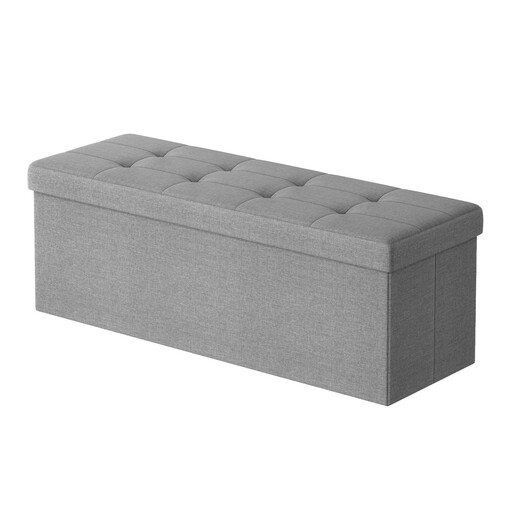
Why we recommend this product: This model combines a considerable length of 110 cm with a high load capacity and a large storage volume. The MDF construction and the metal-reinforced corners of the lid suggest a durable structure.
Advantages:
Who it's for: Individuals and families looking for a robust and spacious solution for the hallway, living room, or as an end-of-bed bench in the bedroom. Its high load capacity makes it a fully functional seating option for multiple people.
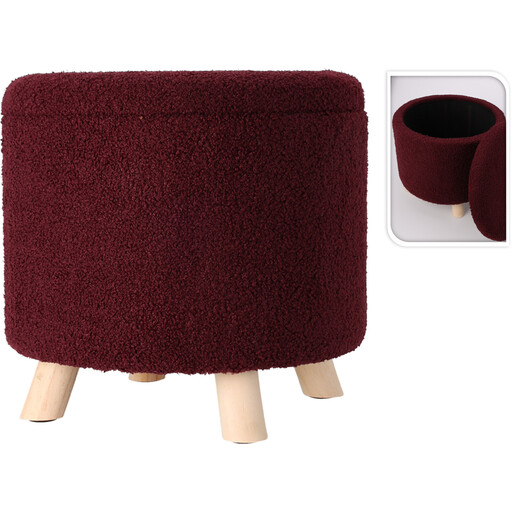
Why we recommend this product: This storage stool stands out with its teddy fabric upholstery and compact, rectangular shape. It serves as a functional accent piece, offering both comfort and storage in one.
Advantages:
Who it's for: Users looking for a stylish and compact piece of furniture for the living room or bedroom. Ideal as a complement to existing decor to add a pop of colour while helping to keep things tidy.
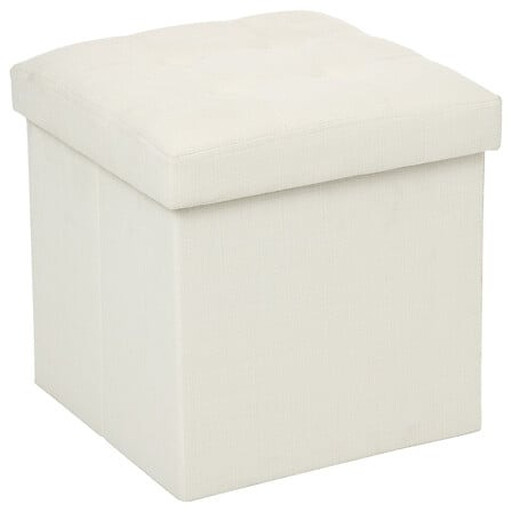
Why we recommend this product: This model is an extremely flexible and space-saving solution. Its square shape, low weight, and foldability make it a highly adaptable storage pouffe.
Advantages:
Who it's for: Ideal for those in smaller flats, students, or anyone needing a flexible, easily transportable seating and storage option. It works well as a single seat or footstool.
If the models presented here don't exactly match your requirements for size, material, or design, a broader selection often holds the right solution. You can find an overview of more models in our Living Room Ottomans category.
1. What is the typical load capacity of a storage bench? The load capacity varies greatly depending on the model and construction. Smaller, foldable stools are often designed for a weight of around 100–150 kg. Larger, more robust benches, especially those with reinforced frames, can have a static load capacity of 300 kg or more. It is essential to check the specific manufacturer's specifications.
2. Can a storage ottoman also be used as a coffee table? Yes, many models with a flat, sturdy lid can serve as a makeshift coffee table. They are well-suited for placing trays, books, or remote controls. However, for padded or tufted lids, the stability for glasses or cups is limited.
3. How do you clean a fabric-upholstered storage bench? For general maintenance, it is usually sufficient to regularly vacuum the surface with a soft brush or an upholstery attachment. For light stains, a slightly damp cloth can be used. For tougher stains, the manufacturer's cleaning instructions should be followed to avoid damaging the material.