
Lieferung heute & morgen

Qualitätsgarantie
App herunterladen
Kategorien
A storage bench is a multifunctional piece of furniture that addresses two fundamental household needs: the necessity for seating and the demand for efficient storage. Especially in urban apartments or when optimising space, such a bench offers a practical solution. It can function as a storage chest in the living room, an entryway bench with storage for shoes and accessories, or as an end-of-bed bench. Selecting the right model depends on specific requirements for material, size, and load capacity.
The decision to purchase a chest bench should be based on an analysis of its technical specifications. The following criteria are relevant for making an informed choice.
The choice of material impacts the furniture's longevity, load capacity, and maintenance.
Before purchasing, measure your available space precisely. Consider not only the bench's width, depth, and height, but also the clearance needed to open the lid or pull out baskets.
The storage volume, often specified in litres (L), provides a quantifiable measure of its capacity. For example, a bench with an 80-litre volume can hold several blankets or pillows, while a shoe bench with compartments or baskets is designed for the organised storage of footwear.
The maximum static load capacity is a critical safety specification provided by the manufacturer. It indicates how much weight the bench can support when stationary. This value is essential for its function as a seat. Models for the hallway or living room often have a load capacity between 120 kg and 300 kg. It is crucial not to exceed this limit to ensure the furniture's structural integrity.
Functional requirements vary depending on the intended use:
Based on an analysis of product specifications and functionality, we present three models that cater to different user profiles.
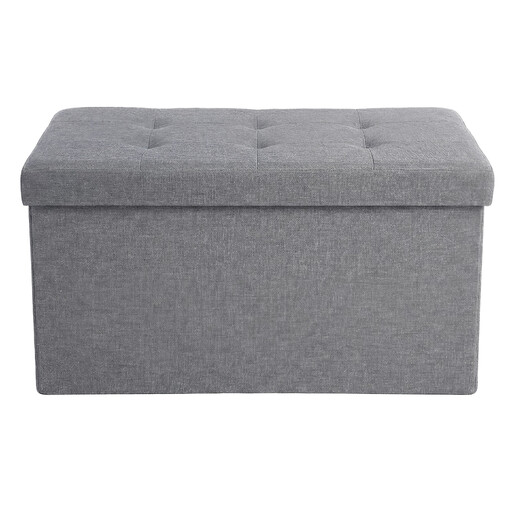
Why we recommend this product: This model combines high functionality with a subtle aesthetic. According to the manufacturer, its MDF board construction allows for a remarkable static load capacity of up to 300 kg. The foldable design makes the bench versatile and easy to store. At 89 litres, it offers substantial storage volume for its compact dimensions.
Pros:
Who it's for: This model is suitable for users seeking a versatile solution for their living room or bedroom. Its high load capacity and foldable design appeal to those who value both stability and flexibility.
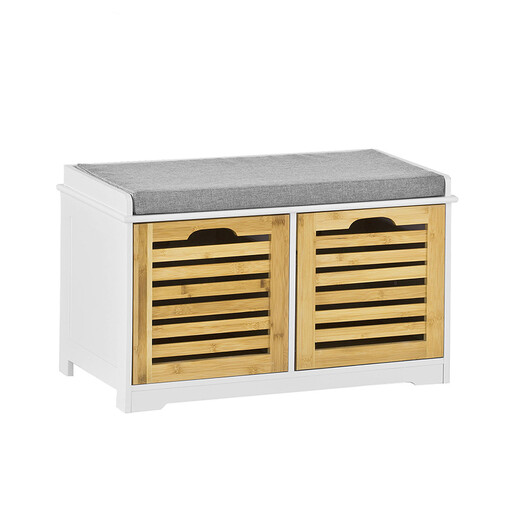
Why we recommend this product: This shoe bench is specifically designed for use in an entryway. The combination of a lacquered MDF frame and bamboo elements offers an appealing look. The two removable baskets provide organised storage for smaller items, while the open compartment offers space for shoes. The included seat cushion enhances comfort when putting on or taking off shoes.
Pros:
Who it's for: Ideal for individuals and families looking for a dedicated and visually appealing solution to organise their hallway. Its compact 71 cm width fits well in most entryways.
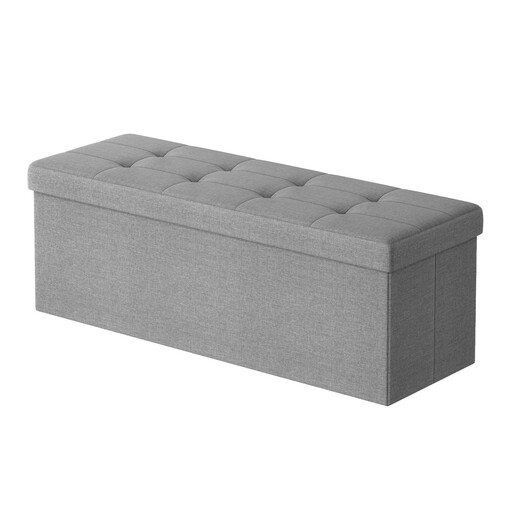
Why we recommend this product: With a width of 110 cm and a storage volume of 131 litres, this storage chest offers a generous solution for both storage and seating. It shares the sturdy construction and high 300 kg load capacity of the smaller model, but its larger size makes it an excellent end-of-bed bench for storing bedding or a long seating option in the living room.
Pros:
Who it's for: This model is the right choice for users with more space who require maximum storage. It functions effectively as an end-of-bed bench in spacious bedrooms or as a central piece of furniture in living areas.
The models presented cover specific use cases. If your requirements for size, material, or design differ, exploring a wider selection may be helpful. Discover more models in our Hallway Storage Bench with Seat category to find the perfect solution for your individual needs.
1. How much weight can a storage bench hold? The maximum static load capacity varies significantly depending on the model and construction. Compact, single-person models are often rated for 120 kg to 150 kg. More robustly constructed benches, especially those made of MDF with internal reinforcement, can have a load capacity of up to 300 kg. It is essential to check and adhere to the specific manufacturer's specifications.
2. What is the best material for an entryway storage bench? Durable and low-maintenance materials are best for the hallway. Lacquered MDF boards or solid wood like bamboo are resistant to daily wear and tear. A removable and washable seat cushion is also advantageous, as entryways are more prone to dirt. Open compartments or easy-to-clean baskets are practical for storing shoes.