
Lieferung heute & morgen

Qualitätsgarantie
App herunterladen
Kategorien
A storage bench is a multifunctional piece of furniture that addresses two key needs in modern living spaces: providing extra seating and creating concealed storage. These pieces optimise space in areas like the hallway, bedroom, or living room. Selecting the right model depends on a careful analysis of material, construction, load capacity, and dimensions.
Your decision should be based on objective criteria that meet your individual requirements for functionality and durability.
The stability of a storage chest is primarily determined by its frame material. MDF (Medium-Density Fibreboard) is commonly used, offering excellent structural integrity and a smooth surface ideal for various finishes. Models with a solid wood frame, such as rubberwood, are distinguished by their superior durability and natural aesthetic. For foldable models, the design of the base plate and lid reinforcements is crucial for overall stability.
The upholstery fabric affects both the texture and maintenance requirements.
The maximum static load capacity, specified in kilograms (kg), is a key indicator of the furniture's stability and safety. This value indicates the weight the bench can support when stationary. Models for everyday use should have a load capacity of at least 120 kg. Products with a 300 kg capacity offer enhanced stability and can be used by two people simultaneously. The load capacity is influenced by the thickness of the frame material, the construction method, and any reinforcements like metal corners.
Before purchasing, it is essential to accurately measure the available space where the bench will be placed. Compare these measurements with the product's dimensions (Length x Width x Height). The storage volume, often specified in litres (L), quantifies the available interior space. A volume of 80 litres or more provides ample room for blankets, cushions, books, or shoes. For use as a shoe bench in an entryway, models with a lower height are often more practical.
The following models have been selected based on their technical specifications and functional features.
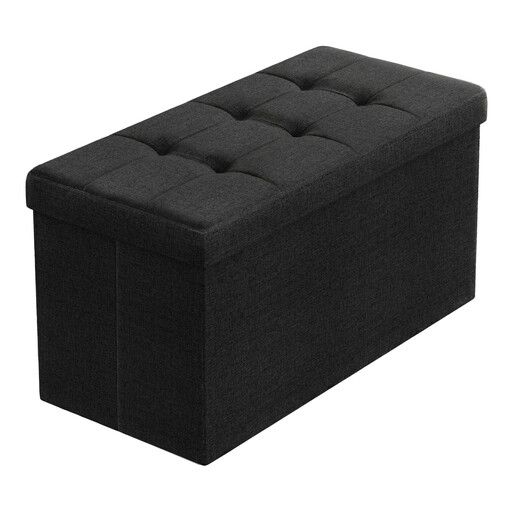
Why we recommend this product: This model combines a very high load capacity with a flexible, foldable design. Its sturdy MDF construction is further reinforced with metal corner protectors on the lid, enhancing its longevity. At 89 litres, this storage ottoman offers a generous volume.
Pros:
Best for: Individuals seeking an extremely robust and flexible storage solution. Ideal for living rooms or as an end-of-bed bench in the bedroom, where both high load capacity and the option for quick storage are valued.
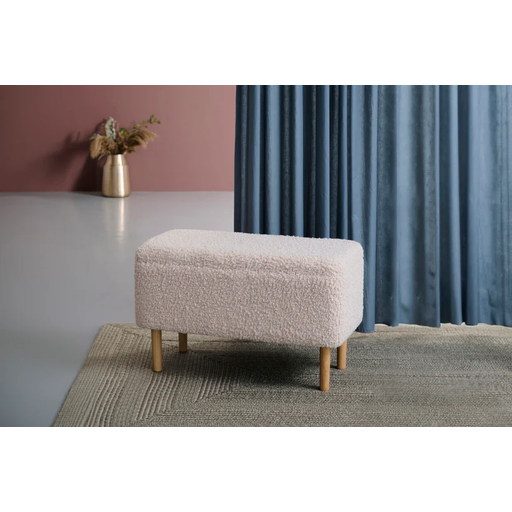
Why we recommend this product: This upholstered storage bench is designed as a stationary piece of furniture, making it ideal for permanent use thanks to its stable construction of MDF and rubberwood. The 46 cm seat height is standard for comfortable seating. According to the manufacturer, the wood used is FSC-certified.
Pros:
Best for: Users looking for a permanent hallway bench with storage or an addition to their living room or bedroom. The focus here is on the appearance of a permanent piece of furniture rather than flexibility.
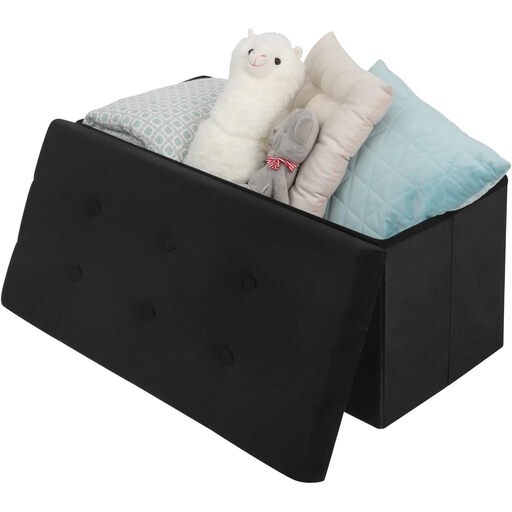
Why we recommend this product: The Woltu model combines a high static load capacity of 300 kg and a foldable design with a visually appealing velvet cover. The construction from E1-grade MDF panels ensures stability, while the high-density foam provides a comfortable seating surface.
Pros:
Best for: Users who value a combination of high functionality (load capacity, foldability) and a sophisticated aesthetic. It is well-suited for living and sleeping areas where the furniture also serves as a design feature.
If the models presented do not exactly match your requirements for size, material, or design, you can find a wider selection of solutions in our Living Room Storage Bench category. There, you can filter products by specific criteria to identify the perfect piece of furniture for your home.
1. How much weight can a storage bench hold? The load capacity varies depending on the model and construction. Basic models often have a maximum static load capacity of around 120–150 kg. More robustly constructed benches, especially those with reinforced MDF panels or solid wood elements, can support up to 300 kg. This value is listed in the manufacturer's technical specifications.
2. What materials are storage chests made of? The body of a storage chest is usually made of MDF panels or, less commonly, solid wood. The padding is typically made from foam. Various textiles are used for the upholstery, such as linen-look polyester, velvet, or faux leather, which differ in their texture, appearance, and ease of maintenance.
3. Can a storage bench also be used as a shoe bench? Yes, many models are well-suited for use as a shoe bench in an entryway. Look for an appropriate seat height (approx. 45 cm) for comfortably putting on and taking off shoes, as well as a durable and easy-to-clean cover. The internal storage compartment is ideal for stowing away shoes, accessories, or shoe care products.