
Lieferung heute & morgen

Qualitätsgarantie

Willkommens-Angebote freischalten: KOSTENLOSE Lieferung | Bis zu 80 % RABATT | Kostenlose 30-Tage-JoyPlus-Testphase
App herunterladen
A storage bench with storage space combines seating with an organisational solution. It can hold shoes in the hallway, store bedding in the bedroom, or serve as a footstool and side table in the living room. However, attractive product images and sweeping promises don't automatically lead to the right storage chest. What really counts are the dimensions, weight capacity, internal volume and construction.
A wide chest bench can look roomy from the outside, while padding, reinforcements or a thick lid reduce the interior space. Before buying, you should therefore check not only the width and height, but also the internal dimensions or the stated volume. A large compartment works well for blankets and cushions; smaller everyday items, on the other hand, are often easier to organise in drawers or separate compartments.
The maximum static load capacity can refer to the entire construction, the lid or the surface. It is not automatically the same as a recommended continuous load. Look for specific information from the manufacturer and check whether the lid sits fully flush. With a storage chest used for seating, children should not climb on or hang from the furniture.
A foldable storage box can be stored away to save space, but when assembled it needs sufficiently sturdy side and base panels. For frequent sitting, details on material, reinforcements, lid construction and maximum static load are more important than the folded size alone. Also check whether the base board must be fully inserted.
Measure the available floor space, including door openings, walkways and adjacent furniture. For the hallway, a shallower depth is practical so the bench doesn't narrow the passage. A storage bench for the bedroom can be longer, however, if it sits at the foot of the bed.
With a bench that is 110 cm wide, you should also check whether drawers, doors or the lid can be opened fully. For smaller rooms, an ottoman with storage or a compact footstool with storage may be more suitable.
MDF or particle board offer a dimensionally stable base, provided they are sufficiently thick and properly joined. For upholstered models, pay attention to seams, lid support and corner protection. Metal fittings can supplement the construction, but they don't replace correct assembly.
With a sideboard that has drawers and doors, drawer weight capacity, compartment layout and adjustable shelves are also relevant. Such furniture is better suited for permanent storage in the living room than for a seating function.
The actual volume should match the intended use:
The following recommendations assign different product types to specific usage situations.
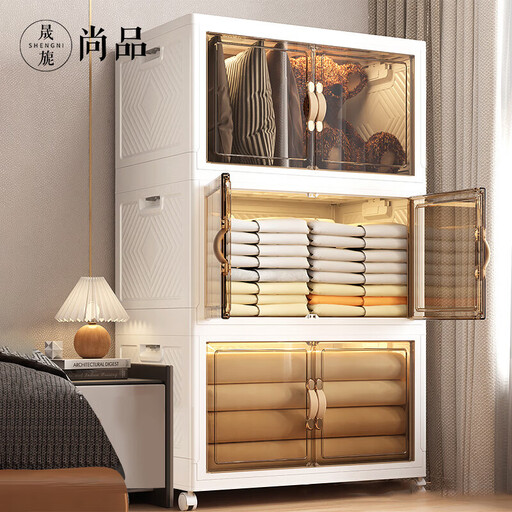
Why this product fits the profile: The foldable construction and stated volume of 67 litres are appealing for tenants, small flats and seasonal storage.
The stated capacity makes planning easier. Before using it as seating, you should check the product details for weight capacity.
67 litres of storage space according to the product name; foldable format for space-saving storage.
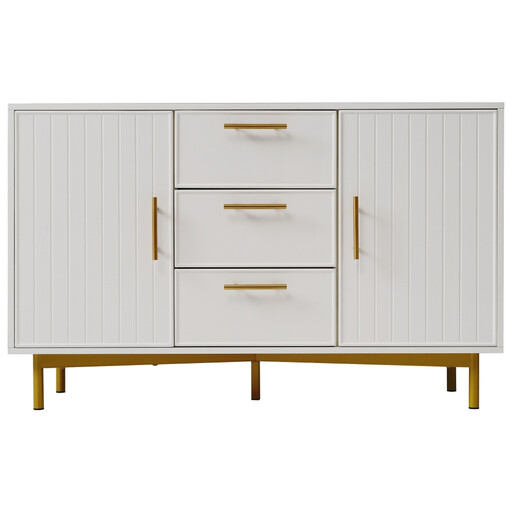
Why this product fits the profile: This sideboard is intended for living rooms and bedrooms where separate compartments and a permanent storage solution are more important than a seating surface.
The construction features two doors, three drawers and height-adjustable shelves. This allows items of different sizes to be stored separately.
Dimensions of 120 × 40 × 75 cm; three drawers each with a weight capacity of up to 5 kg and height-adjustable shelves.
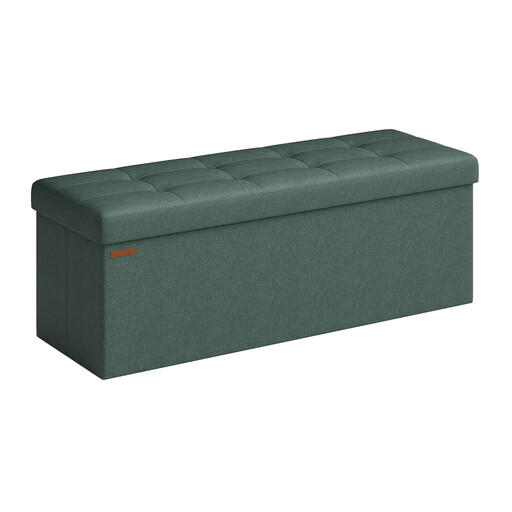
Why this product fits the profile: As an upholstered storage chest, this model is suitable for bedrooms, hallways and living rooms where you want to combine a seat with an internal compartment.
The product details mention reinforced panels, metal edges and a maximum static load capacity of 300 kg. The lid must be fully flush before sitting on it.
Upholstered surface; can be used as a storage box, footstool or coffee table according to the product description.
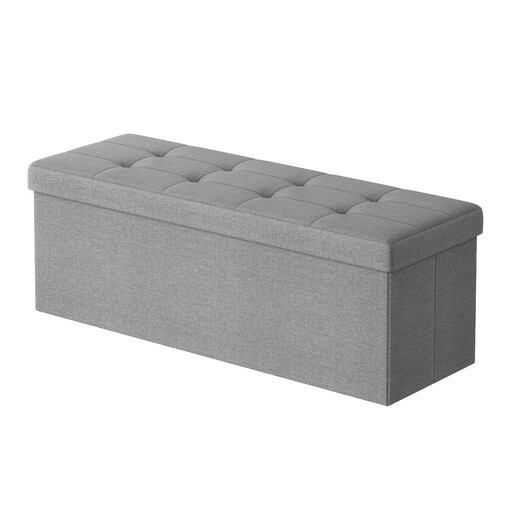
Why this product fits the profile: The foldable model is interesting for families who need extra storage space but want to tuck it away under the bed or in a cupboard when not in use.
MDF panels, metal corner protectors and an insertable base board are specifically described. This reduces the risk of choosing a foldable model without sufficient basic stability.
Stated volume of 131 litres; maximum weight capacity of 300 kg according to the product description; foldable for storage.
We've put together a complete, regularly updated list of products that fully meet these strict selection criteria and the safety regulations in force in the EU.
That depends on the intended use. For cushions and individual blankets, smaller compartments may be sufficient. For bedding, winter textiles or toys, a volume of around 67 litres or more is more practical. Also check whether the internal compartment is divided by struts or padding.
No. A seating function should be explicitly stated. What matters are the maximum static load capacity, the stability of the base and the correct position of the lid. For foldable models, the base board must be fully inserted. Always follow the manufacturer's instructions and don't use the chest as a climbing frame.
Upholstery and fabric surfaces should be cleaned according to the care instructions. Crumbs and dust can be removed regularly with a soft brush or a suitable vacuum cleaner attachment. Wood-based materials should be protected from prolonged moisture. For furniture with legs, the gap to the floor makes cleaning underneath easier.