
Lieferung heute & morgen

Qualitätsgarantie

Willkommens-Angebote freischalten: KOSTENLOSE Lieferung | Bis zu 80 % RABATT | Kostenlose 30-Tage-JoyPlus-Testphase
App herunterladen
A storage bench combines seating and storage in one handy piece of furniture. It’s particularly useful in homes where every square metre counts. In the hallway, it can hold shoes and accessories; in the bedroom, bedding and cushions; and in the living room, blankets, books or toys.
But not every storage bench is right for every room. An attractive finish tells you little about storage capacity, weight limits or how well it will stand up to everyday use. If you choose based only on colour and price, you may not spot important limitations until after you’ve bought it.
A storage ottoman may look compact from the outside, but thick side panels, padding or braces can leave much less room inside than you might expect. So, as well as checking the external dimensions, look at the stated capacity in litres. Blankets and bedding need more internal space than keys, hats or a few books.
Manufacturers often specify a static load capacity. This means the bench is on a flat surface and the weight is distributed evenly. It doesn’t cover dynamic loads, jumping or standing on the bench. Some models also require the lid to be fully closed before you use the top as a seat.
A foldable bench can be packed away neatly under a bed or in a cupboard. But the materials, base panel and lid stability all matter. A storage chest with MDF panels may hold its shape better than a fabric-only stool, but it will usually be heavier.
Measure the space, including room to move around. A hallway bench shouldn’t block doors, drawers or walkways. In a bedroom, a longer upholstered bench at the foot of the bed is often a good choice. In the living room, a storage bench can provide extra seating, a footrest or a small surface for putting things down.
Check:
A compact storage stool works well in a small alcove. A longer upholstered storage bench, on the other hand, offers more internal space and extra seating.
MDF is often used for frames, lids and base panels. The surface may be covered in a linen-look fabric, velvet or teddy fabric. Looks aren’t the only thing to consider: think about care, too. You should be able to clean fabric upholstery with a slightly damp cloth or a suitable upholstery cleaner.
Also check whether the lid simply rests on top, can be removed or has hinges. A removable lid gives you quick access, but you’ll need extra room to lift it off. Metal corner reinforcements can add stability around the lid. Always check the specific product description to understand how the bench is made.
Compare the maximum weight limit with how you plan to use the bench. According to the product details, several of the models below have a static load capacity of up to 300 kg. This isn’t an invitation to exceed the limit, and it doesn’t replace the manufacturer’s instructions.
When using a storage ottoman, you should:
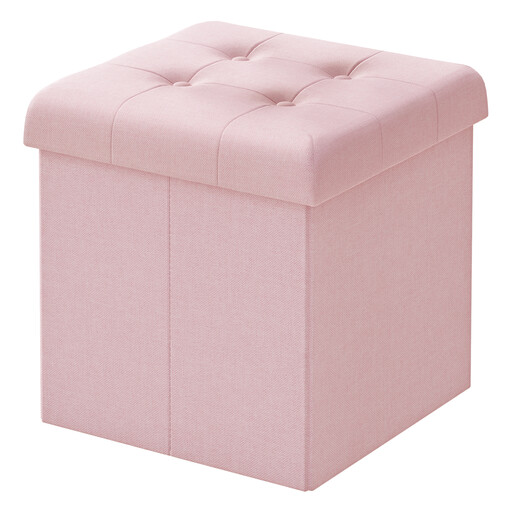
Why it suits this type of shopper: Its compact cube shape, measuring 37.5 × 37.5 × 38 cm, makes it a good fit for small hallways, bedrooms or seating areas. When not in use, it folds down to around 6 cm high.
The stated 43-litre capacity gives you a clear idea of how much storage space is available. The folding feature is backed up by specific dimensions, rather than a vague claim about saving space.
According to the product details: 43 litres of storage, a weight of 2.55 kg and a static load capacity of up to 300 kg.
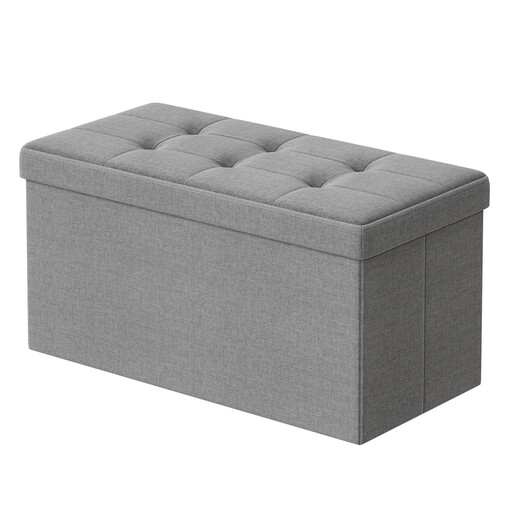
Why it suits this type of shopper: This light grey upholstered bench pairs a longer seat with a textured linen-look finish. It’s a versatile choice for the bedroom, living room or hallway.
The product details specify MDF panels, metal corner reinforcements and a maximum static load capacity. This makes it easier to assess how it’s built and how it can be used.
According to the product details: 89 litres of storage, external dimensions of 38 × 76 × 38 cm and a foldable design for easy storage.
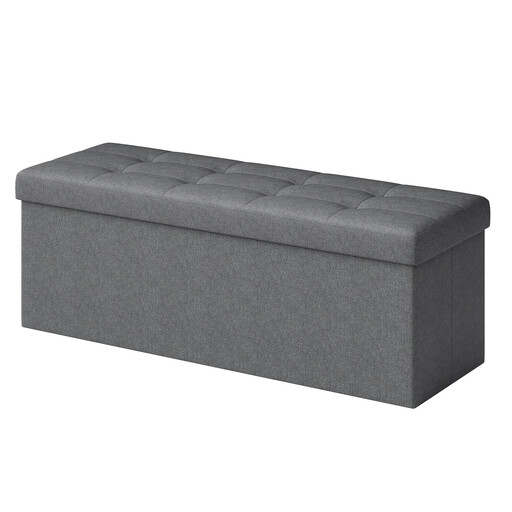
Why it suits this type of shopper: At 110 cm wide, this storage bench offers plenty of room for duvets, cushions or living room textiles. It can sit at the foot of a bed or against an empty wall.
The manufacturer states a 131-litre capacity and advises that the lid should be fully in place before you sit down. This gives you clear guidance on how to use it.
According to the product details: 131 litres of storage, a maximum static load capacity of 300 kg and a foldable design.
We’ve put together a complete, regularly updated list of products that meet these strict selection criteria and fully comply with the safety regulations in force in the EU.
It depends on what you’ll use it for. Compact models with around 40 litres of space may be enough for keys, scarves or small toys. For bedding, cushions and blankets, choose a model with a larger capacity. The key is to make sure the internal dimensions suit the items you want to store and that the lid closes fully.
Yes, as long as its width and depth don’t obstruct the walkway. A slim storage chest or storage stool can make it easier to put on and take off your shoes. In a hallway, also look for a stable base, easy-care upholstery and enough clearance around doors.
Its lifespan depends on the construction, load, surface it stands on and how well you look after it. An MDF frame, reinforced corners and a well-fitting lid can help it cope with everyday use. Avoid overloading it, standing on it or exposing it to high levels of moisture for long periods. For fabric surfaces, regular gentle vacuuming or wiping will help keep them looking their best.