
Lieferung heute & morgen

Qualitätsgarantie

Willkommens-Angebote freischalten: KOSTENLOSE Lieferung | Bis zu 80 % RABATT | Kostenlose 30-Tage-JoyPlus-Testphase
App herunterladen
A storage bench with space can serve several purposes in a bedroom, living room or hallway: it provides a seat, holds blankets or shoes, and can sometimes be folded away to save space when not in use. At the same time, the term "bench" is also used for fitness equipment. A weight bench or adjustable training bench follows completely different safety and load-bearing criteria than a storage chest.
Anyone who only looks at the design or a high stated weight capacity will miss important details. Three typical buying mistakes occur particularly often:
Before buying, you should measure the available floor space exactly. For a bench at the foot of the bed, not only the length and width are relevant, but also the distance to drawers and doors. A bench for the bedroom should also be low enough so that it does not obstruct the opening of the bed or adjacent furniture.
For a hallway bench, the depth and the amount of movement space are crucial. A storage chest that is too deep can narrow the passage. For bed linen, cushions and blankets, the internal volume is more important than the largest possible external width. According to the product details, the models from JOYFURNOS and Ochama offer a storage space of 131 and 89 litres respectively.
A storage bench with space is often made from MDF boards, metal parts, foam and a fabric or faux leather cover. MDF is an engineered wood product and is not the same as solid wood. Buyers should therefore pay attention to the construction of the load-bearing areas:
With a padded bench, the foam density influences the seating feel. However, a precise density specification is not automatically a statement about long-term durability. Care instructions should also be considered, as fabric covers and faux leather can be cleaned differently.
The stated maximum load capacity should always be read in relation to the construction and the intended use. For a storage chest, the load capacity only applies when the lid is fully closed and correctly positioned. Furthermore, oversized or very heavy items should not be forced into the interior if this would deform the lid.
For a training bench, the distinction between dynamic and static load capacity is particularly important. The dynamic load typically includes the person and the training weight during movement. The static load capacity, on the other hand, refers to a stationary load. All adjustment pins, locking hooks and screws must be checked before each use.
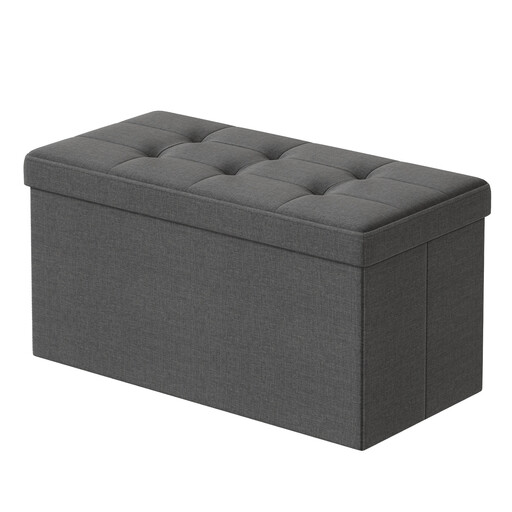
Why this product fits the profile: This compact storage chest is suitable for smaller bedrooms, entrance areas or flats with limited floor space. It can be used as a seat bench, storage box or footrest.
The dimensions of 38 × 76 × 38 cm and the stated volume of 89 litres make space planning straightforward. The base is fitted during assembly, and the bench can then be folded away.
MDF construction, linen-look finish, metal corner protection on the lid and a stated maximum load capacity of 300 kg.
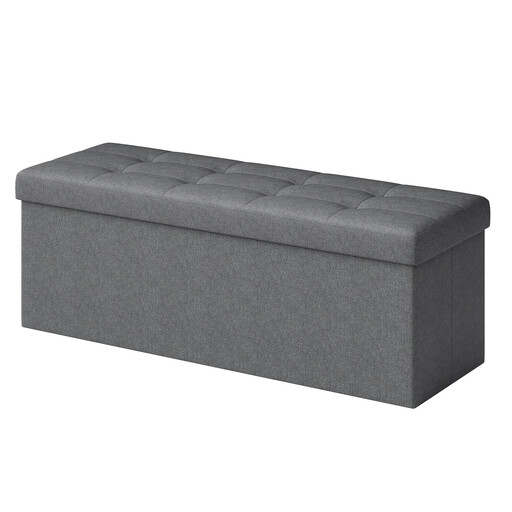
Why this product fits the profile: This longer padded bench offers a larger seating and surface area in the bedroom at the foot of the bed or in the living room. The storage space is ideal for bed linen, blankets, cushions and books.
The construction specifies concrete dimensions of 38 × 110 × 38 cm, an internal volume of 131 litres and a lid support with metal corner protection. The lid must be fully closed before sitting.
MDF boards, double-layer fabric, 25D foam and a stated maximum load capacity of 300 kg.
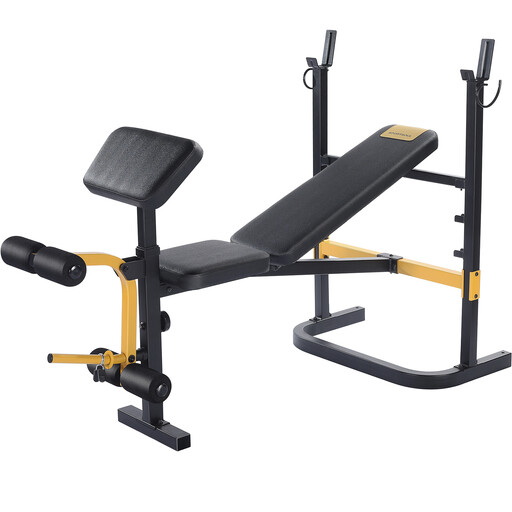
Why this product fits the profile: This adjustable training bench is aimed at people who want to train at home or in a commercial gym with a barbell and additional features. It is not a seat bench for living spaces.
The product data distinguishes dynamic 186 kg from static 544 kg. A four-way adjustable backrest, locking hooks and fully engaging adjustment mechanisms must be checked before each use.
Leg extension and leg curl function, removable preacher curl pad with three settings and a frame made from alloy and stainless steel.
We have put together a complete, regularly updated list of products that fully meet these strict selection criteria and the safety regulations in force in the EU.
With a folding seat bench, assembly is usually limited to fitting the base or setting up the side panels. Nevertheless, the bench should be checked for the following points before first use:
A storage chest should be placed in a dry location and protected from prolonged direct sunlight. For cleaning, a soft, slightly damp cloth and a mild cleaning agent are usually sufficient. Abrasive products can damage covers, coatings or MDF surfaces.
With a weight bench, additional checks come into play. Screws, locking hooks and adjustment pins must be regularly checked for tightness and function. According to the product details, the SPORTSOUL bench is intended for indoor use. Children and pets should stay away during training; for heavy exercises, a second person may be required for safety.
That depends on the specific model and the type of load. For the seat benches mentioned, a maximum load capacity of 300 kg is stated. This specification assumes that the lid is fully in place and the bench is used as intended. For a training bench, separate values apply for dynamic and static loads.
A folding seat bench can be suitable for daily use if the base, lid and side panels are correctly fitted or set up. Before buying, you should check the folding mechanism, the maximum load capacity and the assembly instructions. For consistently heavy use, a stable construction with suitable reinforcements is preferable.
A storage chest primarily refers to a bench with integrated storage space. A bed bench, on the other hand, describes the typical use at the foot of the bed. Both terms can refer to the same product. What matters are therefore the dimensions, internal volume, lid support, padding and the permitted load.