
Lieferung heute & morgen

Qualitätsgarantie

Willkommens-Angebote freischalten: KOSTENLOSE Lieferung | Bis zu 80 % RABATT | Kostenlose 30-Tage-JoyPlus-Testphase
App herunterladen
Creating a home that is both tidy and inviting requires smart solutions. A storage bench is one such piece of furniture that meets two key needs: it creates order with hidden space while also providing extra seating. However, the market is flooded with models that vary widely in quality and functionality.
Many buyers only realise after a few months that their new storage chest is wobbly, the storage space is impractically small, or the fabric upholstery is already showing signs of wear. To help you make the right choice, we will highlight the crucial features and show you how to avoid common pitfalls.
To make an informed decision based on facts rather than marketing promises, you should examine three core parameters. These will determine whether a storage box with seating will be a useful, long-term addition to your home.
A common problem is unstable frames that give way under normal load. The static load capacity is the key metric here.
Pay attention to the frame material. Many sturdy models use E1-grade MDF boards, which ensure high dimensional stability and load-bearing capacity.
The stated storage capacity in litres can be misleading if the design is impractical. Check whether the interior space is restricted by dividers or mechanisms.
A foldable storage bench is an extremely practical feature. These models can be folded flat when not in use and stored in a nook or under the bed. This is ideal for smaller apartments or when the seating is only needed temporarily.
The quality of the fabric is crucial, especially for a velvet upholstered bench. High-quality velvet is resistant to pilling and is easy to clean. Cheaper alternatives can quickly look worn and are more susceptible to stains. Check the manufacturer's care instructions: Can the fabric be cleaned with a damp cloth, or does it require special treatment?
Instead of making a one-size-fits-all recommendation, we have selected products for different user profiles.
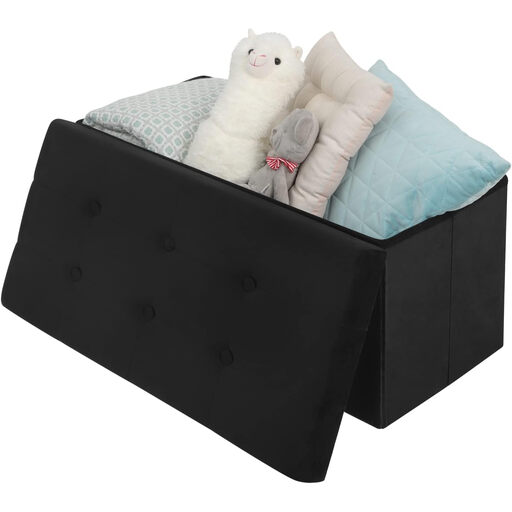
Why it's a match: Ideal for families or anyone seeking maximum functionality. The bench combines a large 80-litre storage capacity with a high load-bearing limit, sufficient for two people. Perfect for blankets in the living room or shoes in the hallway.
The specified static load capacity of 300 kg, supported by an E1-grade MDF board frame, directly addresses concerns about unstable construction.
Its foldability makes it extremely space-efficient when not in use, without compromising on stability or storage volume.
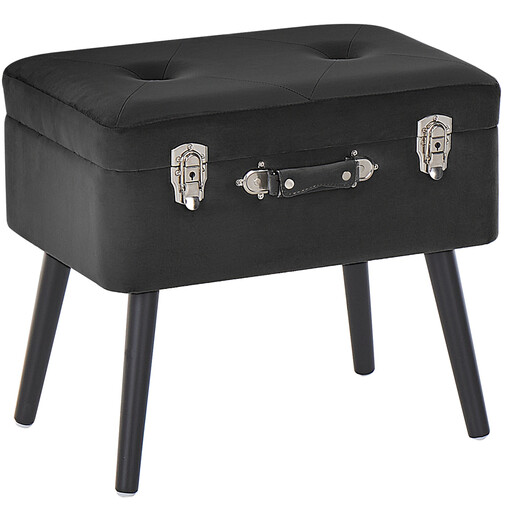
Why it's a match: For those who prioritise design. Shaped like a vintage suitcase with decorative buttons and clasps, this storage chest is a real statement piece for the living room or bedroom.
This piece focuses on a high-end aesthetic, where the velvet upholstery is a central design element. The combination with pine wood legs ensures a stable base.
The unique suitcase design stands out from standard benches while offering practical storage for smaller items.
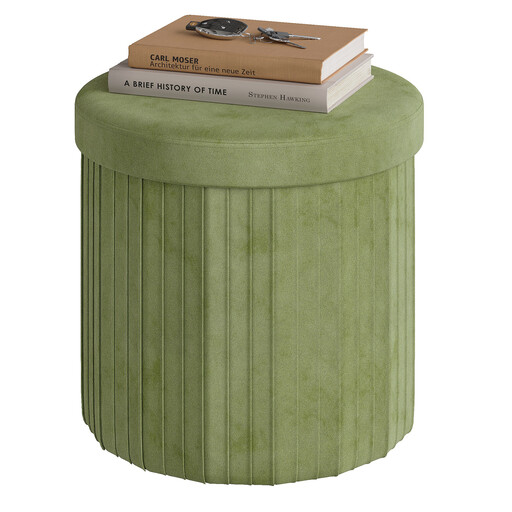
Why it's a match: This compact, round stool is the perfect solution for studios or small living rooms. It serves as a footrest, an impromptu seat, or a side table, and can be easily folded and stored when needed.
The model is transparent about its capacity: 30 litres of storage is a realistic and useful volume for this compact size. Here, foldability isn't a compromise but a core feature.
The round shape and low weight (2.1 kg) offer maximum flexibility. The round stool can be effortlessly placed or moved to any corner.
We have compiled a complete, up-to-date list of products that fully meet these strict selection criteria and relevant safety standards.
The load capacity varies greatly depending on the model and construction. Always check the static load capacity specified by the manufacturer. Models with a capacity of 120–150 kg are designed for one person. Sturdy benches, often intended as a shoe bench in the hallway or for two people, should have a load capacity of up to 300 kg.
Yes, most modern foldable storage benches are designed for quick and easy assembly and disassembly. The mechanism is typically simple and robust enough for frequent use, making them ideal for flexible living arrangements or when extra seating is only needed occasionally.
For most velvet fabrics, a slightly damp cloth with a mild soap solution is sufficient for spot cleaning. For general maintenance, it is recommended to gently vacuum the surface regularly with an upholstery attachment. Avoid harsh cleaning agents, as they can damage the fabric. To be safe, always check the manufacturer's specific care instructions.