
Lieferung heute & morgen

Qualitätsgarantie
App herunterladen
Kategorien
A storage bench combines two essential furniture functions: it provides comfortable seating while also offering concealed storage space. This dual functionality makes it an efficient solution for living areas where space needs to be maximised. Whether as a hallway bench for storing shoes, an end-of-bed bench for blankets and pillows, or as additional seating and storage in the living room – its applications are diverse.
The selection of the right model depends on specific requirements regarding material, load capacity, size, and design. This article analyses the technical criteria relevant to choosing a storage chest or an upholstered storage bench.
The functionality and longevity of a storage box with seating are determined by its construction and the materials used. An informed purchasing decision is based on the analysis of objective technical parameters.
The sturdiness of the frame is significantly influenced by the material used. MDF (Medium Density Fibreboard) is a common choice. Models that comply with the E1 standard have low formaldehyde emissions and are designed for use in residential spaces. The thickness of the boards directly affects the robustness of the entire structure.
The upholstery fabric defines the tactile feel, appearance, and maintenance properties. Linen or linen-look fabrics are a popular choice due to their breathability and durability. The padding, usually made of high-resilience foam, determines the seating comfort.
A crucial technical feature is the static load capacity. This value, given in kilograms (kg), describes the maximum weight the bench can support in a stationary state. High-quality models can reach values of up to 300 kg. This high capacity is often ensured by a sturdy base plate and reinforced side panels. On some models, the lid edges are additionally reinforced with metal corners to increase longevity with frequent use.
The usable storage volume, often specified in litres (L), is directly dependent on the external dimensions. Before purchasing, it is essential to measure the intended location precisely to ensure the chest bench will fit. Consider not only the width and depth but also the height, especially if the bench is to be placed under a window or in a niche.
In addition to technical specifications, design plays a role in integrating the piece into your existing interior design. Models range from simple, cubic forms to more elaborately designed versions with decorative buttons (tufting). A particularly practical additional feature is foldability. A foldable bench can be collapsed to a minimal height and stored away to save space when not in use.
Based on the technical criteria mentioned, we present a selection of models that stand out for their specific features.
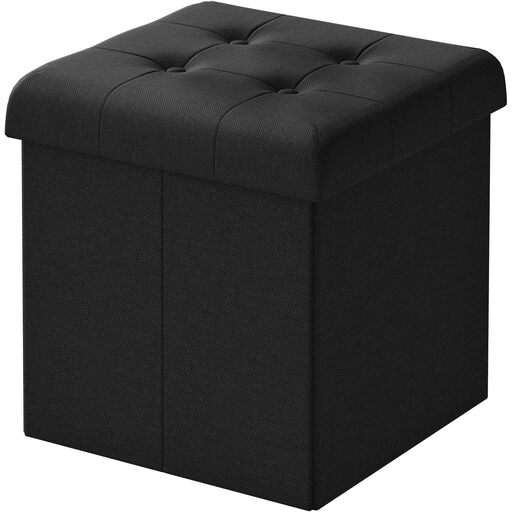
Why we recommend this product: This set of two compact storage ottomans is distinguished by its high functionality in a small footprint. The construction from E1-grade MDF boards and the manufacturer-stated static load capacity of up to 300 kg provide a solid foundation for daily use. With a storage volume of 43 litres per stool and its foldable design, this set is a versatile solution for various living situations.
Pros:
Who it's for: This set is ideal for individuals living in homes with limited space who need a flexible, multifunctional solution for seating and storage. It is well-suited for student accommodation, small living rooms, or as an addition to a hallway.
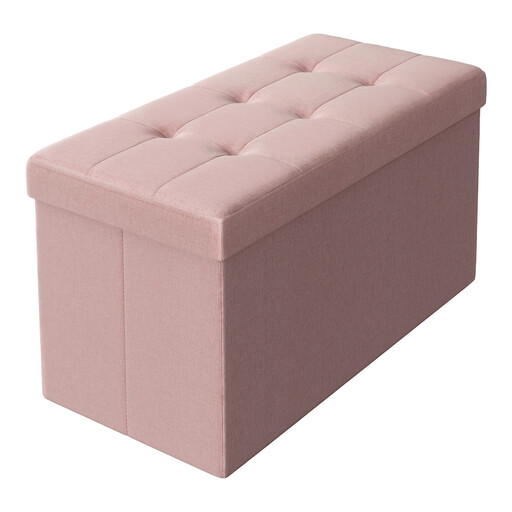
Why we recommend this product: This upholstered storage bench combines a generous storage capacity of 89 litres with a robust construction. The MDF frame is complemented by metal corner protectors on the lid, which enhances stability. The stated maximum load capacity of 300 kg underscores its solid craftsmanship. The design with decorative buttons gives the bench a classic look.
Pros:
Who it's for: This model is suitable for users looking for a medium-sized storage solution with an appealing aesthetic for the living room or bedroom. Its 76 cm width makes it a fitting end-of-bed bench for narrower beds or a practical seating option in an entryway.
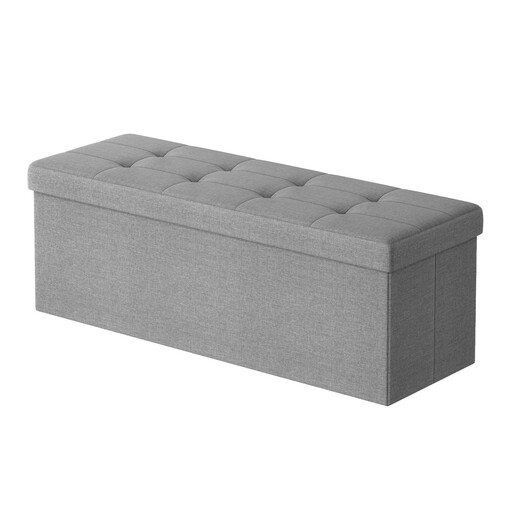
Why we recommend this product: With a length of 110 cm and a storage volume of 131 litres, this chest bench offers the largest capacity of the models presented here. The technical specifications, including the MDF construction and the manufacturer-stated load capacity of 300 kg, are identical to the smaller model and promise high stability. The neutral light grey colour and tufted design allow for easy integration into many interior styles.
Pros:
Who it's for: This bench is the right choice for households with high storage demand, such as families or individuals who need to store bulky textiles like winter duvets or guest bedding. Its length makes it a substantial piece of furniture for the hallway, living room, or bedroom.
If you already own a chest bench or another seating option without padding and wish to enhance its comfort, a separate cushion could be a practical addition. You can find a selection of suitable pads in our Bench Cushions category.
The load capacity varies depending on the model and construction. Many models available on the market, especially those with a solid base of MDF boards, specify a static load capacity of 150 kg to 300 kg. It is important to check the manufacturer's specifications and note that this value refers to a uniformly distributed, stationary load.
The frame is often made of MDF boards or, less commonly, solid wood. The cover is typically made of textile materials such as linen, cotton, velvet, or synthetic leather. The padding usually consists of foam of varying densities, which determines the seating comfort.
Care instructions depend on the specific cover material. For many fabric covers like linen or linen-look, dry cleaning is recommended. Surface dirt or dust can often be removed with a soft brush or a dry cloth. For stains, the manufacturer's specific instructions should be followed.