
Lieferung heute & morgen

Qualitätsgarantie

Willkommens-Angebote freischalten: KOSTENLOSE Lieferung | Bis zu 80 % RABATT | Kostenlose 30-Tage-JoyPlus-Testphase
App herunterladen
A storage bench with a seat combines two functions: it gives you somewhere to sit and provides extra storage. This is particularly useful in smaller homes, hallways, bedrooms, living rooms and student accommodation. However, storage ottomans and benches with storage can vary considerably in size, weight capacity, materials and ease of use.
If you focus only on colour and upholstery, it’s easy to overlook important details. Three common buying mistakes are worth watching out for:
Before you buy, it’s worth checking the technical specifications and considering how you intend to use it.
Measure the space where you plan to put the bench, allowing for doors, drawers and walkways. In a hallway, a narrow hallway bench may be more suitable than a wide storage ottoman. At the foot of the bed, a longer bedroom storage bench could be a good option, as long as you can still access the bed’s doors or drawers.
As well as the external dimensions, check the capacity. A model with 89 litres of storage, for example, is suitable for blankets, cushions or books. A larger storage bench with a capacity of 131 litres gives you more room for bed linen or seasonal textiles. Avoid forcing bulky items into a compartment if the manufacturer specifically advises against it.
The maximum weight capacity should suit how you plan to use the bench. For the models mentioned here, a figure of 300 kg refers to the maximum static load. This doesn’t mean the bench is designed for bouncing, standing or dynamic loads.
Before sitting down, make sure the lid is fully closed and correctly in place. For a storage stool or upholstered bench, the feet or base should also be resting fully and evenly on the floor. Models with a weight capacity of 120 or 150 kg may be suitable for one person to sit on or for use as a footstool, but they must still be used correctly.
MDF panels provide the supporting structure for many foldable benches. Metal reinforcements at the corners of the lid can help strengthen the joints. A linen-look, velvet or teddy-fleece cover, on the other hand, mainly affects the feel, care requirements and appearance.
Wipe-clean surfaces and easily accessible storage are practical for families with children. In a bedroom, a softly upholstered bedroom bench at the foot of the bed can be a good solution. In a living room, a storage ottoman is better suited to smaller items such as remote controls, magazines or toys. If the bench has a fabric cover, follow the manufacturer’s care instructions and avoid heavy rubbing or unsuitable cleaning products.
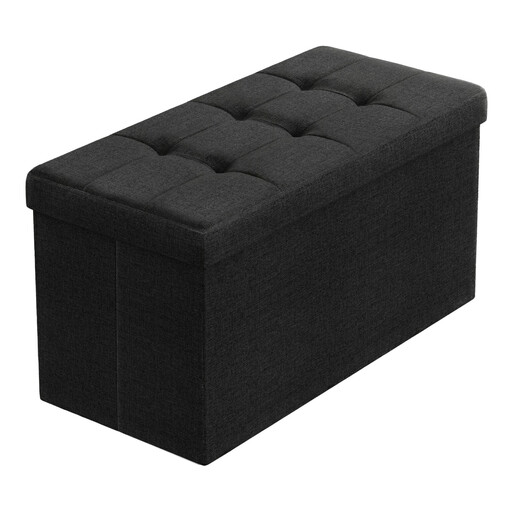
Why this product suits this profile: Measuring 38 x 76 x 38 cm, this foldable storage stool is a good fit for smaller living rooms, bedrooms or entrance areas. The product information gives its storage capacity as 89 litres.
The specifications list the external dimensions, capacity and static load of up to 300 kg. The lid must be fully closed before you sit on the stool.
Foldable design, MDF panels, linen-look finish and 89 litres of storage. Once folded, the stool can be stored away neatly to save space.
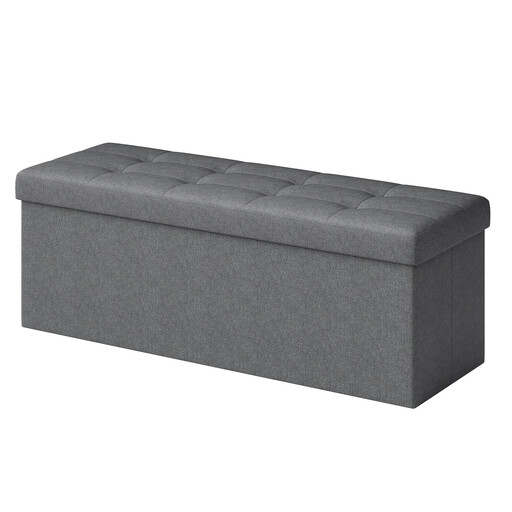
Why this product suits this profile: At 110 cm wide, this storage bench can sit at the foot of a bed, beneath a window or against a longer living-room wall. Its stated storage capacity is 131 litres.
The product details list the materials, dimensions, capacity and maximum static load. The instruction to keep the lid fully closed makes the intended use clear.
131 litres of storage, an MDF construction, metal corner reinforcements and a padded surface in dark grey.
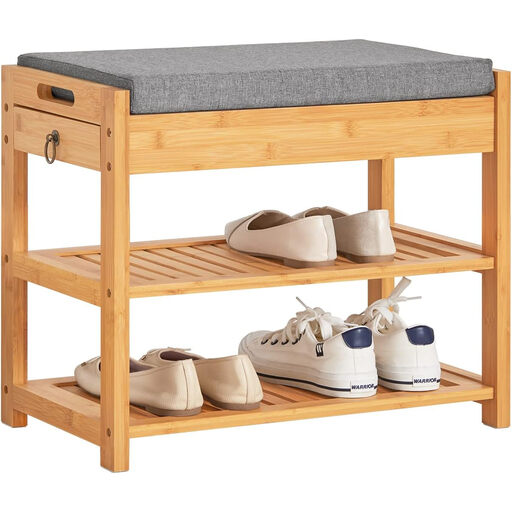
Why this product suits this profile: This bamboo hallway bench has two compartments, a drawer and a 4 cm-thick seat cushion, making it a handy addition to your entrance. It measures 55 x 30 x 46 cm.
The compartments and drawer keep shoes and small accessories organised, rather than loose in a deep storage ottoman. The bench is designed for indoor use.
Bamboo with a clear lacquer finish, two storage compartments, a side drawer, felt pads and a stated weight capacity of up to 150 kg.
We’ve put together a complete, regularly updated list of products that meet these strict selection criteria and fully comply with the safety regulations in force in the EU.
A storage ottoman should stand on a flat, stable surface. Once assembled, check that the lid sits flush and the bench doesn’t wobble. With foldable models, the base panel must be fully in place before you put anything inside or sit on the bench.
Keep textiles such as blankets and cushions in a clean, dry space. Only store shoes inside if the compartment is suitable for them and the shoes are dry. Keep heavy items as low down as possible to avoid putting unnecessary strain on the lid.
It depends on the model. Product specifications may list a capacity of 120, 150 or 300 kg, for example. The important thing is to check whether this refers to a static load and whether the lid needs to be fully closed. Don’t use the bench as a step or standing aid.
There’s no reliable one-size-fits-all answer. It depends on how often the bench is used, the load it carries, the surface it stands on, moisture and how well it’s cared for. Choosing the right size, distributing the load evenly and following the manufacturer’s instructions can reduce wear to the cover, hinges and MDF structure.
Many foldable models are designed for regular use. Before buying, though, check that the base panel, lid and frame fit together securely. If you’ll be using the bench every day in a hallway or living room, a non-slip base, comfortable seat height and easy-care cover are also worth considering.