
Lieferung heute & morgen

Qualitätsgarantie

Willkommens-Angebote freischalten: KOSTENLOSE Lieferung | Bis zu 80 % RABATT | Kostenlose 30-Tage-JoyPlus-Testphase
App herunterladen
A storage bench with seat brings together three functions: it gives you a place to sit, creates extra storage and, depending on the design, can double as a footstool or side table. This kind of combination is especially handy in homes with limited floor space – in the hallway for shoes and bags, at the foot of the bed for blankets, or in the living room for books and soft furnishings.
However, benches with storage vary significantly in construction, padding and load capacity. An attractive fabric finish alone says little about everyday usability. If you only focus on colour and price, you can easily miss important details.
A maximum load of, for example, 300 kg usually refers to a static load under specific conditions. It doesn’t mean the bench is suitable for jumping, climbing or sudden movements. The lid also needs to be fully seated and the bench positioned on a level floor.
So check:
On a chest-style bench with a wide seat, reinforcements, side panels and dividers can reduce the internal volume. It’s sensible to look at the actual capacity in litres. A foldable storage bench with 131 litres of internal volume, for instance, is suitable for blankets, cushions, books or seasonal home textiles.
For bulky items, the opening matters too. A narrow lid or fixed hinge can make access difficult. A removable or lift-up lid makes everyday use easier.
An upholstered bench can look premium yet quickly feel uncomfortable when used for longer periods. Pay attention to the combination of padding thickness, foam type, cover and substructure. MDF panels, reinforced corners and shape-retaining foam are credible construction features. Fabric covers should also come with care instructions that allow spot-cleaning.
A storage bench around 110 cm long gives seating for more than one person but needs enough clearance to move around it. In the hallway, standard walking routes should still be free in front of the bench. At the foot of the bed, height matters as well as length: a bench around 38 cm high can serve as a perch or surface without getting in the way of access to the bed.
MDF panels provide a consistent base for a storage bench. Metal corner reinforcements on the lid can add stability to the build. For models with wooden legs, the fixings and footprint are important. Loose legs, no base panel or a wobbly frame are signs of potential assembly or construction effort.
If you also want the bench as a footstool with storage or side table, the lid needs to be both stable and flat. A fabric lid isn’t automatically suitable for hot cups, liquids or heavy items. Only use the bench as intended by the manufacturer and follow the guidance on lid position and loading.
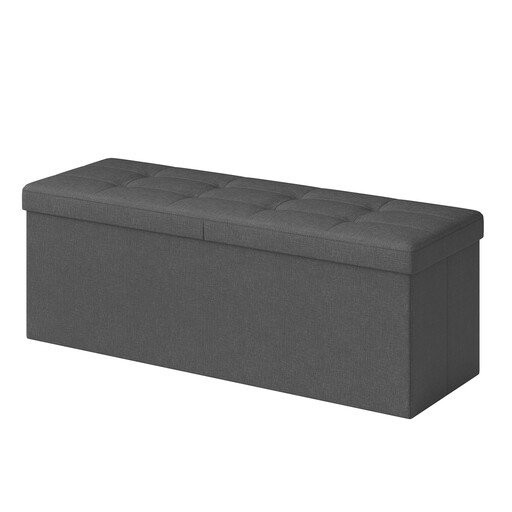
Why this product suits the profile: At 110 cm wide, this bench offers seating and storage for the hallway, bedroom or living room. The foldable design is ideal if you don’t need the storage chest out all the time.
The stated internal volume of 131 litres makes the storage space transparent. The listing also specifies MDF panels, metal corner reinforcements and a static load capacity of up to 300 kg.
131-litre capacity, 38 × 110 × 38 cm, foldable construction and a padded seat with a linen-look cover.
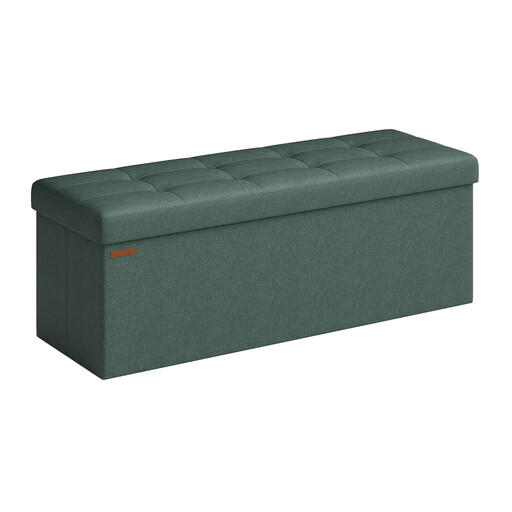
Why this product suits the profile: The tufted top combines decorative detailing with a cushioned seat. It’s ideal if you want a storage bench with seat as a visible design element in your space.
The description specifies reinforced panels, metal corners and a foldable build. That keeps the key details for stability, storage and footprint clearly distinct.
Linen-look cover, tufted accents, 38 × 110 × 38 cm, and use as a storage bench, footstool or table.
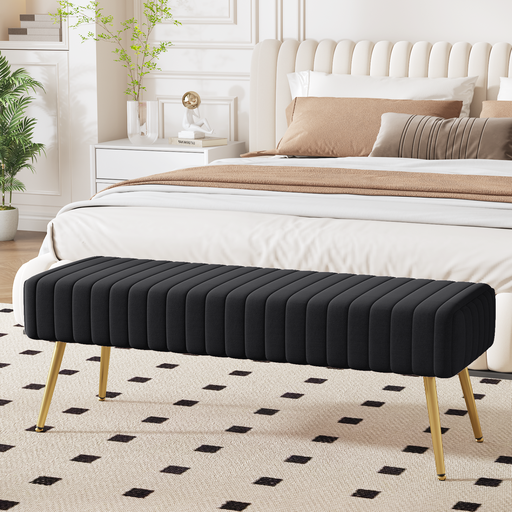
Why this product suits the profile: As a hallway bench, shoe bench or end-of-bed bench, this model offers a fixed seat with wooden legs. It’s aimed at households that don’t need integrated storage but value a classic bench construction.
The design with wooden legs and a sturdy seat frame prevents confusion between an open upholstered bench and a storage chest. Assembly and care instructions are clearly stated.
113.5 cm length, padded velvet surface and wooden legs; suitable for hallway, bedroom, living room or as a dressing bench.
For foldable models, insert the base panel first. Then check the side walls are straight and the lid closes fully. On a bench with legs, all screws should be tightened firmly after assembly. Place the furniture on a level, dry surface and occasionally check the joints for looseness.
Textile covers can usually be cleaned with a vacuum cleaner and upholstery attachment. Treat stains locally with a soft, slightly damp cloth. Don’t use harsh cleaners, bleach or abrasive pads unless the product’s care instructions state otherwise.
We’ve compiled a complete, regularly updated list of products that fully meet these strict selection criteria and the safety regulations applicable in the EU.
For shoes, bags and accessories, a small internal space may be enough. For bedding, blankets or multiple cushions, models with around 100 to 130 litres are more practical. Internal dimensions and the size of the opening are also key.
That depends on the construction and the specified load capacity. MDF panels, reinforced corners and a lid panel that sits flat can all support stability. Don’t exceed the stated maximum static load; standing or jumping on the bench is not intended.
Lifespan depends on daily use, assembly, the surface it stands on and care. Even use within the manufacturer’s guidelines, firmly tightened fixings and a dry location can all help extend service life. With foldable models, avoid forcing the frame to bend or overloading it unnecessarily.