
Lieferung heute & morgen

Qualitätsgarantie

Willkommens-Angebote freischalten: KOSTENLOSE Lieferung | Bis zu 80 % RABATT | Kostenlose 30-Tage-JoyPlus-Testphase
App herunterladen
A storage bench combines seating and organisation in a compact footprint. In the hallway, it makes putting on shoes easier; in the bedroom, it stores blankets or cushions; and in the living room, it can provide extra seating, a footrest or a convenient surface. However, to ensure it works well in everyday life, you should consider more than just colour and design.
Typical purchasing mistakes come down to three issues: the bench is too deep for the intended space, the stated load capacity is misunderstood, or the storage compartment is awkward to use. Soft upholstery alone also says little about comfort or durability. The key factors are clearly stated dimensions, the construction and how the bench will actually be used.
A storage bench does not only need to fit in terms of width. In the hallway, depth and the direction in which the lid opens are particularly important. A bench that is 38 cm deep can already take up valuable passage space in a narrow entrance area. With a lift-up model, you should also ensure that there is enough room in front of or behind the bench.
A simple check is recommended before buying:
Manufacturers often specify a maximum static load capacity. This value describes the load under still, controlled conditions and is not automatically equivalent to dynamic loads caused by jumping, sitting down heavily or tipping. With a storage chest bench, the lid should be fully closed and correctly positioned.
The information on the relevant product page should therefore be checked carefully. For a family, a stated load capacity of 150 kg or 300 kg may be relevant; however, it does not replace safe use in accordance with the assembly instructions.
A storage chest with a large interior can be useful if you mainly want to store bed linen, cushions or blankets. For keys, shoe-care products or small accessories, a compartment with dividers is more practical. Open compartments make shoes easier to access and help with ventilation, while enclosed storage creates a tidier overall look.
A compact hallway bench is ideal for a narrow corridor. For example, the SoBuy model measures 60 × 30 × 43 cm. Its shallow depth makes it well suited to narrow entrance areas, while the 43 cm seat height makes putting on and taking off shoes easier.
A longer upholstered storage bench offers more seating space but naturally requires more floor space. Models measuring 110 cm wide and 38 cm deep are more suitable for the end of a bedroom, the living room or a more spacious hallway.
Furniture of this type often uses MDF or chipboard, coated surfaces, and covers with a fabric, faux-leather or linen-look finish. A melamine coating can help protect the surface against light everyday soiling. With an upholstered shoe bench, check whether the cover is removable or at least easy to wipe clean.
In entrance areas, you should also take dirt, moisture and wet shoes into account. Open shoe compartments should not be treated as a permanent drying area for very wet footwear. Adequate ventilation and regular cleaning remain important.
A folding bench is practical if it is only needed occasionally or needs to be stored compactly when moving house. However, a foldable frame is only safe to use when the base panel and lid have been fitted correctly. The structure should be fully assembled before it is used as a seat.
You should also check for:
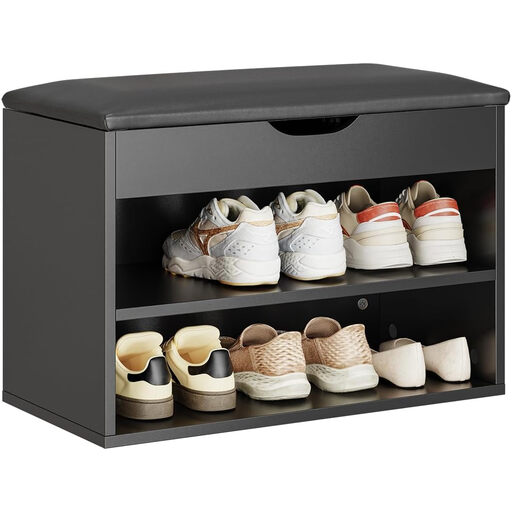
Why this product suits this profile: Measuring 60 × 30 × 43 cm, it is well suited to narrow hallways and small homes. A seat, open shoe rack and concealed compartment are combined in one piece of furniture.
The compact depth reduces the risk of the bench significantly restricting the passageway. The product information also states a maximum static load capacity of 113 kg.
PU-covered seat cushion, open shoe area and a lift-up compartment; assembly required.
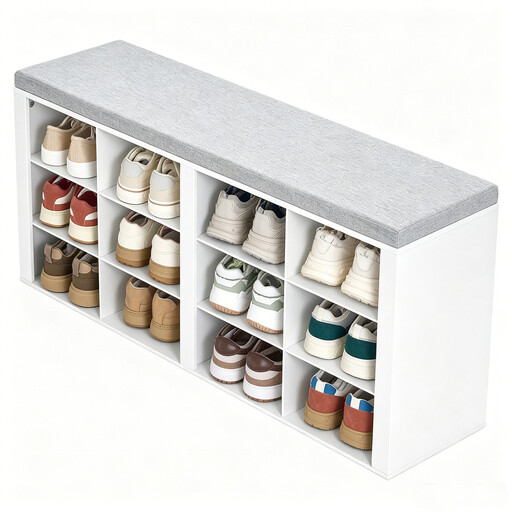
Why this product suits this profile: If you want to store different types of footwear neatly, this model offers height-adjustable shelves and a seat with removable covers.
Adjustable shelves prevent rigid compartments from restricting the storage of boots or high-top shoes. The dimensions are 104.5 × 49.5 × 30.5 cm.
12 compartments, removable seat covers and a stated load capacity of 150 kg.
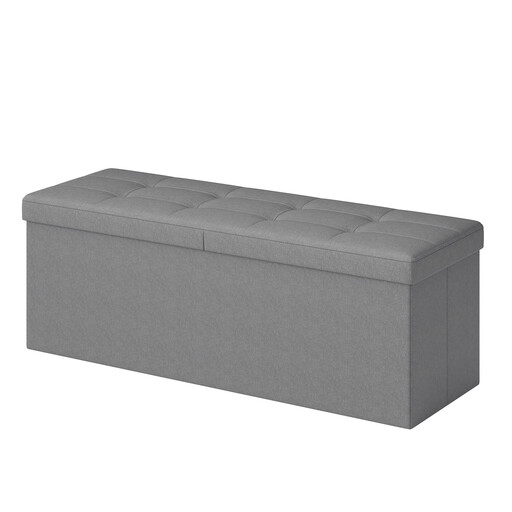
Why this product suits this profile: This model is designed for the living room, bedroom, hallway or the space beneath a window, and can be folded away when not in use.
The product information states an internal volume of 131 l, a folding function and a removable divider. The lid must be fully in place before sitting down.
38 × 110 × 38 cm, MDF construction, upholstered surface and a stated maximum static load capacity of 300 kg.
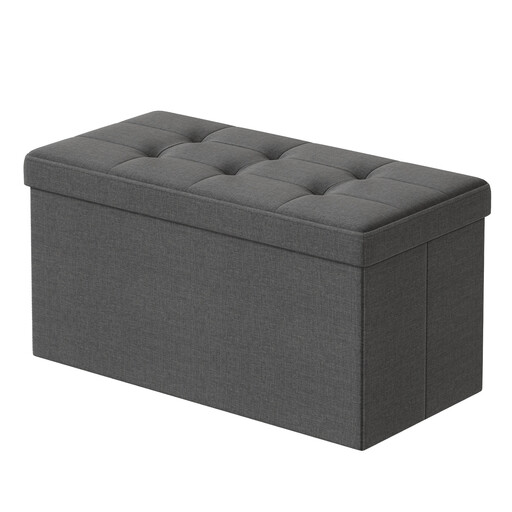
Why this product suits this profile: The shorter version is ideal for smaller living spaces, a narrow bedroom end or a limited entrance area.
With a capacity of 89 l and a width of 76 cm, this bench remains more compact than longer models. Nevertheless, it should only be used with the base panel fully inserted.
89 l of storage, folding construction, a stated maximum load capacity of 300 kg, and use as a bench, footrest or convenient surface.
We have put together a complete, regularly updated list of products that fully meet these strict selection criteria and the safety regulations applicable in the EU.
A shoe bench or shoe cabinet with a bench seat should be assembled on a level surface. All connectors must be fitted according to the instructions and checked after a while. Wall fixing may be advisable for tall or narrow furniture, provided this is intended for the product and the appropriate fixings are used.
Do not force oversized items into the interior. With folding models, the base panel must be fully inserted before the bench is used. For a longer service life, keep the bench in a dry location, wipe it down regularly and avoid concentrated loads on edges or lids.
For a narrow hallway, models around 30 cm deep may be sufficient. Before buying, measure the remaining passage width. A depth of 38 to 40 cm allows for more storage, but naturally takes up more space.
Its service life depends on the material, assembly, load and care. Without knowing the individual conditions of use, it is not possible to give a reliable specific lifespan. Look for a well-constructed design, a clearly stated static load capacity and use that follows the instructions.
Depending on the internal dimensions, blankets, cushions, bed linen, bags or infrequently used everyday items may be suitable. For shoes, open, ventilated compartments are often more practical. Small items such as keys or shoe-care products are easier to find when kept in a separate internal compartment.