
Lieferung heute & morgen

Qualitätsgarantie

Willkommens-Angebote freischalten: KOSTENLOSE Lieferung | Bis zu 80 % RABATT | Kostenlose 30-Tage-JoyPlus-Testphase
App herunterladen
A storage bench combines a seat with enclosed storage in one piece of furniture. It can be used in the hallway as a hall bench, in the bedroom as an end-of-bed bench or in the living room as a seating bench. Particularly practical are models that can also be used as a storage chest, storage ottoman, footrest with storage or storage ottoman bench when needed.
To make sure your purchase remains a practical choice for your home in the long term, don’t just focus on colour and upholstery. The key factors are dimensions, weight capacity, internal volume, lid design and whether the bench can be stored away compactly when not in use.
A figure such as 300 kg weight capacity often refers to the maximum static load. This means a load that is evenly distributed and kept still under the specified conditions. It does not automatically mean the bench is suitable for dynamic loads, jumping or being moved while someone is sitting on it.
Look for wording such as “maximum static load” and follow the manufacturer’s usage instructions. The models featured here also specify that the lid must be fully in place when someone is sitting on the bench.
A long upholstered bench may look spacious in a room, while MDF panels, padding, the lid and any dividers can reduce the space inside. For bedding, blankets or cushions, specific volume figures are more useful than a general claim that a bench is “roomy”.
Before buying, also check whether the lid opens fully and whether the opening is large enough for the items you want to store. Oversized items should not be stored in a folding bench if the manufacturer advises against it.
A folding bench can be stored flat, but it usually needs a sturdy base or floor panel. Check whether it’s assembled by inserting a base panel or whether several assembly steps are required. Storing it flat under a bed or in a cupboard can be useful in smaller homes, guest rooms or for seasonal use.
Depth is particularly important in a hallway, as the bench shouldn’t narrow the walkway unnecessarily. A depth of around 38 cm often works well in narrow spaces, as long as you also allow for doors to open and enough clearance from other furniture. A length of 76 cm is more compact, while 110 cm gives you more seating and surface space.
Before you buy, measure:
MDF panels form the supporting frame of many storage chests. A linen-look cover may suit your décor, but it’s no substitute for checking the construction. Look at the combination of frame material, lid reinforcement and padding.
The selected models feature materials such as MDF, linen-look fabric and 25D foam. Metal corner reinforcements on the lid can provide extra stability. It’s still important to make sure the lid is properly in place and not to use the bench in a way it wasn’t designed for.
A removable divider can help you keep blankets, toys, magazines or shoes separate. More internal space is useful for bedding, while a divided interior may be more practical in an entrance hall for accessories and shoes.
So compare more than just the outer dimensions. Check figures such as 80 l, 89 l or 131 l of internal volume, if they’re available. The shape of the interior also affects how much you can actually store.
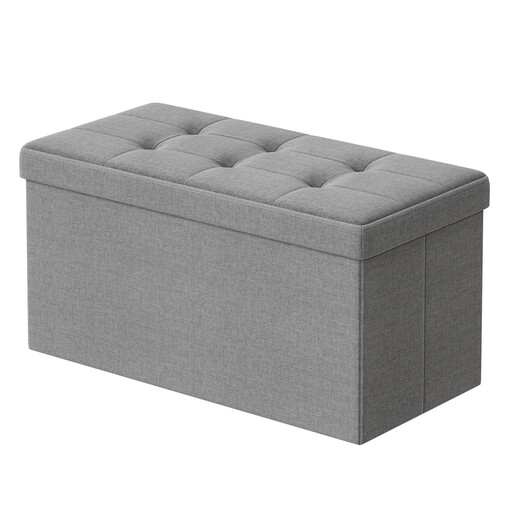
Why it suits this profile: At 76 cm long, this compact bench is well suited to smaller living spaces, bedrooms or narrower hallways. It has a stated internal volume of 89 l.
The specifications give the exact outer dimensions, internal volume and maximum static load of 300 kg. This makes it easier to assess how much space you’ll need than a purely decorative product description would.
38 × 76 × 38 cm, 89 l capacity, folding design, MDF frame and linen-look cover.
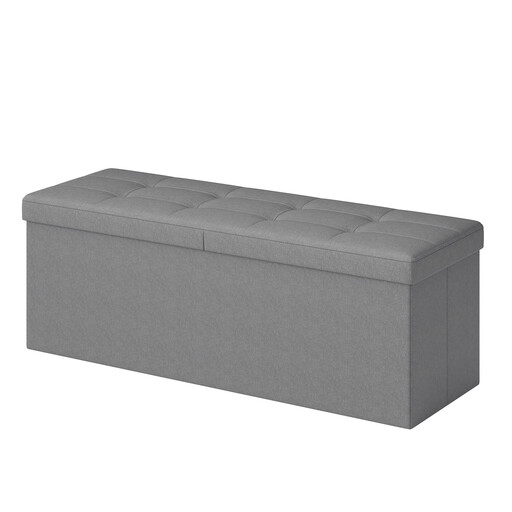
Why it suits this profile: At 110 cm long, this bench offers more seating and surface space. The hinged lid and removable divider are useful if you like to keep your storage organised.
The description specifies a maximum static load of 300 kg, MDF panels, metal corner protectors and an internal volume of 131 l. This gives you clear information about key construction and usage details.
38 × 110 × 38 cm, 131 l capacity, removable divider, folding design and hinged lid.
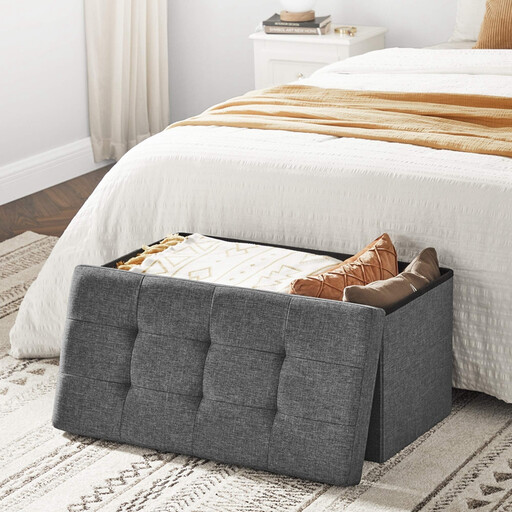
Why it suits this profile: With 80 l of storage, a length of 76 cm and a stated static load capacity of 300 kg, this bench is a good fit for households looking for a versatile seat, footrest and storage chest in one.
The stated internal volume helps you assess the storage space, rather than relying on the cube-shaped exterior alone. The folding design also makes it easier to store away compactly.
80 l storage, 76 × 38 × 38 cm, MDF frame, faux-linen cover and can be used as a bench, footrest or side table.
We’ve put together a complete, regularly updated list of products that meet these strict selection criteria and the applicable EU safety regulations.
It depends on the model and the manufacturer’s stated capacity. The products featured here have a maximum static load capacity of 300 kg. This figure doesn’t automatically apply to dynamic loads. The lid should be fully in place, and the bench should only be used as intended.
A folding bench can be used every day, as long as it’s assembled correctly and placed on a level surface. Check that the base panel and lid are properly in place before each use. If you’ll be opening it frequently, a sturdy lid that’s easy to access is a sensible choice.
Avoid oversized, very heavy or sharp-edged items if the usage instructions advise against storing them. The interior is generally better suited to textiles, cushions, blankets, toys or magazines. If you’re storing delicate items, take moisture, ventilation and the manufacturer’s material information into account.