
Lieferung heute & morgen

Qualitätsgarantie

Willkommens-Angebote freischalten: KOSTENLOSE Lieferung | Bis zu 80 % RABATT | Kostenlose 30-Tage-JoyPlus-Testphase
App herunterladen
Whether in the basement, the attic, or the kids' room, items accumulate over time, taking up valuable space and creating clutter. A smart organisational system is the key to a tidy home. The market offers a vast array of storage boxes, but which one is right for your needs? This article serves as a practical guide to help you choose the perfect storage container, from a simple plastic box to a specialised food container.
The decision for a specific model depends on three key factors: the material, its functionality, and the specific use case.
Most storage boxes are made of polypropylene (PP), a robust and durable plastic. This material has the advantage of being easy to clean and resistant to moisture. Transparent or semi-transparent models allow you to see the contents at a glance without having to open the box. This saves time and makes managing your organisational system easier.
A storage box with a lid is essential to protect the contents from dust, dirt, and moisture. This is particularly important for the long-term storage of clothing, documents, or keepsakes in the basement or attic.
Stacking boxes are designed to maximise vertical space. Ensure that the boxes have a sturdy construction and corresponding grooves or rims that allow for safe stacking.
A collapsible box offers maximum flexibility. It can be quickly assembled when needed and stored to save space when not in use. This makes it a practical solution for temporary storage needs or for households with limited storage space.
For storing food or odour-sensitive items, an airtight container is the right choice. These models feature a special seal (often made of silicone) and a secure locking system. They are proven to keep food fresh for longer, protect against pests, and prevent odours from spreading in the fridge or pantry. When choosing a food container, always look for the "BPA-free" label to ensure it is safe for contact with food.
Based on the criteria mentioned, we have compiled a selection of practical and versatile models for various applications.
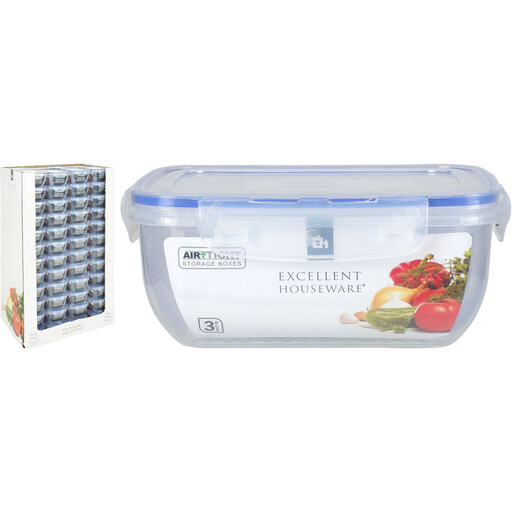
Why it stands out: This set is a universal foundation for any organisational system. It offers a straightforward and effective solution for general household organisation.
Advantages:
Who it's for: Individuals and families looking for a basic and flexible solution for organising household goods, office supplies, children's toys, or craft materials.

Why it stands out: This collapsible box combines functionality with a modern design. Its ability to fold down makes it an exceptionally space-saving option when not in use.
Advantages:
Who it's for: Anyone who needs a flexible and visually appealing storage crate for a child's room, office, or living area and values space-saving storage.
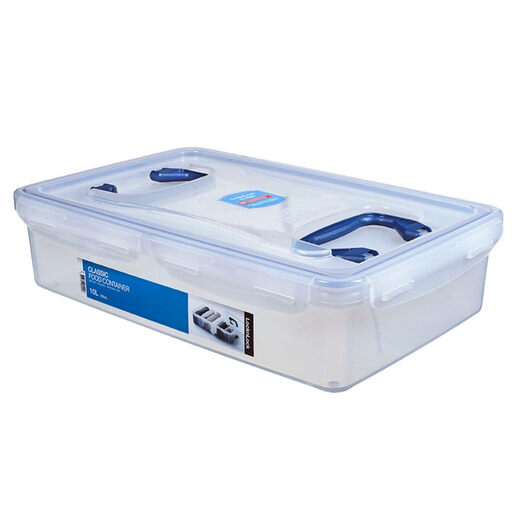
Why it stands out: A highly functional, airtight container with a large volume, specifically designed for the safe storage of food or moisture-sensitive goods.
Advantages:
Who it's for: Home cooks, large families, and anyone who needs a reliable and odour-proof food container for organising their pantry or refrigerator.
Haven't found the right solution for your specific organisational problem yet? Whether you need special sizes, different materials, or entire sets for your dresser, there are many other possibilities.
Discover our entire range of Dresser Storage Bins and find the perfect organisational system for your home.
The main difference lies in the seal and the locking mechanism. An airtight container has a special seal, usually made of silicone, and a tight-fitting lock. This prevents the exchange of air and moisture, which is crucial for keeping food fresh and protecting it from pests. A conventional plastic box with a lid primarily protects against dust and dirt but is not hermetically sealed.
Ideally, use stacking boxes from the same product line, as their lids and bases are designed to fit together. Always place the heaviest boxes at the bottom. Ensure the surface is level and stable. Avoid stacking the boxes too high to prevent compromising stability.
No. For food storage, you should only use boxes that are explicitly labelled as "food-safe" or "BPA-free." These labels guarantee that no harmful substances will transfer from the plastic to the food. Specialised food containers are designed for this purpose and are the safest choice.