
Lieferung heute & morgen

Qualitätsgarantie

Willkommens-Angebote freischalten: KOSTENLOSE Lieferung | Bis zu 80 % RABATT | Kostenlose 30-Tage-JoyPlus-Testphase
App herunterladen
Storage boxes are designed to keep things organised, protect food and make sensible use of the space available. In practice, however, many containers do not fit in fridge compartments, lids do not close reliably or boxes become difficult to clean after a short time. If you focus solely on the price or an appealing product photo, you can easily overlook crucial details.
A stated capacity does not always tell you whether a container will fit in the intended compartment. The external dimensions, including the lid, handles or fasteners, are what matter. Before buying, measure the width, depth and height of the shelf compartment or fridge drawer.
The shape also plays a role: rectangular, stackable plastic boxes generally make more efficient use of straight shelves than round containers. Round food storage containers, on the other hand, can be practical for serving or reheating.
A seal alone does not guarantee leak-proof storage. Check whether the lid has clips, a silicone ring or a seal that runs all the way around. For dry foods such as flour, rice or cereal, it is also important to fill the container only when it is completely dry. Residual moisture can encourage clumping or unpleasant odours.
When transporting food, for example to work or school, the lid should lock securely into place. A container with a lid that simply rests loosely on top is less suitable for this purpose.
Not every food storage box is suitable for the microwave, freezer or oven. Plastic containers should only be heated if this is expressly stated on the packaging. In many cases, approval also applies only without the lid and within a specific temperature limit.
Glass is low-odour and transparent, but it can be heavier and may be damaged by sudden changes in temperature. Metal containers are not automatically suitable for microwave use. The manufacturer’s instructions are therefore more important than general advertising claims.
First, match the intended use to a specific area:
A box should not only fit inside, but also be easy to take out again. In the fridge, a lid that is too tall can obstruct the airflow or block the compartment above.
Food storage containers are usually made from plastic, glass or metal. Look for clear information about food suitability, care and temperature resistance. With plastic, claims such as BPA-free are only meaningful if they can be clearly linked to the product information or packaging.
For glass containers, borosilicate glass is a specific material description. Even so, hot and cold surfaces should not be brought together abruptly. Metal boxes are best used for dry foods or cold meals unless the manufacturer provides different instructions.
Dishwasher suitability can make kitchen organisation easier, but it should always be checked against the product information. For lids with silicone seals, a design that can be taken apart is worthwhile, as residue can collect underneath. Before buying, you should also check:
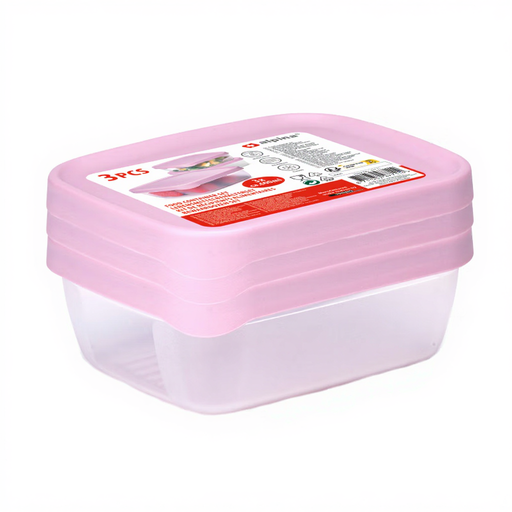
Why this product suits this profile: The set includes three differently sized containers and one universal lid. This makes it easy to start organising your kitchen with several formats without needing a separate lid for each box.
The transparent boxes make it easier to check the contents. Before using them in the microwave, freezer or dishwasher, check the information on the packaging.
Three sizes, one universal lid and a stackable design according to the product description.
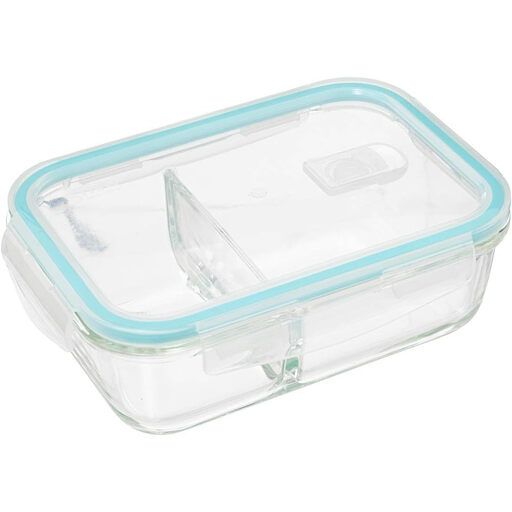
Why this product suits this profile: Made from borosilicate glass, this container has two compartments, making it suitable for keeping separate components of a prepared meal apart. The dimensions are 21.5 × 15.3 × 7.5 cm.
The compartments reduce the mixing of different foods. The lid is made from polypropylene and silicone; dishwasher suitability is stated.
Borosilicate glass, 1.1 l capacity, two compartments and stated dishwasher suitability.
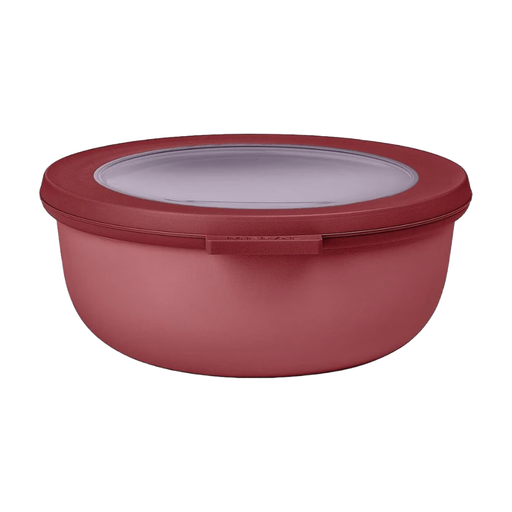
Why this product suits this profile: This food storage container is designed for use in the fridge and freezer and, according to the product description, is microwave-safe without the lid. It can also be used directly for serving.
The temperature limit of 110 °C and the instruction to remove the lid before heating are clearly stated. This helps prevent misuse in everyday situations.
750 ml capacity, airtight lid according to the product description, stackable and nestable design, and dishwasher suitability.
For dry provisions, the Scandinavian Rice Storage Box 1250g has a capacity of 1.25 kg and dimensions of 10.8 × 10.8 × 18.4 cm, making it suitable for rice and similar foods. For larger quantities, the LocknLock Kitchen Caddy 5L offers a capacity of 5 l, a hinged lid with safety clips and a double seal. According to the product description, it is designed for dry goods such as flour, sugar, pasta or pet food, but is not suitable for microwave use.
A dedicated fridge storage solution is provided by the Refrigerator Storage Box 29.7 × 20 × 5.5 cm, made from transparent, food-safe plastic. For cupboards, cellars, balconies or seasonal clothing, the Thick Clear Plastic Storage Box 4 Pack variants are designed with 2.5 mm-thick PP plastic, click-lock lids and integrated handles. For cutlery, cosmetics or small items, the 15 Pieces Drawer Organisers or the WhereHike Drawer Organiser Boxes with adjustable dividers are worth considering.
We have put together a complete, regularly updated list of products that fully meet these strict selection criteria and the safety regulations applicable in the EU.
Flat, transparent containers whose external dimensions fit the compartment are suitable. A fridge storage box should be easy to remove and approved for the intended temperature range. Tall containers can be impractical where compartment height is limited.
Their lifespan depends on the material, use, cleaning and closure. Replace boxes if they develop cracks, permanently distorted lids, damaged seals or heavily scratched inner surfaces. With plastic, frequent exposure to high temperatures can accelerate ageing.
Airtight food storage containers are particularly suitable for dry products such as rice, flour, cereal or pasta. Both the containers and the food must be dry before filling. For fresh, hot or liquid foods, you should also check the information on temperature limits, microwave use, freezer suitability and leak resistance.