
Lieferung heute & morgen

Qualitätsgarantie

Willkommens-Angebote freischalten: KOSTENLOSE Lieferung | Bis zu 80 % RABATT | Kostenlose 30-Tage-JoyPlus-Testphase
App herunterladen
An organised home creates a sense of calm and clarity. However, the path to achieving it is often paved with unsuitable storage solutions that cause more frustration than order. Many people buy products that seem practical at first glance but quickly prove to be useless. Before you make a decision, it's essential to understand the most common pitfalls.
The three most common problems when choosing storage boxes:
This guide will help you navigate these issues and make an informed decision based on objective criteria.
To avoid a purchase you'll regret, you should examine three core aspects. These will determine whether a storage box becomes a long-term asset or a short-term disappointment.
The material is crucial for longevity and its intended use.
Measure the available space precisely before you buy.
The function must match the application.
Here are some recommendations tailored to different needs and use cases.
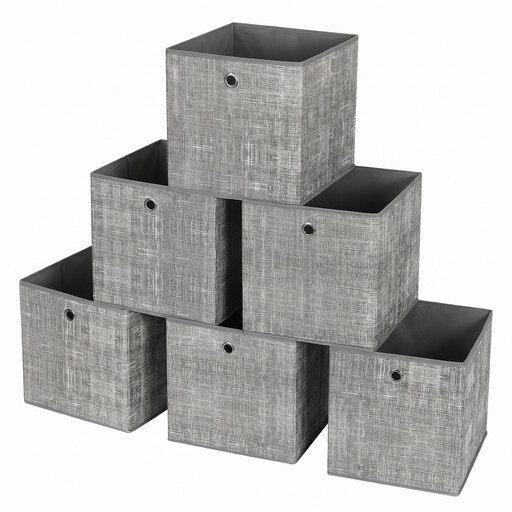
Why it's a great fit: Perfect for starting your journey to an organised home. With its 30x30x30 cm dimensions, this set fits into common cube shelving units and offers a cost-effective solution for general storage of clothes, toys, or books.
The construction with 80g/m? non-woven fabric and sturdy cardboard inserts prevents the rapid collapse common in less robust fabric boxes.
The set of 6 allows for uniform organisation. When not in use, the boxes can be folded flat for space-saving storage.
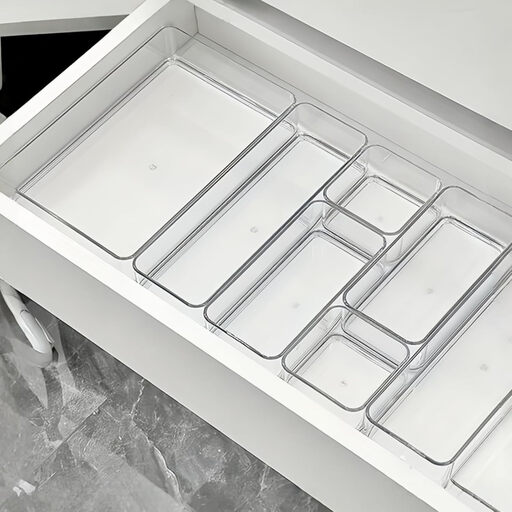
Why it's a great fit: Perfect for ending the chaos in bathroom, desk, or kitchen drawers. The modular system allows for flexible division for cosmetics, office supplies, or cutlery.
Instead of one large, cluttered box, this set offers flexible individual containers. This keeps everything in its place, and the layout can be adapted to almost any drawer size.
The set includes 25 pieces in 4 different sizes for maximum flexibility. The transparent plastic provides a quick overview of the contents.
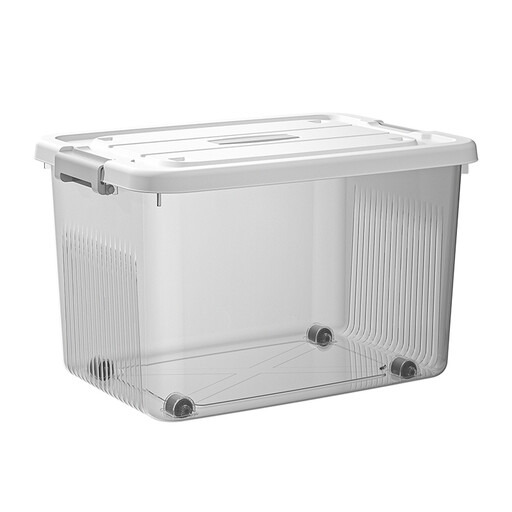
Why it's a great fit: Suitable for storage in the basement, garage, or for heavier items like tools, books, or files where stability and protection are crucial.
With a 2.5 mm wall thickness and reinforced ribs, this box resists deformation. The snap-on lids close securely, reliably protecting the contents from dust.
The boxes are securely stackable thanks to form-fitting lids and a non-slip base. The transparent design allows for quick identification of the contents.
We have compiled a complete, up-to-date list of products that fully meet these strict selection criteria and European safety standards.
Most foldable fabric boxes with integrated cardboard inserts should not be machine-washed or fully submerged in water, as this would soften the cardboard and ruin the box. For cleaning, it is recommended to gently dab stains with a damp cloth and a mild soap solution. Afterwards, the box should be left to air dry completely. Always follow the manufacturer's care instructions.
No, not all plastic boxes are designed for secure stacking. For high stacking stability, the lid should either have a raised edge or the base of the box should have grooves that fit precisely onto the lid of the box below. Boxes with completely flat lids and bases can easily slide when stacked, especially with heavier loads.
This specification refers to the basis weight of the non-woven fabric used, measured in grams per square metre (g/m?). It is an indicator of the material's density and thickness. A higher value, like 80 g/m?, generally indicates a more robust and tear-resistant fabric than versions with, for example, 60 g/m?. This contributes to the overall durability of the fabric box.