
Lieferung heute & morgen

Qualitätsgarantie

Willkommens-Angebote freischalten: KOSTENLOSE Lieferung | Bis zu 80 % RABATT | Kostenlose 30-Tage-JoyPlus-Testphase
App herunterladen
Storage boxes are meant to create order, make the most of your space and simplify access to clothes, toys, office supplies or household items. In practice, however, many boxes don’t fit on the shelf, warp under weight or offer less protection than expected. If you only look at colour and price, you can easily end up buying twice.
This buying guide shows you which features really matter when it comes to storage boxes and which solutions suit different households, workspaces and how often you use them.
A box with the right external dimensions can offer far less space inside, for example because of thick walls, reinforcements or a lid rim. Before you buy, you should therefore check:
For cupboard and shelf boxes, it’s not just the width and height that matter, but also the shelf depth and the direction the door opens.
Stackable storage boxes need a stable surface and a shape that prevents them from slipping. With fabric boxes, the ability to stack often depends on a reinforced base and a sturdy frame. With plastic boxes, the lids, bases and side walls need to be properly matched.
Look for specific information on maximum load, stacking height and safe use. If these details are missing, the box shouldn’t be used for heavy items or tall stacks.
Foldable storage boxes save space when they’re not in use. However, their construction is usually designed for light to medium-weight contents. Books, tools or lots of tins can warp fabric and cardboard models. For those items, rigid plastic boxes or specialist storage crates are more suitable.
The volume should match what you’re storing. Small sorting boxes are ideal for cables, stationery, cosmetics or craft supplies. Medium organising boxes can hold accessories, toys or folded clothes. For blankets, winter coats and bedding, larger models with a sturdy frame make sense.
An example of a compact solution is the DAY-Box 2-piece set with 17 × 12.5 × 7 cm and 1.2 litres capacity per box. Its low height fits into many drawers and smaller shelf compartments. Before ordering, you should compare the internal dimensions of your intended space with the product details.
Fabric boxes are lightweight, often foldable and suitable for wardrobes, open shelving or bedrooms. They should be protected from moisture and usually only cleaned with a slightly damp cloth. For textiles stored for longer periods, a dry, well-ventilated storage spot is important.
Plastic boxes are wipe-clean and more rigid. Transparent versions make it easy to see the contents, while opaque boxes keep things more discreet. Models made from PP plastic with reinforced walls and lids can be suitable for the cellar, garage, balcony or seasonal storage. Even so, always follow the manufacturer’s guidelines on temperature, sunlight and load.
Storage boxes with lids protect the contents from dust and make stacking easier. A flip, snap-on or drop-on lid differs in how you access the contents and how securely it fastens. Handles are handy if you move boxes around often, but they shouldn’t be taken as a sign of unlimited weight capacity.
For many categories, labelling is worthwhile: clothes by season, toys by age group or craft materials by type. Viewing windows, labels or included labelling cards reduce the time spent searching.
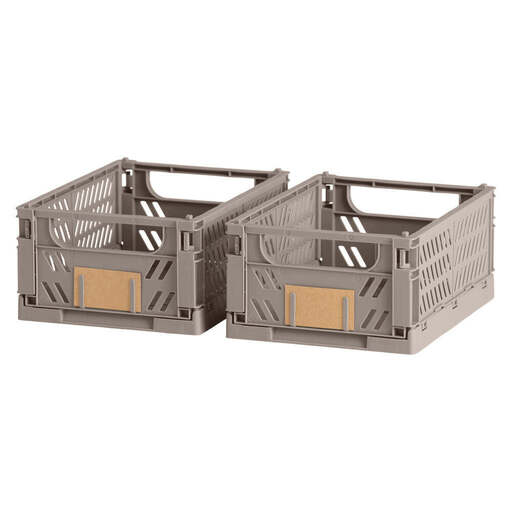
Why this product fits the profile: The 2-piece set is designed for small items and limited compartments. Each box holds 1.2 litres, is stackable and can be folded flat when not in use.
The dimensions and capacity are clearly stated. Two labels per box make it easier to identify contents without having to open them repeatedly.
Stackable construction, foldable design, 1.2 litres per box and a stated maximum load of 5 kg.
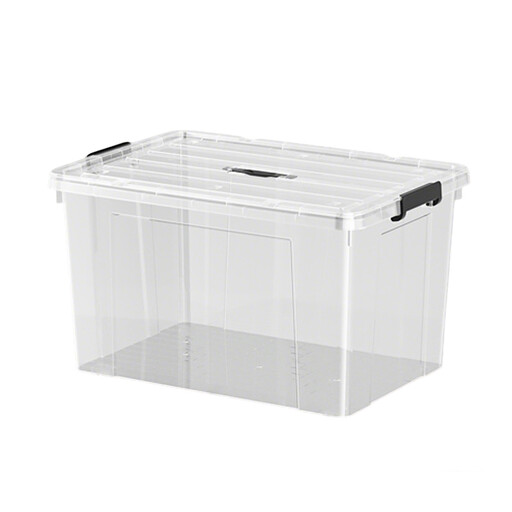
Why this product fits the profile: These plastic boxes appeal to users who want wipe-clean surfaces, see-through storage and stackable organisation for the home, cellar or seasonal items.
The specifications mention a 2.5 mm thick wall, reinforcement ribs, an anti-slip base, lid and integrated handles. This lets you compare key buying criteria in advance.
4-piece set, transparent design, snap-on lid, integrated handles and dimensions of 42 × 30 × 25 cm.
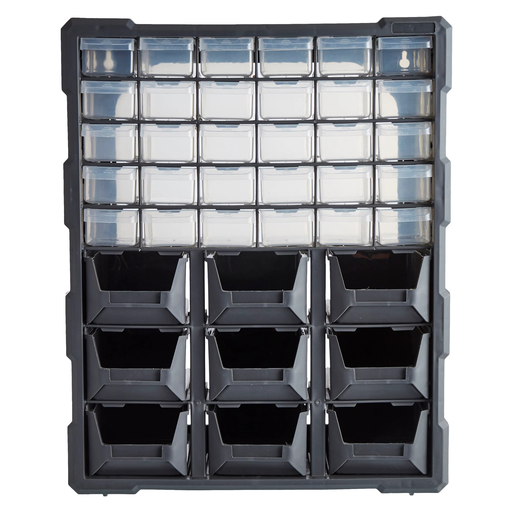
Why this product fits the profile: For the workshop, garage or hobby room, this organiser offers 39 drawers plus nine larger open compartments for screws, nuts, small parts and smaller tools.
The many separate compartments prevent small items from getting mixed up in one large box. The stated load capacity should still be observed; very heavy or sharp-edged items are not intended for this product.
39 drawers, nine open compartments, PP plastic and compact dimensions of 47.5 × 38 × 16 cm.
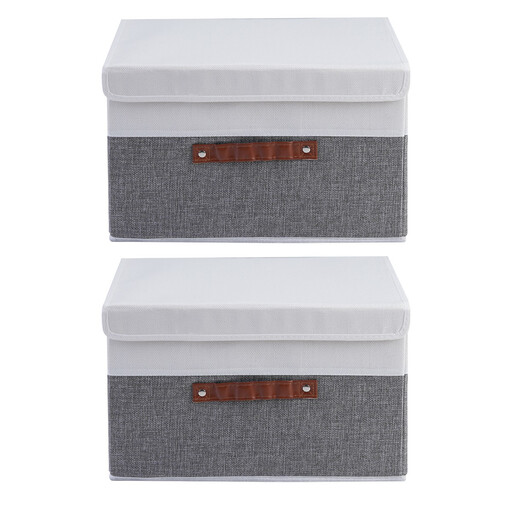
Why this product fits the profile: These collapsible boxes with lids and handles are ideal for clothes, blankets and seasonal textiles in the bedroom, hallway, utility room or car.
The lid reduces dust ingress, while the collapsible design saves space when not in use. This model is not waterproof and should not be overloaded.
2-piece set, collapsible structure, dust-protection lid, carrying handles and square dimensions of 13 × 13 × 13 inches per box.
We’ve put together a full, regularly updated list of products that fully meet these strict selection criteria and the safety regulations in force in the EU.
For clothes, fabric boxes with lids or larger collapsible storage boxes are a good option. What matters is having sufficient dimensions, a dry storage environment and a construction that can support the weight of textiles without sagging. For longer-term storage, clothes should be dry and not packed too tightly.
Plastic boxes are generally easier to wipe clean and are suitable for the cellar, garage or areas that need more frequent cleaning. Fabric boxes are lighter, often foldable and look good in living spaces and bedrooms. The choice depends on the storage location, the contents and the level of protection you need from dust or moisture.
How long they last depends on the material, the load, the storage location and how well they’re cared for. Overloading, moisture, heat and direct sunlight can affect their shape and surface. If you stick to the stated load limit, store boxes in a dry place and replace damaged lids or handles promptly, you’ll reduce typical wear and tear.