
Lieferung heute & morgen

Qualitätsgarantie

Willkommens-Angebote freischalten: KOSTENLOSE Lieferung | Bis zu 80 % RABATT | Kostenlose 30-Tage-JoyPlus-Testphase
App herunterladen
An organised home creates space for clarity and well-being. However, the path to get there is often littered with unsuitable storage solutions. Many of us know the problem: you buy storage boxes that look promising, only for them to prove impractical or unstable. Before you invest, it's crucial to understand the common pitfalls that often lead to disappointment and clutter.
Two of the most common issues are unstable construction and impractical designs. Many boxes, especially budget-friendly models made of cardboard or thin plastic, buckle under weight, can't be stacked properly, or have lids that warp. Another frustration is the discrepancy between the external dimensions and the actual usable volume. A bulky box that offers little interior space is not an efficient solution.
To make an informed decision tailored to your needs, you should evaluate a few key parameters. These will help you create a durable and functional organisational system.
The material determines the longevity and intended use of a storage box.
The functionality should perfectly match your available space and intended use.
Compare not only the external dimensions but also the stated volume in litres. A box with straight walls and a simple lid generally offers more usable storage space than one with heavily tapered edges or complex latches. Carefully measure the intended space—whether on a shelf, under the bed, or in a closet—to ensure a perfect fit.
To make your choice easier, we have matched some products to different use cases.
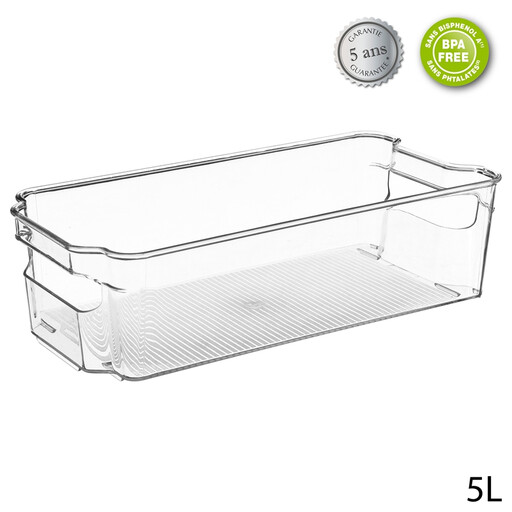
Why it's a great fit: Ideal for those who want to create order and hygiene in their refrigerator. The box helps to store foods like fruit, vegetables, or cold cuts separately and visibly.
The box is made of sturdy and clear PET plastic, not thin, brittle material. Its rectangular shape maximises shelf space and avoids wasted gaps.
The transparent design allows for quick identification of contents without having to take the box out. The material is easy to clean.
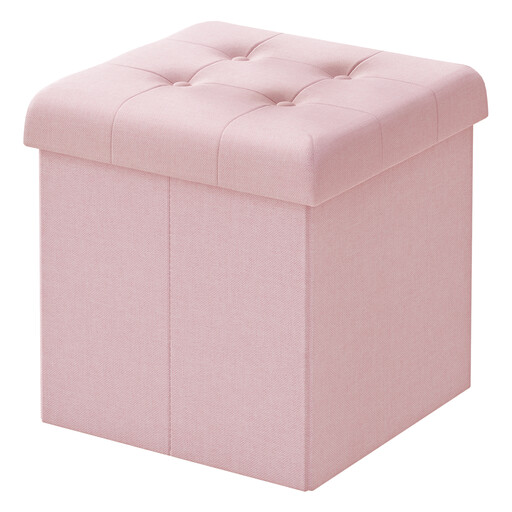
Why it's a great fit: Perfect for small apartments or rooms where every function counts. This ottoman combines a seat with a practical storage capacity of 43 litres.
The construction is based on sturdy E1-grade MDF panels instead of cardboard. According to the manufacturer, the ottoman supports a static load of up to 300 kg, making it a truly functional piece of furniture.
The ottoman is foldable and can be collapsed to a height of just 6 cm when not in use. The linen-look cover is breathable and easy to care for.
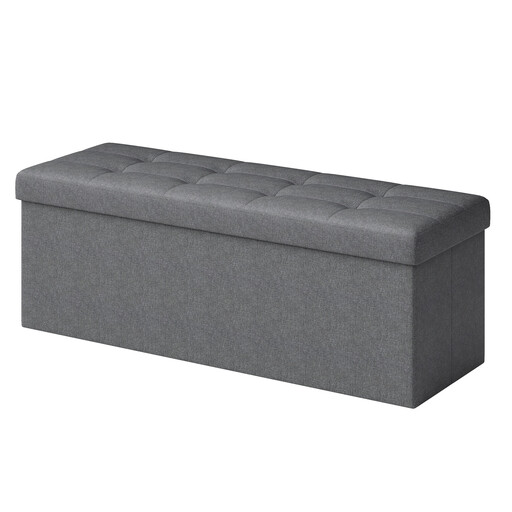
Why it's a great fit: For anyone who needs ample storage without compromising on aesthetics in the living room or bedroom. Ideal as a bench at the foot of the bed for blankets and pillows.
The robust construction of MDF panels and metal corner reinforcements ensures high stability. Its large 131-litre volume is genuinely practical, not just an optical illusion.
The elegant design, with its linen-look fabric and tufted surface, blends seamlessly into any decor. The high static load capacity of 300 kg provides a true seating function.
We have compiled a complete, up-to-date list of products that fully meet these strict selection criteria and rigorous safety standards.
Durability heavily depends on the core material. Models with a structure made from MDF panels can often support a static load of up to 300 kg, according to manufacturer specifications. This makes them well-suited as additional, temporary seating. For products made primarily of cardboard, the load capacity is significantly lower. Therefore, always check the product description for information on the maximum weight capacity.
For a stable organisational system, stackable boxes should have a reinforced frame and a well-fitting lid. Ideally, the lid and base will have interlocking grooves or a shape that prevents slipping. If you want to identify the contents quickly, transparent boxes or models with a label window are advantageous, as they save you from having to unstack everything.
Most fabric boxes, especially those reinforced with cardboard or MDF, are not machine-washable. The recommended cleaning method is to wipe them with a slightly damp cloth. For more stubborn stains, a mild detergent can be spot-tested on an inconspicuous area. Afterwards, always allow the box to air-dry completely to prevent material damage or odours.