
Lieferung heute & morgen

Qualitätsgarantie

Willkommens-Angebote freischalten: KOSTENLOSE Lieferung | Bis zu 80 % RABATT | Kostenlose 30-Tage-JoyPlus-Testphase
App herunterladen
Overfilled wardrobes, loose items in the cellar and seasonal clothing without a designated place: storage boxes can make household organisation easier when the size, material and intended use are right. However, it is often not the price alone that leads to a poor choice, but an unsuitable design.
A box can offer plenty of storage space and still not fit under the bed, into a shelving compartment or inside the wardrobe. That is why the external dimensions in centimetres are just as important as the capacity in litres. For under-bed storage, you should also check whether castors, the bed frame or skirting boards restrict the available space.
Fabric boxes and storage bags are lightweight and often foldable. They are suitable for clothing, blankets or textiles, for example, but should not be treated as equivalent to a load-bearing plastic box. For plastic boxes, material thickness, lid closure, handle design and base stability are relevant details. A transparent box makes it easier to find the contents, while opaque models can provide protection from light and greater privacy.
Stackable storage requires a level surface. A well-fitting lid and a non-slip base can improve stability, but they do not replace information about the maximum load. Heavy books are not automatically suitable for every folding box or fabric box. For books, tools or provisions, sturdy plastic boxes or a suitable storage cabinet are generally more practical.
Measure the intended storage space at several points. For clothing and bedding, rectangular storage bags are often more space-efficient than square boxes. A size of 70 × 43 × 18 cm may be suitable for under-bed storage, for example, provided the actual clearance is sufficient.
For shelving with cube compartments, dimensions such as 30 × 30 × 30 cm or 28 × 28 cm are relevant. Leave a little clearance so that the box can be removed easily. For garment bags and bags with zips, the opening should also be large enough to insert folded textiles comfortably.
A zip makes it easier to open a bag on the floor or under the bed. Carry handles are useful on large bags, but should not be confused with a tested load capacity. For boxes with lids, a secure closure and integrated handles are practical when the contents need to be moved regularly.
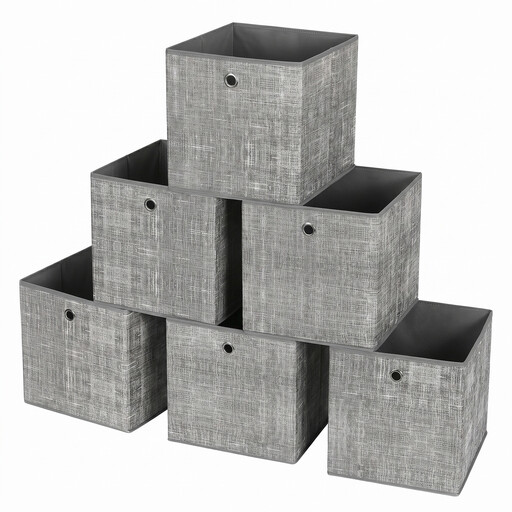
Why this product suits this profile: The set includes six foldable fabric boxes measuring 30 × 30 × 30 cm, making them suitable for clothing, small items or books in compatible shelving compartments.
The stated dimensions make it easier to check compatibility before buying. The boxes can be folded away when not in use and are intended for dry indoor areas.
Set of six, foldable design, carry handles and a stated static load capacity of up to 5 kg per box.
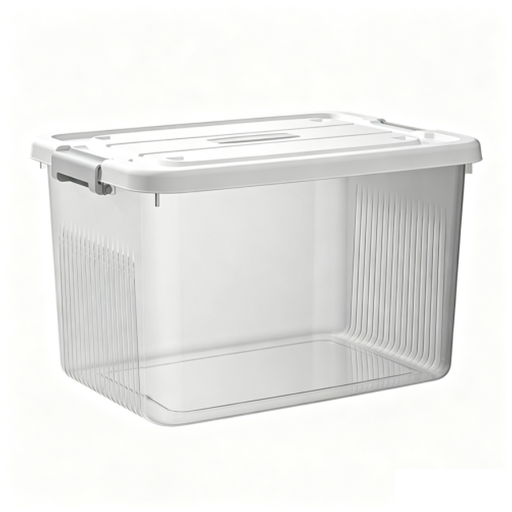
Why this product suits this profile: The four transparent PP plastic boxes are designed for clothing, household items, office supplies or seasonal belongings.
The product details specify a 2.5 mm body thickness, reinforcing ribs, snap-on lids and a non-slip base. The maximum load should still be observed.
Transparent design, integrated handles, stackable lids and easy cleaning with a damp cloth.
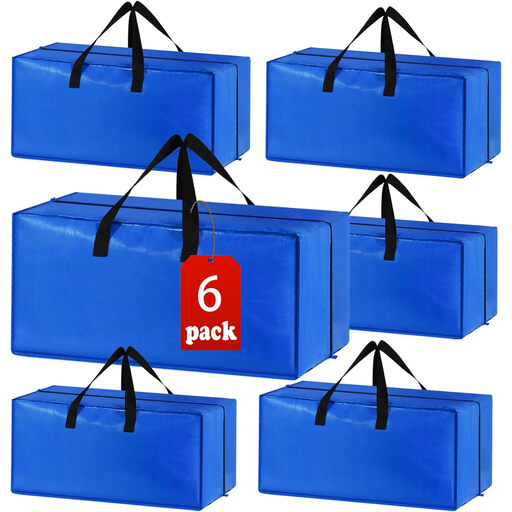
Why this product suits this profile: The large zip-up bags with handles are designed for clothing, duvets, moving house, camping and seasonal storage.
The dimensions and six-piece set are clearly specified. The zip opening keeps textiles accessible without requiring a rigid box.
Large format, carry handles, zip closure and six bags for organised, category-based storage.
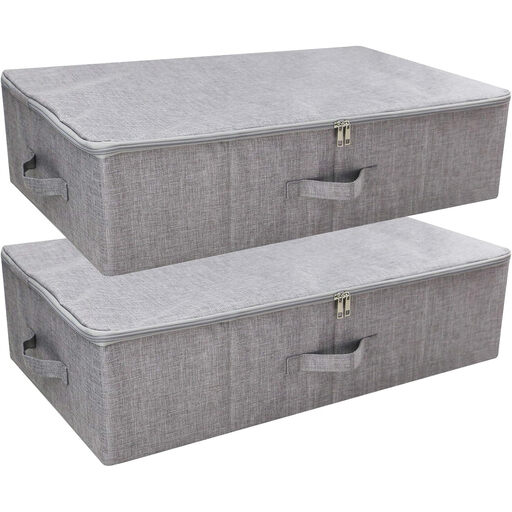
Why this product suits this profile: The low-profile design is intended for clothing, accessories and household items under the bed or in shallow wardrobe areas.
The low height is clear from the specific dimensions. Before buying, measure the available space under the bed and avoid overloading the bags.
Two foldable bags, a rectangular design and zip cover for accessing stored textiles.
We have put together a complete, regularly updated list of products that fully meet these strict selection criteria and the safety regulations applicable in the EU.
For wardrobes, fabric boxes, folding boxes and wardrobe organisers are useful as long as they remain easy to access. In the bedroom, garment bags and duvet storage are suitable for textiles that are not needed regularly. In the cellar or on the balcony, pay attention to the instructions regarding moisture, UV light and temperature.
A storage cabinet with several levels can create additional vertical storage space in small homes. PP plastic models can be wiped clean and, depending on the design, assembled without tools. For mobile versions with castors, a level floor is important; heavy items should only be stored within the specified load capacity.
For families, labelling by category and season is worthwhile. Students often benefit from foldable bags that take up little space when moving house. Anyone organising books or files should consider the load capacity of the relevant shelf and the box separately.
For clothing, dry, well-ventilated fabric boxes, folding boxes and storage bags with zips are suitable. Textiles should be clean and completely dry before being stored. For cellar areas, the product’s instructions regarding moisture and temperature are particularly important.
Yes, provided the height, lid design and base area fit beneath the bed. Transparent plastic boxes make it easier to check the contents. Before buying, compare the internal and external dimensions, as reinforcements or lids can alter the usable space.
Their lifespan depends on the material, load, frequency of transport and storage location. Fabric boxes should not be washed or stored in permanently damp conditions. Plastic boxes should be protected from heat, naked flames and prolonged direct sunlight. For all types, following the stated load capacity and avoiding overfilling will help extend their useful life.