
Lieferung heute & morgen

Qualitätsgarantie

Willkommens-Angebote freischalten: KOSTENLOSE Lieferung | Bis zu 80 % RABATT | Kostenlose 30-Tage-JoyPlus-Testphase
App herunterladen
An storage cabinet should create order, take up as little space as possible and suit the room it is used in. In practice, however, unclear dimensions, insufficient load capacity or impractical compartments often lead to unsuitable purchases. This affects households as well as students, office users and workshop owners.
It is therefore worth considering how the cabinet will actually be used before buying: will it store clothes, shoes, files, tools or bathroom essentials? Will it need to be moved regularly? Is it possible to anchor it securely to a wall? The following criteria will help you distinguish marketing claims from product features that really matter.
A high number of compartments or drawers does not automatically mean plenty of storage space. The crucial factors are width, depth and clear internal height. A narrow model may be suitable for documents, while folded clothes or bulky household items require more depth.
Also check whether drawers can be pulled out fully and whether doors, handles or castors require additional space in front of the cabinet.
Descriptions such as ‘stable’ or ‘robust’ are difficult to assess without specific figures. With a drawer cabinet, the load capacity per drawer should be considered separately. Fabric drawers, for example, are more suitable for lightweight clothing and accessories than for books, tools or full ring binders.
With an office cabinet or mobile pedestal, the load-bearing capacity of the top and the stability of the castors are also important. Heavy items should be stored as low down as possible so that the cabinet does not tip over.
A folding plastic cabinet or a model that can be assembled without tools can be set up quickly. Even so, the floor must be level, and locks or connectors should be fully engaged. With taller furniture, an anti-tip device may be advisable or required.
One example is a drawer cabinet supplied with an anti-tip system: it should be secured to the wall according to the instructions. Small children and pets can pull on furniture, so stability should be part of your purchase decision, not just something to consider during assembly.
First measure the available alcove and take skirting boards, doors and radiators into account. For a hallway or multipurpose cabinet, the width of the passageway is also important. A space-saving storage cabinet with a shallow depth may be more practical there than a large model with wide doors.
A mobile storage cabinet is well suited to flexible room layouts. Castors make it easy to move the cabinet between a home office, bedroom and living room. Look for locking brakes if you intend to keep the cabinet in one place permanently.
PP plastic is lightweight, easy to wipe clean and suitable for many areas of the home. A folding plastic cabinet can be useful in a small flat or student accommodation if you want to store it compactly when moving house. Direct heat, fire and extreme temperatures should be avoided, as plastic can become deformed.
Coated chipboard provides a more solid surface for living areas and offices. In damp conditions, the edges and surfaces must be cared for appropriately. Wipe-clean materials are practical for bathrooms and kitchens, although standing water should be avoided.
Drawers are suitable for clothes, underwear, accessories and smaller items. Open compartments provide quick access to books, towels or supplies. Doors protect the contents from dust, while transparent elements can make it easier to find what you need.
A wardrobe with drawers is a good option if you want to store hanging clothes and folded textiles together. For shoes, a shoe cabinet with adjustable shelves is a practical choice. With a model that includes a bench, you should also check whether the seat, cushion and compartment layout are suitable for everyday use.
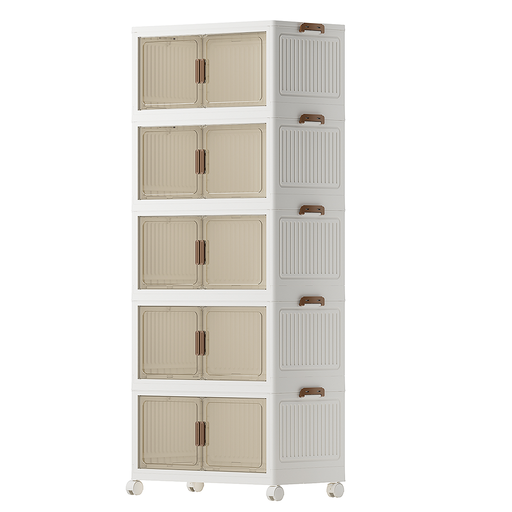
Why this product suits the profile: With five compartments, castors and a folding PP plastic construction, this cabinet is suitable for small flats, student accommodation and rooms where storage needs change.
The product description specifies the material and locking system, and states that the cabinet must be placed on a level surface. The maximum load should be checked before filling it.
Five shelves, tool-free set-up, folding construction and nylon castors; the surface can be cleaned with a damp cloth.
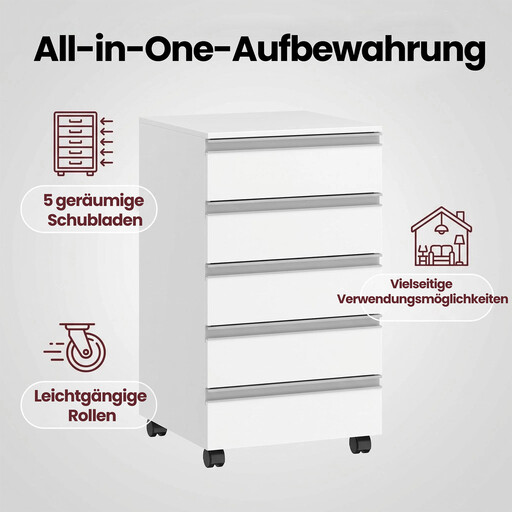
Why this product suits the profile: This mobile pedestal is designed for documents, office supplies, drawings or workshop accessories and, according to the product information, has a total load capacity of up to 50 kg.
Specific dimensions of approximately 40.5 × 40.5 × 65.5 cm, reinforced drawer runners and lockable front castors make planning easier and provide a secure stand.
Five deep drawers, 360-degree castors, coated chipboard and a usable top surface for smaller devices.
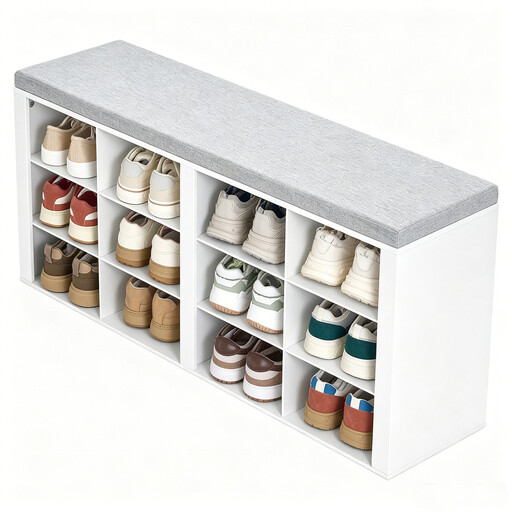
Why this product suits the profile: Designed for hallways, bedrooms or entrance areas, this model combines shoe storage with a seat and height-adjustable shelves.
The adjustable shelves accommodate different shoe heights. The product information also states a load capacity of 150 kg and a removable, washable seat cover.
Twelve compartments, adjustable shelves, a bench with a removable cover and a width of 104.5 cm.
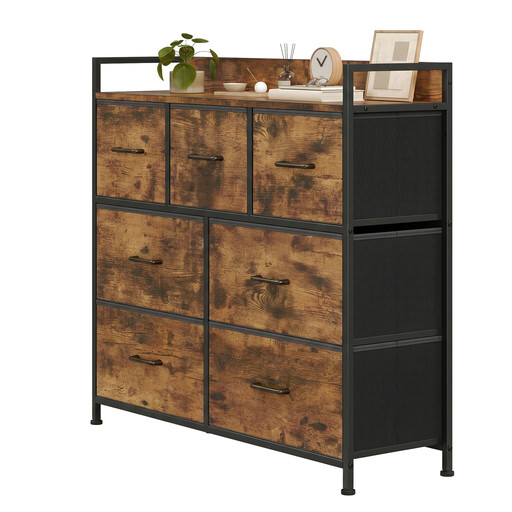
Why this product suits the profile: With seven drawers and a width of 98 cm, this combination is suitable for clothes, laundry and accessories in a bedroom or dressing room.
The specifications state a maximum static load of 3 kg per drawer. Heavy items should therefore not be placed in the fabric compartments; the supplied anti-tip device should also be used.
Seven drawers in different sizes, adjustable feet, a steel frame and a top surface with a stated load capacity of 50 kg.
We have put together a complete, regularly updated list of products that fully meet these strict selection criteria and the safety regulations applicable in the EU.
Start by measuring the floor space and the available height. With drawers and doors, you should also allow for the opening area. For narrow hallways or small kitchens, slim models or a mobile storage cabinet are often easier to integrate. The external dimensions should always be compared with the specific internal dimensions and your intended use.
The service life depends on the material, load, assembly and care. A plastic model should not be overloaded or placed near powerful heat sources. With fabric drawers, the stated load limit is particularly important. Coated surfaces remain fit for use for longer when cleaned gently; abrasive products and harsh chemicals can cause damage.
An ordinary cabinet does not incur any electricity costs during use. Ongoing expenses may only arise from cleaning, replacement parts or, where necessary, additional fixing materials. With a model on castors, the castors’ movement and locking function should be checked regularly. The purchase price should therefore be considered alongside the material, load capacity, assembly effort and suitability for the room layout.