
Lieferung heute & morgen

Qualitätsgarantie

Willkommens-Angebote freischalten: KOSTENLOSE Lieferung | Bis zu 80 % RABATT | Kostenlose 30-Tage-JoyPlus-Testphase
App herunterladen
A storage cabinet should help you stay organised without making the room feel unnecessarily cramped. In the living room, you may want closed compartments for personal belongings; in a home office, space for documents; and in the hallway, somewhere to keep shoes. For a garage, cellar or workshop, durable materials and easy cleaning are more important.
Many disappointing purchases aren’t down to the price, but to unclear product information. Check these three common pitfalls before you buy:
Note the width, height and depth of the space where you plan to put the cabinet. You should also allow room to open its doors or drawers. In a narrow hallway, a slim shoe rack with a shallow depth may be more suitable than a closed cabinet.
An corner shelving unit or a slim plastic shelving unit can work well in a corner. A vertical freestanding shelving unit makes use of the room’s height without taking up much floor space. Also check whether skirting boards, radiators or plug sockets could affect where you can position it.
A steel cabinet or lockable metal cabinet is suitable for documents, office supplies and items you don’t want to leave accessible to everyone. A painted or coated metal surface can make cleaning easier. Even so, check the care instructions for use in damp rooms and avoid leaving standing water on it.
A plastic cabinet is usually lighter and may suit a kitchen, bathroom, children’s room or utility room. When choosing a plastic model, check its stability, back panel and shelf load capacity. A plastic multi-purpose cabinet is handy if you might need to move it from time to time.
For a lockable cabinet, the product details should clearly state the type of lock and what’s included. According to the product description, the JOYFURNOS model comes with a metal lock and two keys. The maximum static load for the top is 30 kg, while each adjustable shelf can hold 25 kg.
Tall shelving units and cabinets should stand on a level surface. An anti-tip device is especially important in homes with children or pets. The steel cabinet mentioned above comes with an anti-tip kit for wall fixing. The assembly instructions and numbered parts can make it easier to put together, but they don’t replace securely fixing it to a suitable wall.
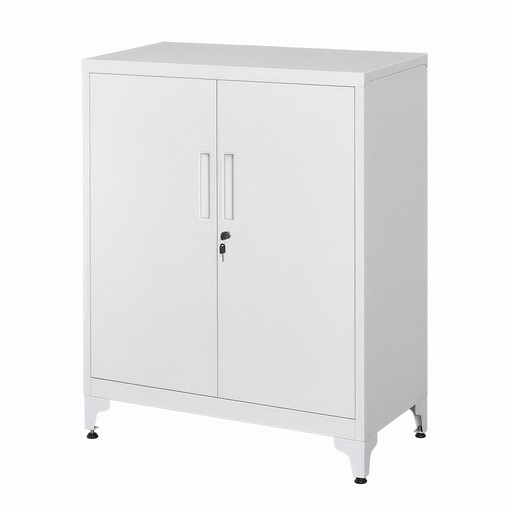
Why it suits this type of shopper: This steel cabinet combines concealed storage with a lock and adjustable shelves. It’s a good fit for a home office, office, study, garage or living room.
The product details specify the external dimensions, load capacities and an anti-tip kit. This makes it easier to assess how much space it needs and how you can use it before buying.
Steel construction, two adjustable shelves, a metal lock with two keys and a water-repellent surface, according to the product description.
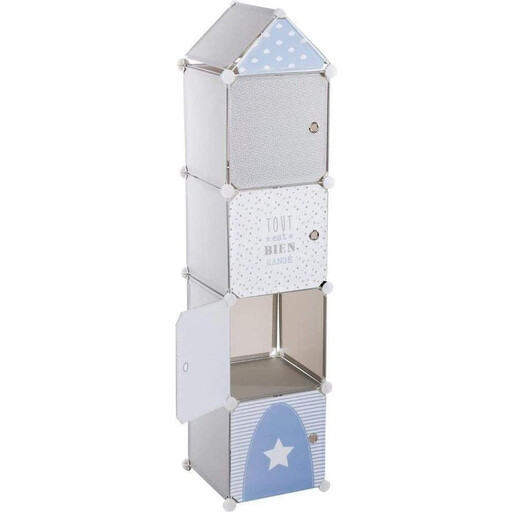
Why it suits this type of shopper: This lightweight plastic model may appeal if you’re looking for a closed, multi-purpose cabinet with a shallow depth, perhaps for a children’s room, utility room or hallway.
The details list the material, dimensions, back panel, doors, wheels and shelves included. This makes it easier to judge what’s included, rather than relying on photos alone.
Polypropylene construction, closed double doors, a back panel and wheels. The product details state a height of 140 cm.
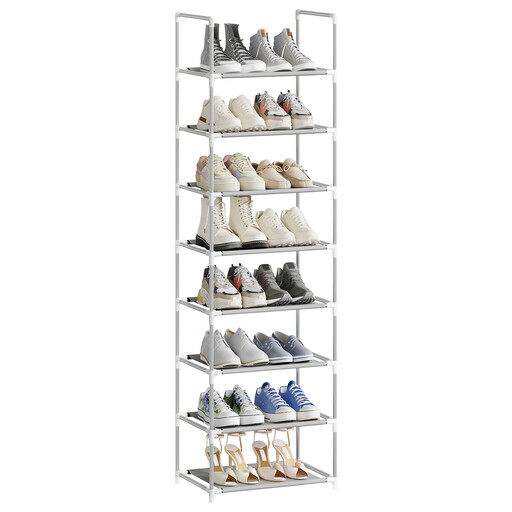
Why it suits this type of shopper: This slim shoe rack makes use of vertical space and, according to the product details, is only 28 cm deep. It’s a good fit for a hall, corridor or entrance.
The tiers are removable, according to the description, and the rack can be split into sections. It also includes an anti-tip device, so you can adapt the layout to suit your shoes and boxes.
Eight tiers, each holding up to 5 kg according to the product details, space for up to 16 pairs of shoes and tool-free assembly with push-fit connectors.
We’ve put together a complete, regularly updated list of products that meet these strict selection criteria and the safety regulations in force in the EU.
Start by placing it on a level, solid surface. Use any anti-tip devices provided and secure the cabinet to a suitable wall, following the assembly instructions. Before drilling, check for pipes and cables and make sure the wall is suitable.
Its lifespan depends on the material, load, moisture, assembly and care. With proper use, metal can be a durable option; plastic is lighter, but shouldn’t be loaded beyond its stated capacity. Regularly checking screws, connectors and doors can help keep it safe to use.
A standard cabinet doesn’t use energy, so it has no running energy costs. You may incur additional costs for assembly accessories, extra storage boxes or replacement parts. If you choose a lockable model, keep the keys somewhere safe and ask about a suitable replacement if needed.