
Lieferung heute & morgen

Qualitätsgarantie

Willkommens-Angebote freischalten: KOSTENLOSE Lieferung | Bis zu 80 % RABATT | Kostenlose 30-Tage-JoyPlus-Testphase
App herunterladen
An organised home creates a calm and pleasant atmosphere. The key to achieving this is choosing the right storage furniture. With countless options available, making a decision can be overwhelming. This guide will help you avoid common buying mistakes and find a solution that perfectly fits your needs and your living space.
As your Joybuy Product Recommendation Officer, I've compiled the most important criteria to help you make an informed choice you'll be happy with for years to come.
Before you invest, it's wise to know the typical pitfalls that often only become apparent after assembly or during daily use.
To avoid the problems mentioned above, focus on the following three core aspects. They will help you objectively assess the quality and functionality of a piece of furniture.
The longevity of storage furniture depends directly on its material.
Always check the specified maximum load capacity for shelves, drawers, and the top surface. This information is crucial to prevent overloading and premature wear.
Measure the intended space precisely—width, height, and depth. Also, account for the clearance needed to open doors or pull out drawers. For specific requirements, there are targeted solutions:
The choice between drawers, doors, and open shelves should depend on what you plan to store.
Here are some recommendations tailored to specific needs that meet the quality criteria mentioned above.
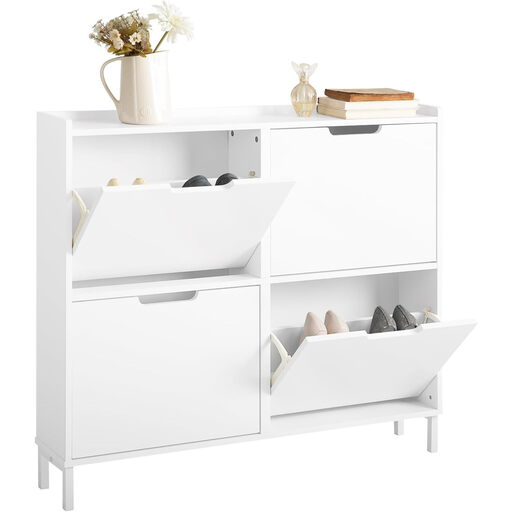
Why This Fits Their Persona: With its shallow depth of just 19 cm, this shoe cabinet is specifically designed for the narrow hallways often found in urban apartments, where every inch counts.
It solves the "awkward dimensions" problem with its intentionally slim design, creating maximum storage in a minimal footprint.
Four flip-drawers keep shoes organised, dust-free, and out of sight. The top shelf provides extra space for keys or decor.
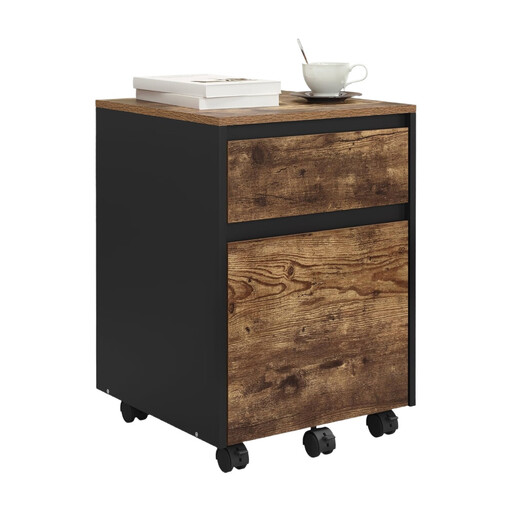
Why This Fits Their Persona: This mobile pedestal is perfect for the home office, as it can be moved as needed and stored under a desk to save space. It offers organised storage for documents and office supplies.
It tackles the "lack of flexibility" trap with five 360° castors (three of which are lockable) and a multifunctional top surface that can serve as a printer stand.
The large drawer is equipped with rails for A4 hanging files. An additional wheel under the drawer prevents it from tipping when fully loaded.
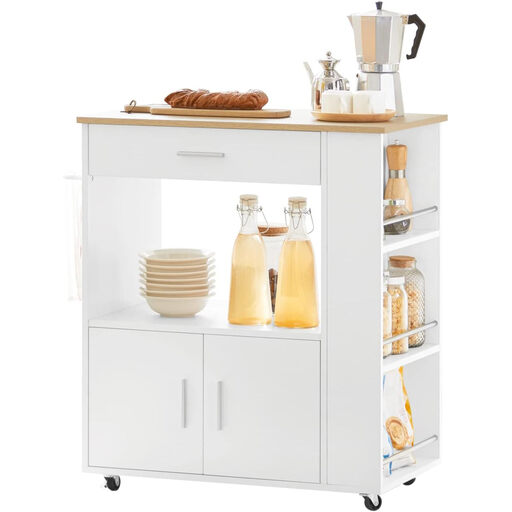
Why This Fits Their Persona: This kitchen trolley is a practical addition to kitchens where counter space and storage are at a premium. It can serve as a mobile kitchen island, serving cart, or extra sideboard.
As a prime example of multifunctional furniture, it avoids the inflexibility trap. It combines a worktop, drawer, cabinet, and side shelves into one mobile unit.
The sturdy PB(E1) worktop offers a durable surface. Four robust castors, two with brakes, ensure both mobility and a stable footing.
We've curated a comprehensive, up-to-date list of products that meet these selection criteria.
1. How much weight can a piece of storage furniture hold? The load capacity varies greatly depending on the material and construction. Reputable manufacturers specify the maximum load capacity for the top surface and for each individual shelf or drawer in the product details. Always compare this value with your intended use. For heavy items like books or dishes, a higher load capacity is essential.
2. Do I need to anchor storage furniture to the wall? For taller or narrower pieces of furniture like dressers, tall shelving units, or cabinets, wall anchoring is strongly recommended to prevent tipping. This is especially important in households with children. Many products already come with a corresponding anti-tip kit (wall anchor). Installation is a small effort that significantly increases safety.
3. What is the difference between MDF, particleboard, and solid wood?