
Lieferung heute & morgen

Qualitätsgarantie

Willkommens-Angebote freischalten: KOSTENLOSE Lieferung | Bis zu 80 % RABATT | Kostenlose 30-Tage-JoyPlus-Testphase
App herunterladen
You don’t always need a new cupboard to create extra storage. The right storage hooks can help you organise coats, towels, bags, kitchen utensils and accessories without taking up much space. However, hook rails, wall hooks, over-door hooks and adhesive hooks vary considerably in how they’re fitted, how much they can hold and where they can be used.
Before you buy, it’s worth looking out for three common pitfalls: a stated weight capacity doesn’t automatically apply to every wall or door, easy installation doesn’t mean a hook will work on every surface, and decorative design says little about how well it will hold up to everyday use.
A maximum load usually applies to the product under specific conditions. With a wall-mounted hook rail, the wall plugs, screws, wall material and quality of the installation also affect how securely it’s fitted. For adhesive hooks, the surface needs to be smooth, dry, grease-free and strong enough to support them.
Heavy winter coats, full bags and several towels put more strain on a hook than individual accessories. So it’s best not to use the maximum load as a constant target. If a product lists a weight capacity, follow the manufacturer’s guidance.
No-drill hooks are handy for rented homes and rooms where you want to avoid permanent holes. Over-door hooks hang over the door, S-hooks need a rail or edge, while adhesive hooks and suction-cup hooks require a suitable surface.
Textured wallpaper, porous walls, uneven tiles and delicate painted surfaces can all affect how well a hook stays in place. With an over-door hook, you’ll also need to check that the door still closes properly and that there’s enough clearance at the top of the door.
A hook rail might look compact on the wall, but wider coats and bags need enough space between hooks. For bathroom towels, it’s also helpful to choose a hook with enough depth to keep the fabric from resting against the wall.
Before you buy, measure:
For renters, over-door hooks, adhesive hooks and hanging solutions are often a good choice because they don’t require permanent holes. An over-door hook, for example, works well in a hallway, bedroom or bathroom. If you’re using a wall regularly, a securely screwed-in hook rail may be more stable, but you’ll need a suitable wall and the right fixings.
Kitchen hooks can be fitted to shelves, rails or cupboards. S-hooks are flexible, but they need a suitable rail or edge. Compact adhesive hooks are often enough for small items such as keys, lightweight cloths or kitchen accessories.
Steel and stainless steel are common choices for hooks that get a lot of use. In the bathroom, dry the surface regularly, as prolonged exposure to moisture can affect coatings and wooden components. Bamboo and wood give a hook rail a warm, homely look, but shouldn’t be left wet for long periods.
A lightly damp cloth is enough for cleaning in many cases. Harsh cleaning products can damage surfaces. If you’re using hooks outdoors or in particularly damp areas, follow the manufacturer’s guidance.
Look for a specific figure, such as the maximum weight capacity per hook or for the whole product. One example from our selection is the white Naturéo over-door hook, which has a stated maximum load of 6 kg. The stated weight capacity for the 5five adhesive hooks is 1.5 kg per hook.
Don’t assume that a hook’s weight capacity makes it suitable for every use. Distribute weight evenly and regularly check that wall-mounted or over-door hooks remain securely in place.
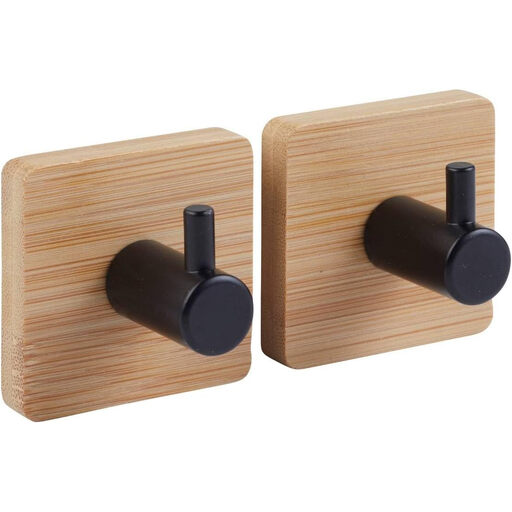
Why this product is a good fit: This two-piece set is designed for lightweight items in the kitchen, bathroom or office, and can be fitted without drilling. Its compact dimensions of 4,5 × 4,5 × 3,6 cm make it a good choice for smaller spaces.
The product details specify the material, dimensions, number of hooks and fitting method. At 1,5 kg per hook, it’s clear that these hooks are intended for lightweight items only.
Bamboo and steel construction, two hooks and tool-free adhesive fitting for indoor use.
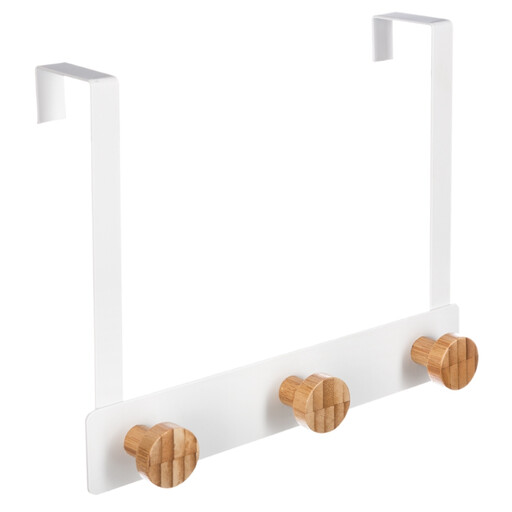
Why this product is a good fit: The combination of white-coated steel and bamboo pairs a clean look with a stated weight capacity of 6 kg. It can be fitted to a suitable standard internal door.
The maximum load of 6 kg is clearly stated. Before use, check that the door is sturdy, the hook fits securely and the weight is evenly distributed.
Three hooks, 25 × 8 × 19 cm, a hook depth of 5 cm and no-drill fitting.
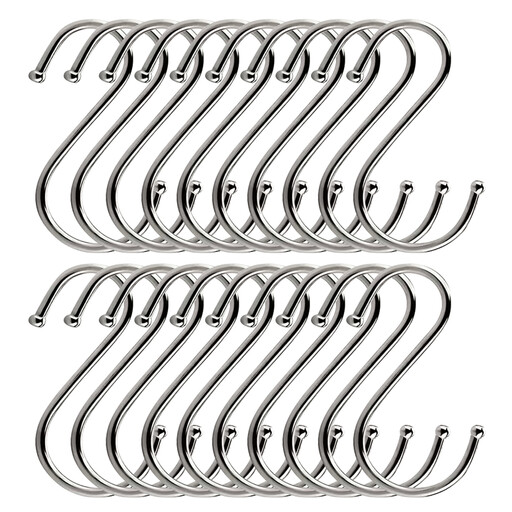
Why this product is a good fit: The 20 S-hooks, each 75 mm long, offer flexible storage on rails, bars, edges or shelves. You can move them around as needed.
The fitting method is straightforward: hang them up rather than using adhesive or drilling. This avoids the mistaken assumption that every wall or tiled surface is suitable.
20 hooks per pack, metal construction and a rust-resistant finish according to the product description.
We’ve put together a complete, regularly updated range of products that meet these strict selection criteria and the safety regulations in force in the EU.
For a rented home, over-door hooks, S-hooks and suitable adhesive hooks are all worth considering. Over-door hooks don’t require drilled holes. Adhesive hooks should only be fitted to clean, dry, smooth surfaces. Before removing them, check the manufacturer’s instructions to help protect the surface.
First, check the wall material, the product’s weight and the intended load. Use wall plugs and screws that are suitable for the wall, and fit the rail level. If you’re hanging heavy items, spread the load across several hooks. Once it’s installed, it’s a good idea to test it carefully with a light load.
How long they last depends on the surface, temperature, moisture, load and how they’re fitted. Smooth, non-porous surfaces are generally more suitable than wallpaper or rough tiles. Clean and dry the surface before fitting, don’t exceed the stated weight capacity, and check regularly that the hooks are still secure.