
Lieferung heute & morgen

Qualitätsgarantie

Willkommens-Angebote freischalten: KOSTENLOSE Lieferung | Bis zu 80 % RABATT | Kostenlose 30-Tage-JoyPlus-Testphase
App herunterladen
Storage hooks create extra space without the need for a new piece of furniture. Whether in the hallway, bathroom, bedroom or kitchen, the right design can keep keys, towels, clothing, kitchen utensils or decorations close at hand. However, products differ considerably in terms of mounting method, load capacity, material and intended use.
If you focus only on appearance or a large quantity, it is easy to overlook important details. Three marketing traps in particular often lead to poor purchases:
For rented homes, wall hooks without drilling are particularly useful. Self-adhesive hooks can usually be fitted quickly and do not require wall plugs. They are especially suitable for smooth, clean and dry surfaces, such as tiles, glass, metal or certain painted surfaces.
Before buying, check the manufacturer’s information about suitable surfaces. Wallpaper, woodchip wallpaper, textured walls, crumbling plaster and freshly painted surfaces are unsuitable for many adhesive solutions. Correct preparation is also important: clean the surface, allow it to dry, press the hook firmly into place and observe the stated waiting time.
A door hook, on the other hand, hangs over the top edge of the door. This is practical when you do not want to alter the wall. Check the door thickness, the gap between the door leaf and frame, and the available clearance. A hook that is too thick may prevent the door from closing fully.
Towels, keys and lightweight accessories place different demands on a hook than winter coats, rucksacks or full shopping bags. The stated “maximum load capacity” should always refer either to an individual hook or to the product as a whole.
It is sensible to allow a safety margin. Do not hang heavy or breakable items above seating or sleeping areas if the manufacturer advises against it. For wall mounting with screws, the right wall plugs for the specific wall type are essential.
Metal hooks made from steel or stainless steel are suitable for frequent use and can often simply be wiped clean. In the kitchen and bathroom, look for a rust-resistant design and follow the recommended care instructions. Even so, direct and prolonged contact with water can still cause problems.
Wooden or bamboo elements offer a different look, but should not be exposed to permanently high humidity unless the manufacturer confirms that they are suitable for it. Plastic hooks are lightweight and are often designed for adhesive mounting. When choosing, therefore, it is not just the design and colour that matter, but also the material, contact with moisture and the load.
With S-hooks, the diameter of the rod or rail is also important. For example, a 7.5 cm S-hook may be suitable for kitchen and bathroom rails, cupboard shelves or garden areas, provided that its size and load capacity are appropriate for the item concerned.
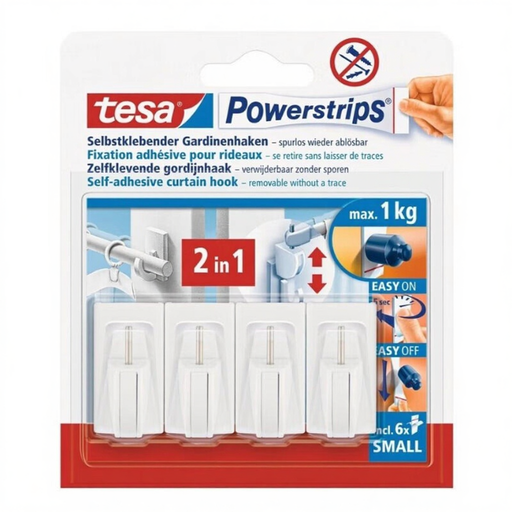
Why this product suits this profile: This small plastic hook is designed for simple, tool-free applications, such as holding keys, lightweight accessories or small kitchen utensils. According to the product information, the maximum load capacity is 1 kg per hook.
The manufacturer’s instructions specify suitable and unsuitable surfaces, as well as the load limit. This helps avoid the common mistake of overestimating adhesive hooks.
Plastic construction, tool-free installation and, according to the description, residue-free removal when used correctly.
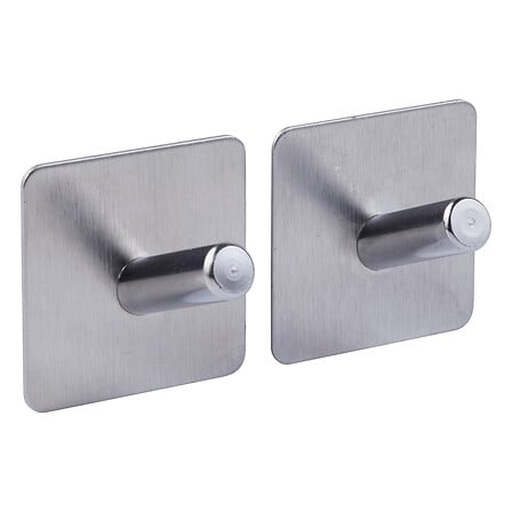
Why this product suits this profile: Made from steel and stainless steel, with a stated load capacity of up to 1.5 kg per hook, this set is an interesting option for smooth surfaces in the kitchen, bathroom or office.
The specifications state both the material and the load limit. Permanent adhesive mounting should nevertheless only be carried out on suitable, smooth surfaces.
Metal construction, 3M adhesive strips according to the product description, and two hooks per set.
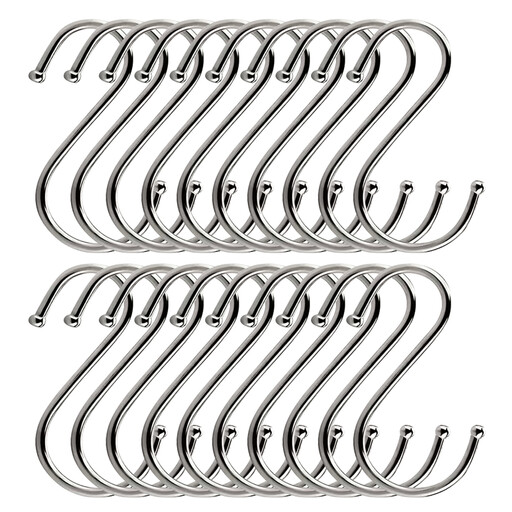
Why this product suits this profile: The pack of 20 is suitable for households that need plenty of hanging points in the kitchen, bathroom, cupboard, office or garden. According to the description, the hooks are made from metal with a rust-resistant finish.
S-hooks do not require an adhesive surface. This eliminates the risk of wallpaper or paint being damaged when an adhesive hook is removed.
20 pieces per pack, 75 mm length and flexible use on rods, rails or edges.

Why this product suits this profile: This door-mounted solution provides ten hooks and, according to the product description, requires neither drilling nor permanent wall mounting. It is designed for hallways, bedrooms, bathrooms or cupboard areas.
Before use, check that the door is sufficiently sturdy and that the frame leaves enough room for the rack. This helps ensure that an unsuitable door thickness is not overlooked.
Ten hanging points, stainless steel or steel construction according to the product information, and flexible positioning.
We have put together a complete, regularly updated list of products that fully meet these strict selection criteria and the safety regulations applicable in the EU.
With adhesive hooks, the surface should first be free from grease and dust. Do not use aggressive cleaning products if the manufacturer’s instructions warn against them. After pressing the hook into place, the adhesive often needs time before it can bear a load. When removing an adhesive strip, pull it slowly in the intended direction instead of jerking the hook away from the wall.
Door hooks should be checked regularly to ensure that they are securely fitted. With metal hooks, a soft, slightly damp cloth is usually sufficient. Rust, bent parts or loose connections are reasons to stop using the hook under load. A hook rail fixed with screws should be checked for suitable wall plugs and an even distribution of weight.
For rented homes, self-adhesive hooks and door hooks are often suitable because they can be installed without drilling. However, adhesive hooks should only be used on surfaces explicitly confirmed as suitable. With delicate wallpaper or an unclear substrate, a door hook is often the lower-risk option.
This depends on the product, adhesive system, substrate and correct installation. Examples from the selection specify 1 kg per hook, 1.5 kg per hook or, for certain ceiling and wall hooks, 2.6 lb. These values must not be applied generally. The specific manufacturer’s information is always decisive.
S-hooks can be practical in kitchens and bathrooms when hung from a suitable rod, rail or edge. In damp rooms, the material and surface treatment are important. You should also check that the hook is secure and that the weight of the item being hung is suitable for the particular construction.