
Lieferung heute & morgen

Qualitätsgarantie

Willkommens-Angebote freischalten: KOSTENLOSE Lieferung | Bis zu 80 % RABATT | Kostenlose 30-Tage-JoyPlus-Testphase
App herunterladen
Clutter often builds up where things are used every day: coats in the hallway, towels in the bathroom, keys by the front door or kitchen utensils around the worktop. Storage hooks can make use of free space on walls, doors and ceilings without the need for additional cupboards.
The choice may initially seem straightforward. In practice, however, some common purchasing decisions can lead to unnecessary expense or impractical installation.
A model with lots of hooks does not automatically offer a high load capacity. The crucial factor is the specified maximum load per hook or for the rail as a whole. For example, a single adhesive hook with a load capacity of 1 kg is suitable for keys, light accessories or a small towel, but not for a heavy bag.
For wall hooks installed with screws, the actual load capacity also depends on the wall material, the wall plugs and correct installation.
Self-adhesive hooks work best on clean, dry and smooth surfaces. Textured plaster, wallpaper, flaking paint or damp tiles can impair adhesion. Freshly painted walls should not be covered immediately either.
People living in rented accommodation often look for hooks that require no drilling. This is practical, but it assumes that the surface is suitable for the adhesive system and that the installation instructions are followed.
A door hook must be suitable for the door thickness, rebate and available clearance. If the construction is too tight, the door may be difficult to close; if there is too much play, the hook may slip. Before buying, you should therefore check the door leaf thickness and the gap between the door and frame.
In the bathroom or kitchen, stainless steel hooks or rust-resistant metal surfaces are a sensible choice. Even so, the product should be intended for the relevant indoor area and should not be left permanently in standing water.
Bamboo and wood can add visual appeal, but need protection from prolonged moisture. Plastic hooks are often lightweight and suitable for smaller items. For a hook rail for coats or bags, the material, wall fixing and load capacity should all be considered together.
A towel holder with a longer rail needs more wall width than a single towel hook. With several coat hooks, there should be enough space between the hooks so that garments do not overlap.
You should also check:
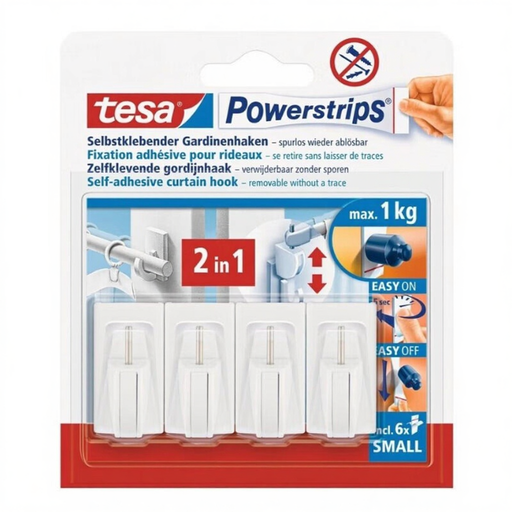
Why this product suits this profile: This small adhesive hook is designed for light items and can be installed without drilling. According to the product information, the maximum load is 1 kg per hook.
The stated load limit makes it clear that the hook is not intended for heavy bags or several towels. The guidance also excludes unsuitable, textured or freshly painted surfaces.
Tool-free installation and, according to the description, low-residue removal when used correctly.
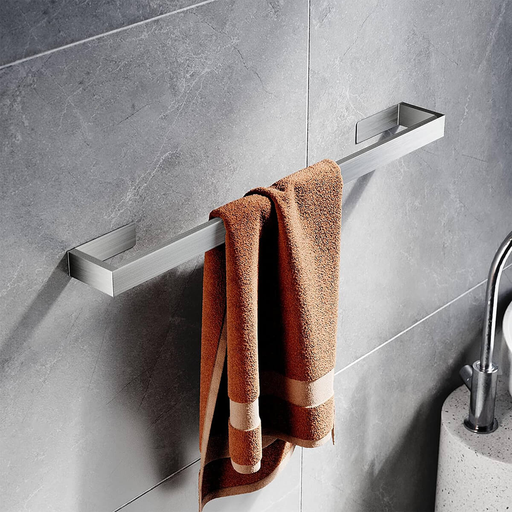
Why this product suits this profile: This towel holder combines a length of 61.5 cm with a brushed stainless steel finish and installation without drilling.
The product details clearly state the material, dimensions and installation method. Nevertheless, before fitting, you should check that the bathroom wall is smooth, dry and suitable for adhesive installation.
Brushed stainless steel and a usable length of 61.5 cm for several towels.
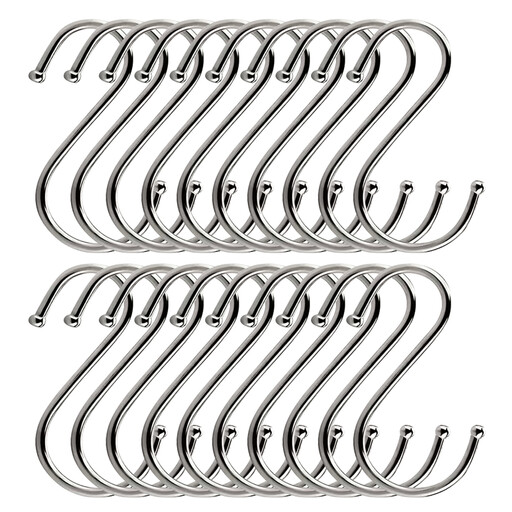
Why this product suits this profile: The 20 S-hooks can be hung from poles, rails or edges and are suitable for use in the kitchen, bathroom, bedroom, office or garden.
Instead of installing a fixed hook rail for every use, the hooks can be distributed flexibly as needed. However, they are intended only for light to medium-weight items.
20 pieces per pack and tool-free hanging from existing poles or rails.
For individual keys, light kitchen utensils or small accessories, an adhesive hook is often sufficient. Towels benefit from a sufficiently long towel holder or several wall hooks with enough space between them. In the hallway, coat hooks or a door hook are useful if you do not want to drill into the wall.
For several family members, a hook rail can make it easier to assign a place to each person. S-hooks are a good option for changing storage locations. If you want to hang pictures, however, you should choose specialist picture hooks with suitable nails and clearly stated load limits.
We have put together a complete, regularly updated list of products that fully meet these strict selection criteria and the safety regulations applicable in the EU.
Adhesive hooks and door hooks do not require drill holes. With adhesive hooks, the surface must be smooth, clean and dry. The stated load capacity must not be exceeded. For heavy coats or bags, a professionally installed screw-mounted solution may be more suitable.
Their lifespan depends on the surface, humidity, temperature, load and installation. It is not possible to give a general service life. Clean and dry the surface before fitting the hook, and follow the manufacturer’s recommended waiting time before applying any load.
No. The door leaf thickness, rebate, frame and existing door gap must all be compatible. The door should also be stable and still close fully after installation. If you are unsure, check the product dimensions and measure before buying.