
Lieferung heute & morgen

Qualitätsgarantie

Willkommens-Angebote freischalten: KOSTENLOSE Lieferung | Bis zu 80 % RABATT | Kostenlose 30-Tage-JoyPlus-Testphase
App herunterladen
A storage ottoman is a smart solution for anyone looking to combine style and organisation in their home. Whether used as extra seating, a comfortable footstool with storage, or a discreet place to keep blankets, magazines, and toys, its versatility is a clear advantage. However, the market is flooded with models of widely varying quality. Before you make a decision, it's crucial to understand the most common weaknesses that can quickly turn a practical piece of furniture into a purchase you'll regret.
Many products look appealing at first glance but reveal their flaws only after everyday use. Pay close attention to these three points to avoid disappointment.
To find a durable and functional upholstered storage ottoman, you should check three core parameters. These will give you a reliable guide to the product's true quality.
The stability of an ottoman depends directly on its frame material. A solid base is built from a frame of MDF (Medium-Density Fibreboard), ideally E1 grade, which is known for its stability and low formaldehyde emissions. Pay attention to the manufacturer's stated maximum load capacity. A rating of 150 kg is a good indicator of a sturdy ottoman for one person. A storage bench designed for two people should have a static load capacity of up to 300 kg.
The fabric defines not only the look but also the feel and durability.
High-quality padding made from shape-retaining foam ensures the ottoman remains comfortable even after extended use.
Consider which shape best fits your space. A round ottoman often creates a softer, more organic look, while a square storage cube with a lid can be placed flush against walls or next to sofas. Check the internal dimensions to estimate the actual storage volume. Foldable models are practical for occasional use or for moving, while ottomans with fixed legs generally offer greater stability for daily use.
Here are some recommendations tailored to different needs and living situations.
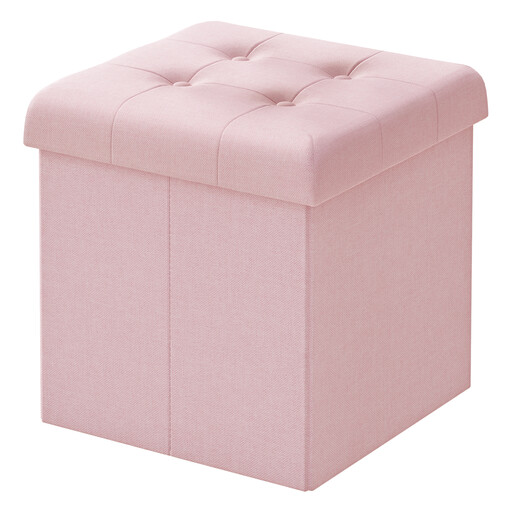
Why this model is a great fit: Ideal for a first apartment or a shared flat where flexibility and great value are key. The foldable design makes it easy to transport and store, while 43 litres of storage space help keep things tidy.
Despite its foldable design, the frame is made from a sturdy E1-grade MDF board. The manufacturer's stated static load capacity of up to 300 kg counters the pitfall of an unstable construction.
High load capacity combined with a foldable, space-saving design. The linen-style upholstery is also breathable and easy to clean.
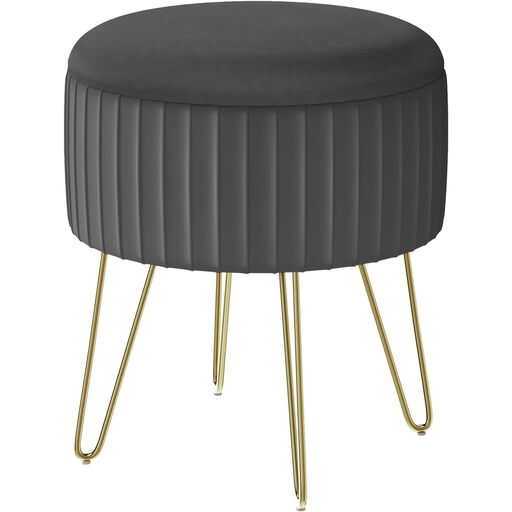
Why this model is a great fit: For anyone seeking a piece of furniture that is not only practical but also a visual statement. The velvet upholstery and slim metal legs complement modern and Scandinavian interior styles.
This model avoids the pitfall of subpar materials. The silky velvet cover is paired with shape-retaining foam and an E1-grade MDF frame. The metal legs with non-slip feet ensure a stable footing.
The combination of elegant design and a robust, durable construction. It offers 8.4 litres of dedicated storage for small items like remote controls or magazines.
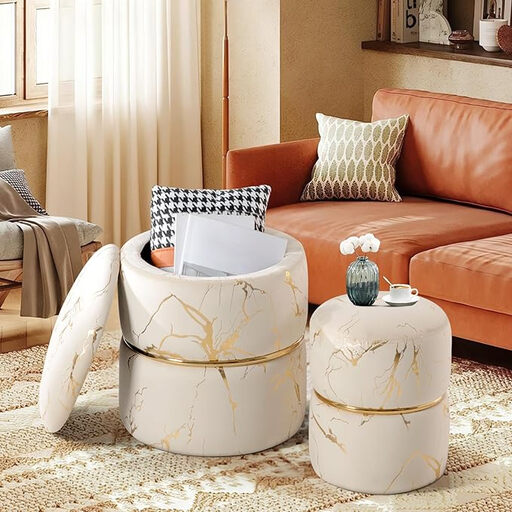
Why this model is a great fit: Perfect for those who need maximum flexibility in a small space. The set includes two ottomans, with the smaller one nesting inside the larger one. This provides a multifunctional solution for seating, a footrest, and a side table.
This set avoids the pitfall of impractical design. The nesting feature is a thoughtful space-saving solution. The sturdy wooden frame and load capacity of up to 135 kg ensure stable everyday use.
Two pieces of furniture in one. The larger ottoman provides storage, while the smaller one can be used as extra seating when needed or stored away to save space.
We've compiled a comprehensive, up-to-date list of products that meet these selection criteria.
The load capacity varies greatly depending on the model and construction. A key factor is the frame material. Models with a frame made of E1-grade MDF are generally much sturdier than those made from simple cardboard. Always refer to the maximum static load capacity specified by the manufacturer. A rating of 150 kg for a single ottoman and up to 300 kg for a bench are good benchmarks for a stable construction.
Yes, high-quality foldable ottomans can be suitable for daily use. Make sure the model has a reinforced base and a sturdy MDF frame. Very inexpensive models are often intended more for occasional seating or as a footstool with storage rather than for permanent, intensive use as a primary seat.
Proper care depends on the material. Generally, it's recommended to vacuum the upholstery regularly with an upholstery attachment to remove dust and loose particles. Light stains can often be treated with a slightly damp cloth and possibly a mild soap solution. Always test any cleaning agent on an inconspicuous area first. In all cases, follow the specific care instructions provided by the manufacturer.