
Lieferung heute & morgen

Qualitätsgarantie

Willkommens-Angebote freischalten: KOSTENLOSE Lieferung | Bis zu 80 % RABATT | Kostenlose 30-Tage-JoyPlus-Testphase
App herunterladen
A storage ottoman is a prime example of smart living: it serves as an extra seat, a comfortable footrest, and a discreet storage solution all in one. But the wide variety of options also has its pitfalls. Many models look appealing at first glance but turn out to be a poor investment after a short time. Before you decide to buy, it's important to know the most common weaknesses that often only become apparent with everyday use.
The 3 Most Common Pitfalls When Buying Storage Ottomans:
To avoid making a bad purchase, you should focus on a few technical details that determine the longevity and functionality of your new piece of furniture.
The basis of any good ottoman is a solid structure. Pay attention to the material of the internal frame. A good benchmark is E1 grade MDF, known for its dimensional stability and low formaldehyde emissions. Legs made of solid wood or metal generally offer greater stability than plastic ones.
A key indicator of quality is the manufacturer's stated maximum weight capacity. A rating of 150 kg (approx. 330 lbs) suggests a robust design that can withstand everyday use. Check this specification to ensure the ottoman can be used not just for decoration, but as a fully functional seat.
The upholstery material defines the character of the ottoman. Linen fabrics are durable and breathable, making them a practical choice for a small living room ottoman. Velvet covers look elegant and feel soft but may require a bit more care.
Regardless of the material, the quality of the padding is crucial. Look for terms like "high-density foam" or "shape-retaining foam." This ensures the seat keeps its shape even after frequent use and doesn't sink in. A well-padded round upholstered stool will thus offer long-lasting comfort.
A pouf with storage or an ottoman with storage is meant to help you get organised. Therefore, compare not only the external dimensions (e.g., ? 32 cm x H 36 cm) but also the internal dimensions of the storage compartment (e.g., ? 29.5 cm x H 12 cm). This is the only way to ensure that blankets, remote controls, or magazines will actually fit inside. A removable lid is usually more practical than a hinged mechanism, as it allows full access to the contents.
Here are some recommendations tailored to different needs and interior styles, all of which meet the quality criteria mentioned above.
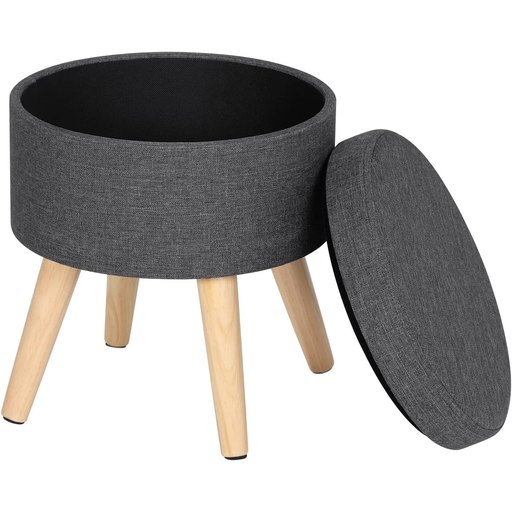
Why it's a great fit: Ideal for anyone looking for a straightforward and sturdy solution. The simple design and durable linen fabric blend seamlessly into most interiors without being obtrusive. Perfect as a footstool with storage in the living room or hallway.
The construction, featuring an E1 grade MDF frame and solid wood legs, provides the necessary stability and avoids the problem of wobbly furniture.
The easy-care linen cover is resistant to wear and tear. The weight capacity of up to 150 kg (approx. 330 lbs) underscores its solid construction.
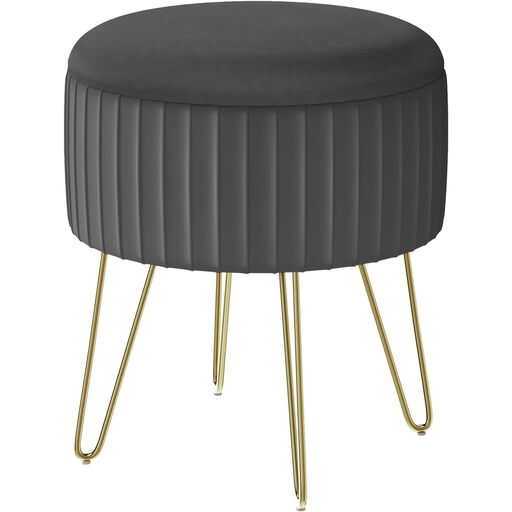
Why it's a great fit: For those who value an elegant aesthetic. The combination of soft velvet, vertical decorative stitching, and slender metal legs adds a touch of Scandinavian elegance to any room. Ideal as a vanity stool or a stylish addition to the living room or bedroom.
The silky velvet cover and firm padding have a high-quality feel, avoiding the trap of cheap-looking materials that wear out quickly.
The four metal legs with non-slip feet provide a secure footing and protect your floors. The 8.4-litre storage capacity is practically sized.
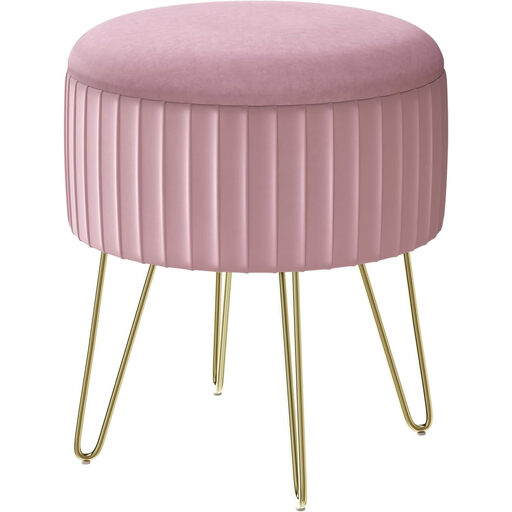
Why it's a great fit: Perfect for those who want to add a functional pop of colour to their decor. The delicate pink hue and soft velvet cover create a welcoming and cosy atmosphere, while the storage space helps keep things tidy.
This model combines appealing aesthetics with solid functionality. It defies the trade-off that suggests stylish furniture can't also be practical and durable.
The soft velvet cover and sturdy construction, with a weight capacity of 150 kg (approx. 330 lbs), offer a successful blend of comfort and reliability.
We've compiled a complete, up-to-date list of products that meet these strict selection criteria and quality standards.
The weight capacity varies greatly depending on the model and construction. Basic models often only support up to 100 kg (approx. 220 lbs). Higher-quality ottomans with a solid frame made of MDF or solid wood and sturdy legs are often designed for a maximum weight capacity of 150 kg (approx. 330 lbs). This rating is a key quality indicator and should be checked before purchasing, especially if the ottoman will be used regularly as a seat.
For easy maintenance, covers made of linen or synthetic fibres with a smooth texture are ideal. They are generally robust and can be easily wiped clean with a damp cloth for minor spills. While visually appealing, velvet can be more prone to collecting dust and may require occasional brushing or vacuuming to maintain its appearance.
An ottoman or pouf is primarily designed as extra, flexible seating or a footrest, not as a substitute for a chair for hours of sitting. It's perfectly fine for short periods, as long as the maximum weight capacity is not exceeded. The quality of the padding determines how quickly the seat will wear down. Models with high-density, shape-retaining foam offer a longer lifespan.