
Lieferung heute & morgen

Qualitätsgarantie
App herunterladen
Kategorien
In urban living spaces, the efficient use of space is a key aspect of interior design. Multifunctional furniture, such as the storage ottoman, offers a practical solution by combining seating and storage. This document serves as an objective guide, analysing the technical parameters crucial for selecting such a piece of furniture. The focus is on material quality, construction, and practical utility to facilitate an informed decision.
The functionality of a storage ottoman is determined by its technical specifications. The following criteria are relevant for a thorough evaluation.
The durability and stability of an ottoman depend significantly on the materials used.
The maximum static load capacity is a critical safety feature. This value, typically specified in kilograms (kg), defines the maximum weight the ottoman can support when stationary. A solid construction, often reinforced with a base plate, is essential for stability. Models designed as a storage box with a lid must have a snug-fitting and sturdy lid to ensure a secure seating surface.
The storage volume, specified in litres (L), determines how many items can be stored inside the ottoman. It is calculated from the internal dimensions of the body. The external dimensions are equally important to ensure the storage ottoman fits in its intended space, whether as a footstool with storage next to the sofa or as an upholstered storage bench at the foot of the bed.
Some models are designed as a foldable storage box. Such a folding mechanism allows the ottoman to be stored compactly when not in use. This is particularly advantageous in small apartments or for temporary needs. The design should allow for simple and quick assembly and disassembly without tools.
Based on the technical criteria mentioned above, we present two models that meet different requirements for form and function.
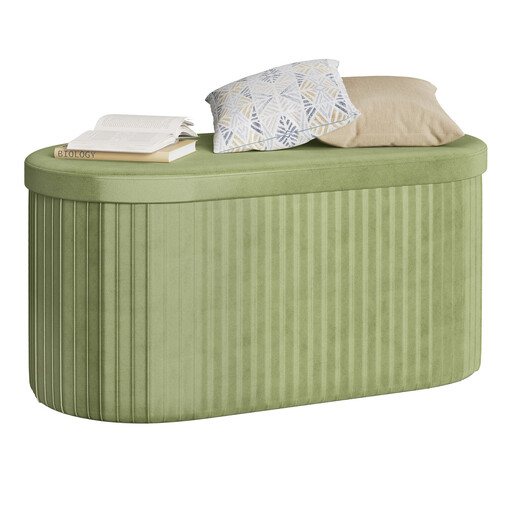
Why we're featuring this product: This model combines the function of a storage bench with a rectangular shape that allows for a high storage volume. Its dimensions of 76 x 38 x 38 cm make it a practical solution for hallways or bedrooms. The MDF construction and velvet upholstery meet common standards for stability and aesthetics.
Advantages:
Who it's for: This model is suitable for those looking for an elongated seating and storage solution. It functions well as an upholstered storage bench at the foot of a bed or as seating in an entryway for putting on and storing shoes.
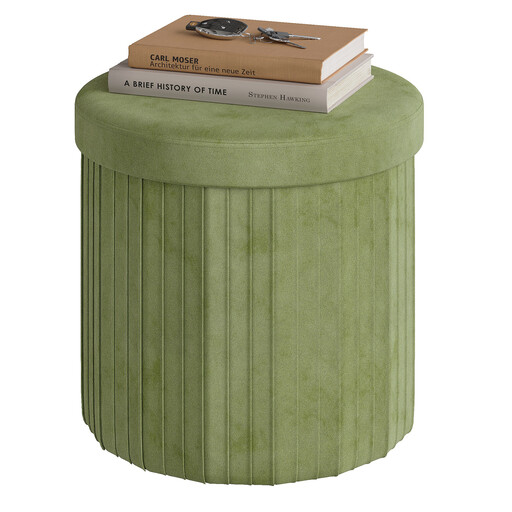
Why we're featuring this product: This round pouf with storage is distinguished by its compact and flexible shape. With a diameter of 38 cm and a height of 36 cm, it can be easily integrated into existing living spaces. According to the manufacturer, WOLTU, the construction is based on an E1 Class MDF frame and is designed for a static load of up to 150 kg.
Advantages:
Who it's for: This model is ideal for users seeking a flexible and space-saving addition to their living room or bedroom. Its round shape and compact dimensions make it an unobtrusive yet functional piece, well-suited for storing everyday items.
If the colour scheme of the models featured here does not meet your specific requirements, consider exploring related products. You can find a selection of other organisational solutions in our Green Storage Boxes category.
1. How much weight can a foldable storage ottoman support? The load capacity varies depending on the construction and materials. Many models based on an MDF frame have a static load capacity of between 100 kg and 150 kg. It is advisable to check the manufacturer's specific guidelines for the individual product to avoid overloading it.
2. What materials are storage ottomans typically made of? The support structure is often made of MDF boards or, less commonly, solid wood or metal. The cushioning is typically made from foam. There is a wide variety of upholstery fabrics, ranging from velvet and microfibre to linen and faux leather. The choice of material affects both durability and maintenance.
3. How do you clean a velvet ottoman? To clean velvet upholstery, it is recommended to gently remove loose particles with a soft brush or a vacuum cleaner with an upholstery attachment. For stains, use a slightly damp, lint-free cloth. It is advisable to always work in the direction of the pile and to avoid harsh cleaning agents to prevent damage to the fabric's structure.