
Lieferung heute & morgen

Qualitätsgarantie

Willkommens-Angebote freischalten: KOSTENLOSE Lieferung | Bis zu 80 % RABATT | Kostenlose 30-Tage-JoyPlus-Testphase
App herunterladen
A storage ottoman can replace several pieces of furniture: it serves as extra seating, a footrest, a side table or a closed chest for blankets and cushions. To make sure this space-saving piece isn’t a purchase you regret, take a closer look before you buy. Product images often create a premium impression but say little about internal capacity, load limits or how it actually handles in everyday use.
A wide upholstered ottoman can look roomy in photos. What matters, though, are the internal dimensions. MDF panels, padding and reinforcements reduce usable storage. For bedding or multiple blankets, choose a long storage bench with an internal capacity of more than 100 Litern. For remotes, books or small textiles, a compact storage ottoman will do.
A maximum static load capacity does not automatically cover every use. Jumping, standing or a concentrated load can exert different forces than calm sitting. Check whether the manufacturer explicitly calls it the maximum static load capacity, and whether the lid sits fully flush.
A folding ottoman saves space when not in use. Before you sit on it, it must be unfolded correctly and, depending on the model, fixed with a base plate or legs. For a foldable bench, also make sure the construction stands level and the lid closes securely.
Measure the available space, including room to move. An ottoman for living rooms and bedrooms can sit at the foot of the bed, in front of the sofa or in the hallway. For narrow entrances, models with around 36 to 40 cm depth are suitable. A longer chest with a seat around 110 cm wide offers more surface and storage, but needs more floor space accordingly.
Also consider the seat height. Lower models at around 38 to 40 cm work as footrests or extra seating. Taller models with legs can serve as storage ottomans beside the bed or as a perch in a dressing area.
MDF panels form the load-bearing structure in many designs. The designation MDF E1 refers to a specific emission class for engineered wood boards. Padding and upholstery can include foam, velvet, corduroy or a linen-look fabric. For your purchase decision, concrete care instructions matter more than marketing terms.
Velvet and cord covers usually need spot cleaning with a suitable upholstery cleaner or a slightly damp cloth. A cotton or teddy-fleece cover can be gently vacuumed on a regular basis. Check whether the cover is removable. For heavily used seats, visible seams, reinforced lids and stable bases are practical selection criteria.
A removable lid gives quick access, while a hinged lid can be more convenient for daily use. A removable divider helps keep blankets, cushions and smaller items separate. Mind the permissible size of contents: bulky items can deform the lid or prevent it from closing fully.
The following details are manufacturer data and should be checked against current product information before you buy. Particularly relevant are internal capacity, net weight, maximum load capacity and assembly effort.
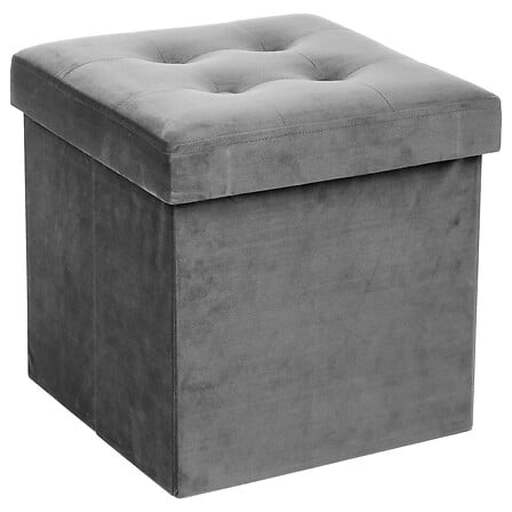
Why this product suits this profile: The compact 38 × 38 × 38 cm format is ideal for small flats, sleeping areas or a tight hallway.
The folding design is backed up with clear setup and storage guidance, so you can stow the ottoman neatly when it’s not in use.
MDF E1, grey velvet cover, 2,4 kg net weight and suitable as a seat or footrest.
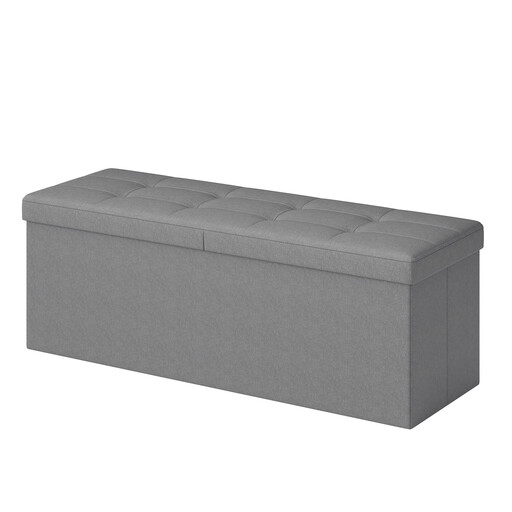
Why this product suits this profile: The 110 cm wide storage bench combines a large seating surface with an internal capacity of 131 Litern.
The stated internal capacity and removable divider make the storage space more transparent than images alone.
MDF construction, metal reinforcements on the lid, foldable design and a stated static load capacity of 300 kg.
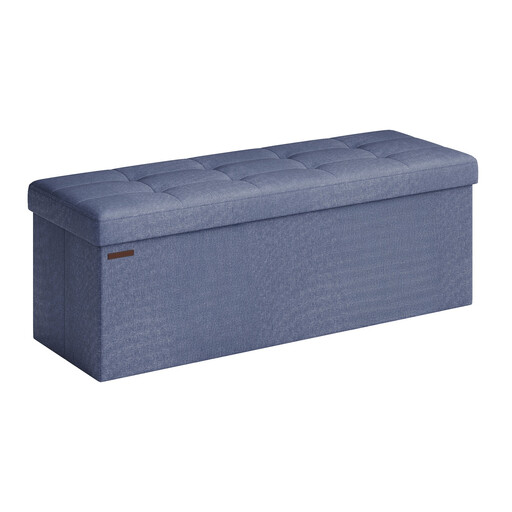
Why this product suits this profile: The wide design can be used in the bedroom, living room or entrance area as a bench, footrest and surface.
The product details list 38 × 110 × 38 cm, 8,8 kg net weight and a maximum static load capacity of 300 kg. The lid must sit fully flush before you sit on it.
Foldable, upholstered, with removable divider and, according to the manufacturer, rated for up to 660 lb or 300 kg of static load.
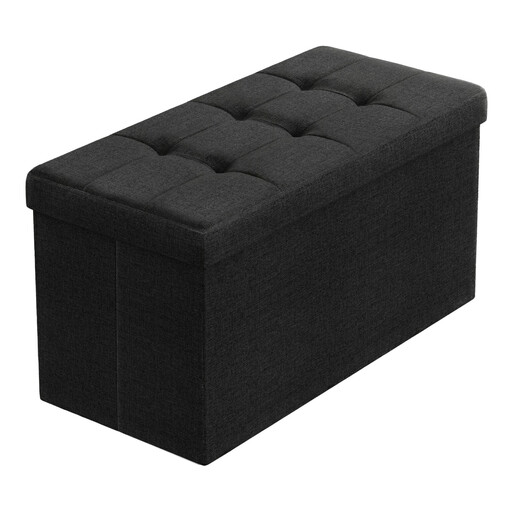
Why this product suits this profile: At 38 × 76 × 38 cm, the black ottoman is shorter than a classic storage bench and is easier to move around.
The stated volume of 89 Litern and the folding function help you plan storage and stowage. The lid must be fully closed before anyone sits on it.
MDF panels, linen-look upholstery, padding, 5,6 kg weight and a stated maximum static load capacity of 300 kg.
We have compiled a complete, continuously updated list of products that fully meet these strict selection criteria and the safety regulations in force in the EU.
Place the storage ottoman on a level, stable and non-slip surface. In hallways, leave sufficient clearance for doors and walkways. On folding models, the base plate, side walls or legs must be fully locked in or correctly fitted.
Avoid moisture on MDF panels and only use the cleaning methods recommended by the manufacturer for fabric covers. An ottoman is not intended as a step ladder. Children should not play inside the storage compartment, as closing the lid could cause injury or trapping.
That depends on the model and the manufacturer’s specification. In our selection, figures range, for example, from 120 kg on certain pouffes to 300 kg static load capacity on selected JOYFURNOS models. Do not exceed the maximum load. Standing or jumping on the ottoman should always be avoided unless expressly intended.
Suitable items are lightweight, soft or flat objects such as blankets, cushions, bedding, books and small home accessories. Bulky or very heavy items can stress the interior, side walls or lid. A removable divider is helpful if you want to keep different items separate.
There’s no honest, one-size-fits-all lifespan. It depends on the load, how often it’s unfolded and folded away, the surface it stands on and how it’s cared for. Correct assembly, staying within the load limit and dry storage support its intended use. Regularly check seams, lid, feet and folding joints for visible damage.