
Lieferung heute & morgen

Qualitätsgarantie

Willkommens-Angebote freischalten: KOSTENLOSE Lieferung | Bis zu 80 % RABATT | Kostenlose 30-Tage-JoyPlus-Testphase
App herunterladen
A storage ottoman can serve as a seat in the living room, a surface for belongings in the bedroom or a compact storage solution in the hallway. This combination is particularly practical in small flats, student accommodation or dressing rooms with limited space. However, some models look larger, sturdier or more versatile in product photos than they actually are in everyday use.
As a Joybuy Product Recommendation Officer, I therefore focus on clear, verifiable information rather than purely promotional claims. Before buying, you should avoid three common pitfalls in particular.
The external dimensions do not automatically indicate the usable capacity inside. Padding, lid mechanisms and side panels reduce the available space. You should therefore check:
A narrow living room ottoman may save space, but it may not offer enough internal capacity for larger textiles.
A stated maximum weight capacity often refers to a static load under specific conditions. It does not automatically mean the ottoman is suitable for dynamic sitting, jumping or frequent repositioning. The construction, lid stability and condition of the floor surface are all important.
With a folding ottoman, the lid must be fully closed before using it as a seat. Uneven floors can also cause wobbling, even if the model has a high static weight capacity.
“Linen look”, teddy fabric or bamboo initially describe the surface or the visible material content. They reveal little about how the ottoman should be cleaned. Look for specific care instructions:
A seating ottoman for the living area should complement your existing seating arrangement. A height of around 40 cm may suit many sofas and beds, but it will not be equally suitable for every body size or intended use. Measure the seat height of your sofa, bed edge or dressing table before making a decision.
For a living room ottoman or bedroom ottoman, the footprint and opening direction are also important. Round models do not have corners, but they may be less efficient to position against a wall or underneath a table.
Prioritise product descriptions that provide specific details about:
The JOYFURNOS model is specified as having MDF panels, metal edges on the lid and a maximum static weight capacity of 300 kg. This is an objective product specification, but it does not replace the requirement to use the ottoman with the lid fully closed.
Not every footstool offers storage, and not every decorative ottoman is designed to be used as seating. A bamboo stool can provide extra seating or a surface for belongings, while a padded storage ottoman is more suitable for blankets, books or accessories.
Before placing your order, consider which function matters most in everyday use:
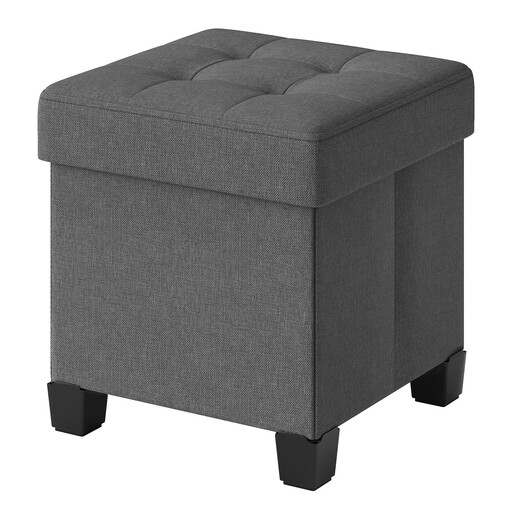
Why this product suits this profile: The compact, foldable design is suitable for smaller living rooms, bedrooms, hallways or student accommodation. The ottoman can be used as a storage box, footrest or side table.
The product data specifies the external dimensions, weight, materials and a maximum static weight capacity of 300 kg. The note about keeping the lid fully closed makes the intended use clearer.
38 x 38 x 40 cm; foldable design; MDF panels, linen-look finish and 25D foam; stated static weight capacity of 300 kg.
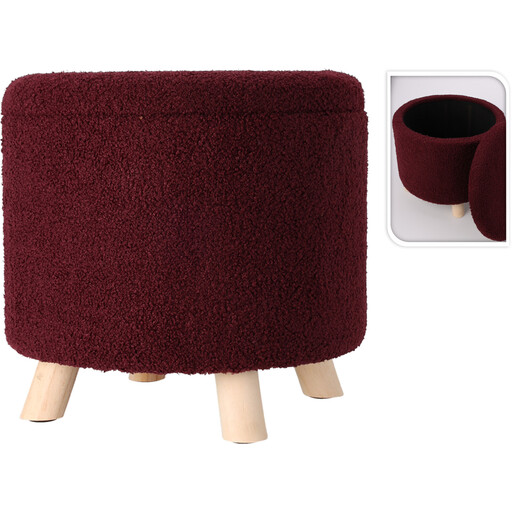
Why this product suits this profile: This padded storage ottoman combines a textured teddy fabric surface with a concealed compartment. It fits neatly at the foot of a bed or in living spaces where textiles and magazines need to be put away quickly.
The dimensions of 35 x 40 x 55 cm are clearly stated. The hinged top makes the storage concept clear; before buying, you should still check whether the elongated shape will fit comfortably in the intended location.
Padded teddy fabric surface; concealed compartment beneath the removable or hinged top; suitable for use as a seat or footrest.
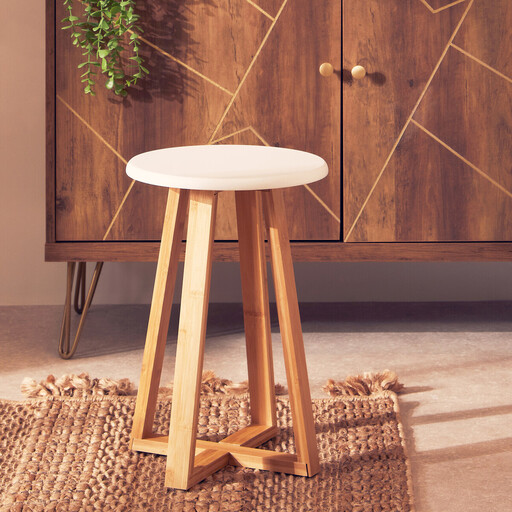
Why this product suits this profile: This round bamboo stool is suitable for buyers looking for a compact seating or surface solution with a Scandinavian-inspired look. It is intended for use in the living room, bedroom or kitchen and does not offer enclosed storage.
The product description clearly identifies it as a round stool. The stated capacity of 50 kg helps put its use into perspective and prevents the piece of furniture from being mistaken for a storage ottoman.
Round dimensions of 30 x 30 x 43 cm; material specification of 55% bamboo and 45% MDF; stated capacity of 50 kg; care with a soft cloth.
For the living room, a footstool with an internal compartment or a padded ottoman is a sensible choice if you want blankets and magazines close at hand but out of sight. In the bedroom, a model at the foot of the bed can work well, provided its height and opening direction are compatible with the bed.
In the hallway, the base should be sufficiently stable and the surface easy to care for. A folding ottoman can be a practical choice for a dressing room, as it can be stored away to save space when not in use. A decorative ottoman without storage is an alternative when design and additional seating matter more than keeping the internal compartment tidy.
We have put together a complete, regularly updated list of products that fully meet these strict selection criteria and the safety regulations applicable in the EU.
This depends on the construction and the manufacturer’s stated capacity. When buying, you should distinguish between maximum static weight capacity and dynamic use. A model with a static weight capacity of 300 kg is not automatically designed for jumping or sudden movements. Use the ottoman only in accordance with the product and safety instructions.
Place frequently used items at the top and less frequently used belongings at the bottom. Small boxes or fabric bags can help divide the compartment into categories such as blankets, books or accessories. Take care not to overfill the compartment, so that the lid can close fully.
It is not possible to give a reliable general lifespan. This depends, among other things, on the load, frequency of use, floor surface and care. Models with specific material and weight-capacity information make it easier to choose. Check the lid, hinges, seams and feet regularly, and place the ottoman on a level surface.