
Lieferung heute & morgen

Qualitätsgarantie

Willkommens-Angebote freischalten: KOSTENLOSE Lieferung | Bis zu 80 % RABATT | Kostenlose 30-Tage-JoyPlus-Testphase
App herunterladen
Living space is often limited, but the need for organisation and flexible seating remains. A storage ottoman is a functional solution that combines both: it serves as comfortable seating, a footrest, and a discreet place to hide blankets, books, or toys.
This article serves as your guide. It introduces various models and explains the key features to consider, helping you find the perfect solution for your home.
Choosing the right model depends on your individual needs regarding size, material, and design. The following criteria will help you make an informed decision.
The construction is crucial for durability and safety. Most storage ottomans are made from MDF (Medium-Density Fibreboard) panels, which provide a stable base. Pay attention to the specified maximum static load capacity. Models for occasional use often support up to 150 kg, while more robust designs are built to handle loads of up to 300 kg.
The upholstery fabric affects both the look and feel. Linen fabrics are breathable and durable, while velvet offers an elegant and soft surface.
Measure the intended space carefully before purchasing. A compact storage cube fits well in alcoves or next to a sofa, while a wider storage bench can be placed at the foot of a bed or in a hallway.
Some models are designed to be a foldable storage box. When not in use, they can be collapsed to a minimal height and stored compactly—a practical feature for small apartments or for those with changing space requirements.
From a simple living room stool to an elegant upholstered storage ottoman, there are numerous designs available. Consider which shape and colour best suit your decor. A square ottoman can double as a side table, while a long storage bench offers seating for multiple people or more surface area. Models with a removable lid provide quick access to the contents, whereas those with hinges keep the lid securely attached to the body.
Here is a selection of models that stand out for their unique features and are suitable for various applications.
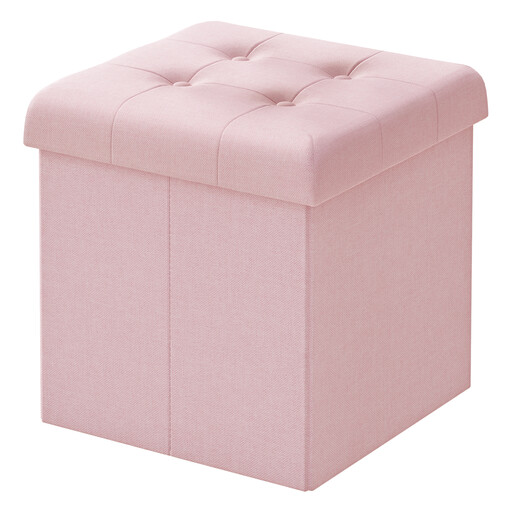
Why it stands out: This compact storage cube from WOLTU combines high functionality with an understated design. Its remarkably high static load capacity of up to 300 kg, according to the manufacturer, makes it an exceptionally stable seating option despite its small size.
Advantages:
Who is it for? Ideal for students, small apartments, or as flexible, extra seating in the living room or a child's room. Its high stability also makes it useful as a step stool or a storage footstool.
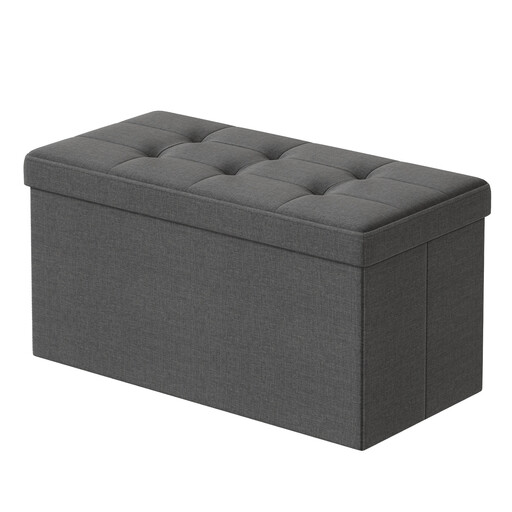
Why it stands out: This storage bench from Ochama, with its 76 cm width, offers significantly more space than a single stool. The design, featuring a tufted top, gives it a classic look that integrates well into living rooms or bedrooms.
Advantages:
Who is it for? Perfect for families or couples looking for a multi-functional solution for the living room, entryway, or bedroom who value a large storage capacity.
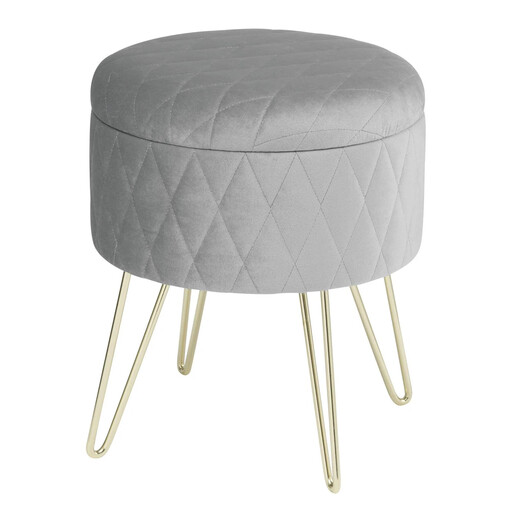
Why it stands out: This upholstered storage stool from WOLTU makes a clear design statement. The combination of soft velvet fabric and gold-coloured metal legs gives it an elegant appeal that sets it apart from purely functional models.
Advantages:
Who is it for? For anyone seeking a stylish piece of furniture that combines functionality with aesthetics. It works well as a decorative stool in the living room, a vanity stool in the bedroom, or an elegant footstool.
Haven't found the right model for your needs yet? Storage ottomans are available in numerous other sizes, materials, and designs. Whether you're looking for a simple cube, a wide bench, or a round ottoman, the selection is vast.
Discover more models in our Upholstered Box category.
The load capacity varies significantly depending on the model and construction. Simple, foldable ottomans are often designed for a static load of 100 to 150 kg. Models with reinforced MDF panels and a more solid build can support up to 300 kg, as specified by the manufacturers. Always check the product description for exact details.
An upholstered ottoman can serve as occasional seating. For daily, hours-long use as a main seat, it is generally less suitable than an ergonomic chair. However, as extra seating for guests, a footrest, or for short periods of sitting, it is a comfortable and practical solution.
The cleaning method depends on the material. For most fabrics like linen or polyester, it is sufficient to remove dust and loose dirt with a soft brush or a vacuum cleaner with an upholstery attachment. Light stains can often be treated with a clean, slightly damp cloth. For delicate fabrics like velvet, you should follow the manufacturer's care instructions to avoid damaging the fibre structure.