
Lieferung heute & morgen

Qualitätsgarantie

Willkommens-Angebote freischalten: KOSTENLOSE Lieferung | Bis zu 80 % RABATT | Kostenlose 30-Tage-JoyPlus-Testphase
App herunterladen
A new storage shelf promises to bring order quickly and easily, making smart use of unused space. But the selection is vast, and not every model lives up to its product photos. Before you make a decision you'll later regret, you should know the three common weaknesses that often lead to a poor investment. This guide will help you separate the wheat from the chaff and find a shelf that is both functional and durable.
The 3 Most Common Pitfalls When Buying Shelves:
To avoid these pitfalls, it helps to focus on a few crucial technical parameters. These features determine the longevity, safety, and functionality of your new storage shelf.
The choice of material is fundamental to the shelf's stability and its intended use.
The specified maximum static load capacity is a critical value. It indicates how much weight a shelf can support with an evenly distributed load without warping or breaking.
To create storage space for the long term, a shelf should be flexible. Look for features like height-adjustable shelves, stackable modules, or integrated additional functions. For example, a shelf with hooks in the hallway can serve as both a coat rack and a storage surface, making it far more practical than a simple shelf.
Based on these objective criteria, we have identified several models that offer a well-thought-out solution for specific requirement profiles.
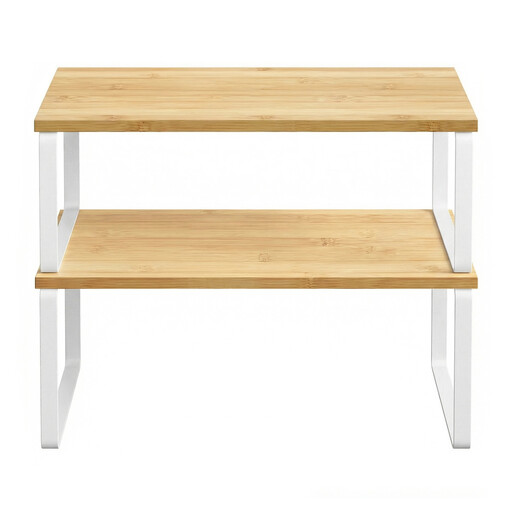
Why This Fits Their Persona: Ideal for anyone needing extra storage on the kitchen counter or in a cupboard. The set creates a second tier for spices, mugs, or tins, keeping everything organised and within reach.
The metal and engineered wood construction provides reliable stability for kitchen utensils. Unlike wobbly plastic racks, it remains stable even when fully loaded. The flexible arrangement (stackable, side-by-side, separate) avoids the problem of a rigid, ill-fitting system.
Flexible, modular design; stackable, nestable, or can be used separately. Each shelf holds up to 15 kg.
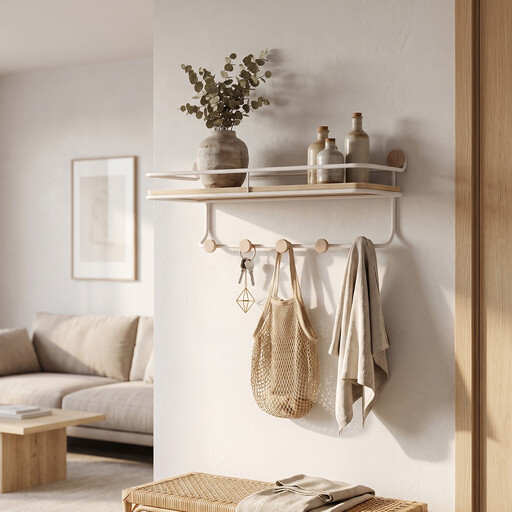
Why This Fits Their Persona: Perfect for entryways or narrow hallways where every centimetre counts. This wall shelf combines a surface for keys and decor with five hooks for jackets, bags, and scarves.
It solves the problem of limited functionality by combining two pieces of furniture—a shelf and a coat rack—in one. The construction of FSC-certified rubberwood and powder-coated steel is designed for a load capacity of 20 kg, making it far more stable than purely decorative floating shelves.
Combines a shelf and hooks; a protective ledge prevents items from falling off; robust material combination.
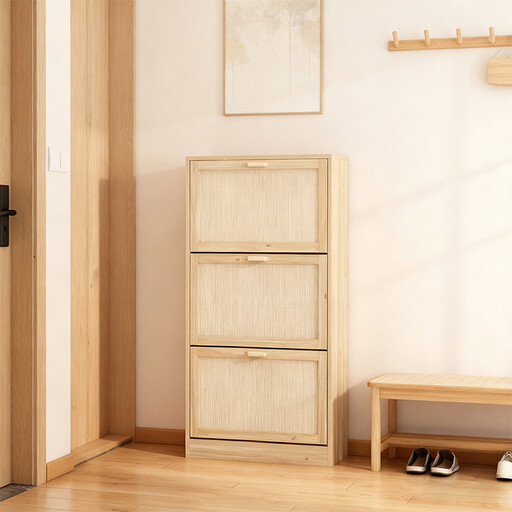
Why This Fits Their Persona: This slim shelf is designed as a tilt-out shoe cabinet and, with a depth of just 24 cm, fits perfectly into tight hallways or niches. It creates order by hiding up to 12 pairs of shoes behind closed flaps.
This model is a specialised solution for a common problem: lack of space in the hallway. Instead of an ill-fitting, wide shelf, it offers a tailored function. The woven bamboo doors are breathable and prevent odour build-up—a thoughtful detail often missing from simple closed shelves. The included anti-tip kit provides the necessary stability.
Very slim depth (24 cm); closed storage for up to 12 pairs of shoes; includes anti-tip kit for wall mounting.
We've compiled a complete, up-to-date list of products that fully meet these strict selection criteria and UK safety regulations.
For the bathroom, materials with high moisture resistance are crucial. Bamboo is an excellent choice as it is naturally resistant to moisture. Powder-coated metal or plastic are also suitable. If you prefer a wooden shelf, ensure it is solid wood with a protective lacquer finish or engineered wood specifically sealed for damp environments. You should definitely avoid untreated particleboard.
The maximum static load capacity specifies the maximum weight that a single shelf can support when the load is stationary and evenly distributed. This value is a key indicator of the shelf's stability and safety. Do not exceed this rating to prevent the shelves from sagging or the entire structure from collapsing. For a bookshelf, a high load capacity (e.g., 15 kg per shelf or more) is recommended, while lower values are sufficient for decorative items.
Yes, many freestanding shelves, especially taller and narrower models, come with an anti-tip kit. This is usually a bracket or a strap used to anchor the shelf to the wall. This additional fastening is strongly recommended to prevent the shelf from tipping over, especially in households with children or on uneven floors. It significantly increases stability and safety.