
Lieferung heute & morgen

Qualitätsgarantie

Willkommens-Angebote freischalten: KOSTENLOSE Lieferung | Bis zu 80 % RABATT | Kostenlose 30-Tage-JoyPlus-Testphase
App herunterladen
Storage shelving helps keep things organised, but models can vary considerably in load capacity, dimensions and intended use. A narrow kitchen shelf is not necessarily suitable for crates of drinks, and a heavy-duty shelving unit may not fit in a small pantry. If you focus only on the price or the stated maximum load, you could easily overlook important details.
A high load capacity sounds impressive, but it often applies only under certain conditions: the weight must be evenly distributed, the floor must be level, and the connecting parts must be fitted correctly. It is also important to distinguish between the load capacity per shelf and the total load capacity.
Heavy items such as tools, tins and crates of drinks should go on the lower shelves. Whether a shelving unit also needs to be fixed to the wall depends on its design, height and the manufacturer's instructions. An anti-tip feature can be particularly useful in homes with children or pets, or where the upper shelves are accessed frequently.
Before buying, measure not only the height and width, but also the usable depth and the space between the shelves. Doors, skirting boards, radiators and sockets can reduce the space available.
For kitchen shelving, you should also check the inside dimensions of the cupboard. For example, a pull-out pot lid organiser must fit fully into the space provided without blocking hinges or drawers.
MDF shelves may be suitable for dry indoor spaces, but should be protected from prolonged exposure to water and high humidity. For a cellar, garage or workshop, check the information about the surface finish, frame material and permitted operating conditions.
A metal shelving unit often has a sturdy frame, but that does not automatically make it rust-resistant. A garage storage rack should therefore not be placed directly against damp walls or on a wet floor.
First, estimate the weight of the items and decide how to distribute them across the shelves. For heavy-duty shelving, these details are particularly important:
The manufacturer's stated capacity should not be taken as an invitation to load every shelf to its limit. Leaving a safety margin also makes it easier to put items in and take them out.
For dry living spaces, freestanding shelves made from MDF, wood-based materials or metal are all options. A shelving unit with MDF shelves can hold books, ornaments, kitchen essentials or lightweight household items. In a damp environment, pay particular attention to the care instructions.
Steel frames are practical for cellars and garages where you want to store tools, paint or storage boxes. Even with a metal shelving unit with MDF shelves, protection from moisture is still important.
Adjustable shelves let you adapt the unit to items of different heights. A simple-to-assemble plug-in shelving unit could be a good choice if your storage needs change over time. Some models can be split into two smaller units or used as a workbench.
For smaller spaces, consider a kitchen shelf, spice rack or stackable cupboard shelf. These options make use of existing cupboard space without filling the room with a tall freestanding unit.
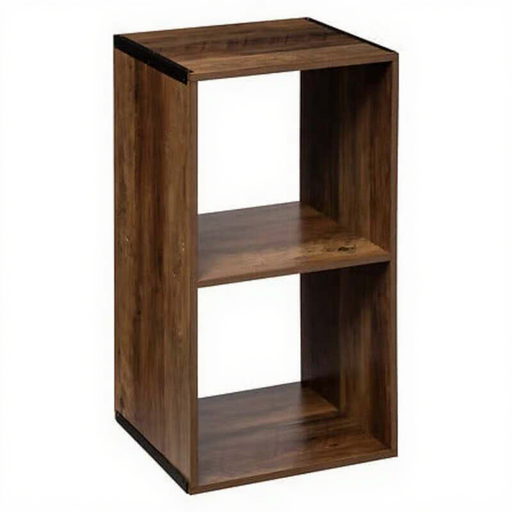
Why this product suits this need: This compact freestanding shelving unit has six compartments and measures 67.7 × 32 × 100.5 cm. It's suitable for books, ornaments and everyday items in the living room, home office or hallway.
The clearly stated compartment dimensions make planning easier. Keep the MDF dry and distribute the load evenly.
Six compartments, a product weight of 16.13 kg and a relatively compact footprint.
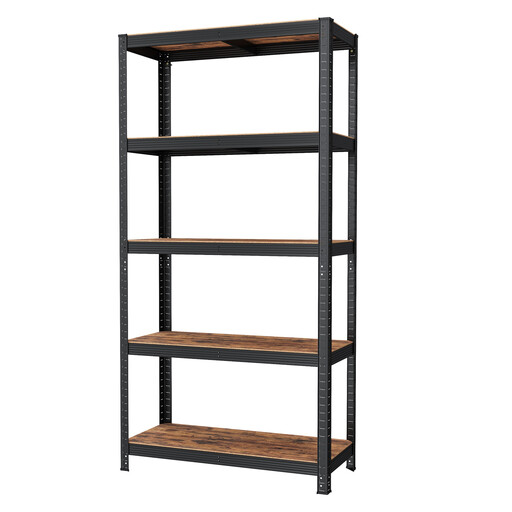
Why this product suits this need: This 150 cm-high shelving unit, with a steel frame and MDF shelves, is designed for cellars, garages, utility rooms and small storage areas.
The load capacity is clearly stated for both: 130 kg per shelf and 650 kg in total. An anti-tip kit is included and should be fitted according to the instructions.
Adjustable shelves, a divisible design and external dimensions of 30 × 75 × 150 cm.
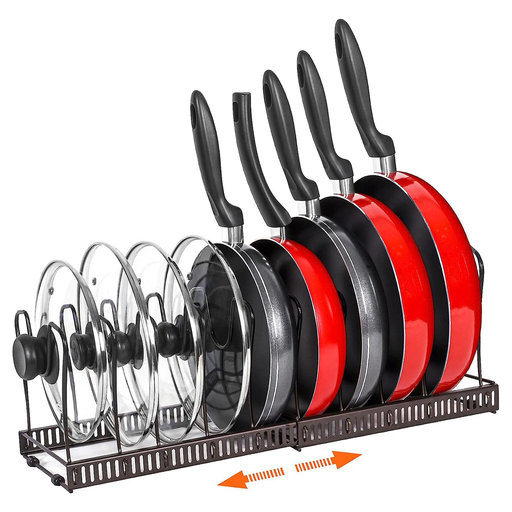
Why this product suits this need: These pull-out organisers are designed for pot lids, chopping boards and baking trays in cupboards, drawers or on worktops.
The pull-out section extends from 12 to 23 Zoll, and each organiser has ten adjustable dividers to suit cupboards of different widths.
304 stainless steel frame, non-slip feet and tool-free set-up in a pack of two.
We've put together a comprehensive, regularly updated list of products that meet these strict selection criteria and the safety requirements in force in the EU.
It depends on what you plan to use it for. A lower load capacity per shelf is usually enough for books or lightweight kitchen items. Tools, provisions or crates of drinks need a considerably higher capacity per shelf. The key figure is the load capacity per shelf, not just the total capacity.
A steel frame with sturdy shelves is practical for storing tools, boxes and household accessories. Before buying, check the dimensions, load capacity, anti-tip features and protection from moisture. MDF shelves are not designed for permanently damp conditions.
A narrow kitchen shelf, spice rack or pull-out pot lid organiser makes use of alcoves and cupboard space. Stackable units add extra levels without the need for another large cupboard. Be sure to check the internal dimensions, permitted load and clearance needed for doors and drawers.